English
 中文简体
中文简体 Español
 svenska



Content
- 1 What Is a Lawn Mower Spindle?
- 2 Parts of a Spindle: Spindle Assembly Diagram and Components
- 3 Signs of a Bad Spindle: Symptoms to Watch For
- 4 Bent Shaft on a Lawn Mower: Causes, Diagnosis, and Consequences
- 5 Lawn Mower Spindle Repair vs. Full Assembly Replacement
- 6 Mower Deck Spindle Replacement: Step-by-Step
- 7 Lawn Mower Spindle Replacement Cost
- 8 Greasing Mower Spindles: Intervals, Grease Types, and Technique
- 9 Lawn Mower Wheel Assembly and Its Relationship to Deck Spindles
What Is a Lawn Mower Spindle?
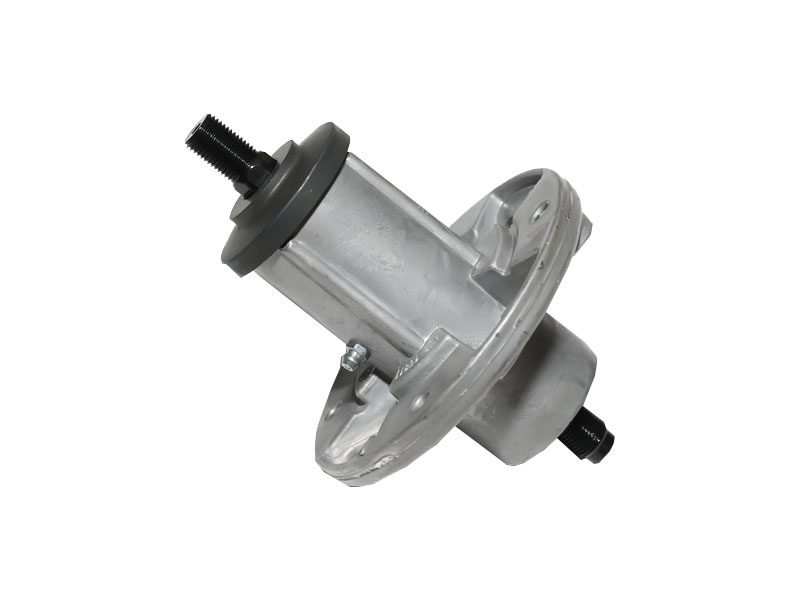
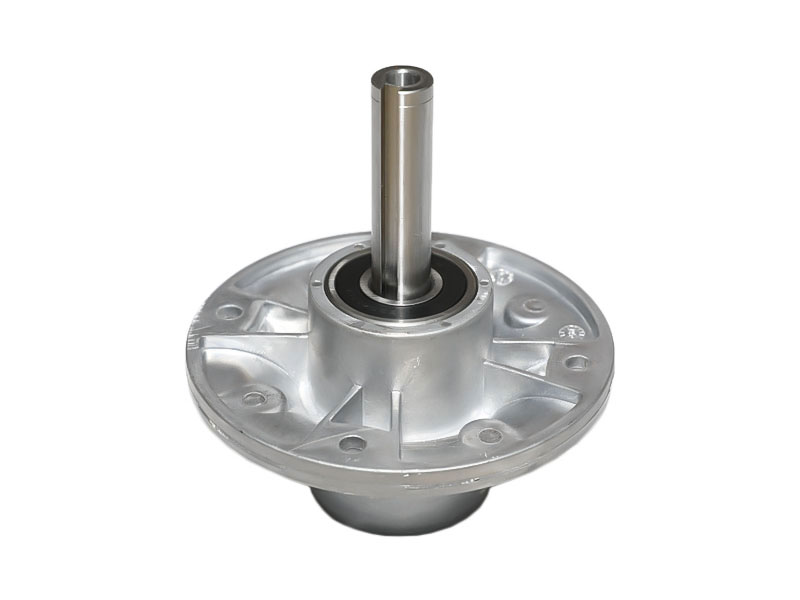
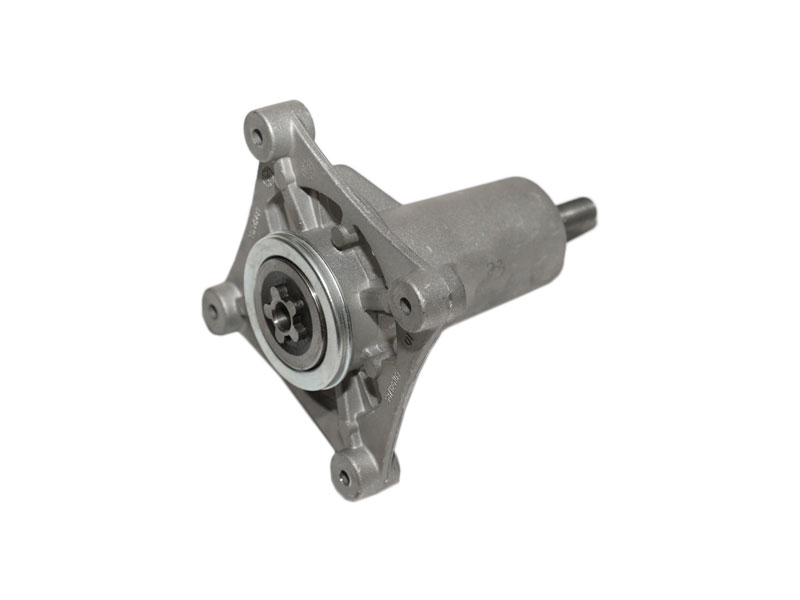
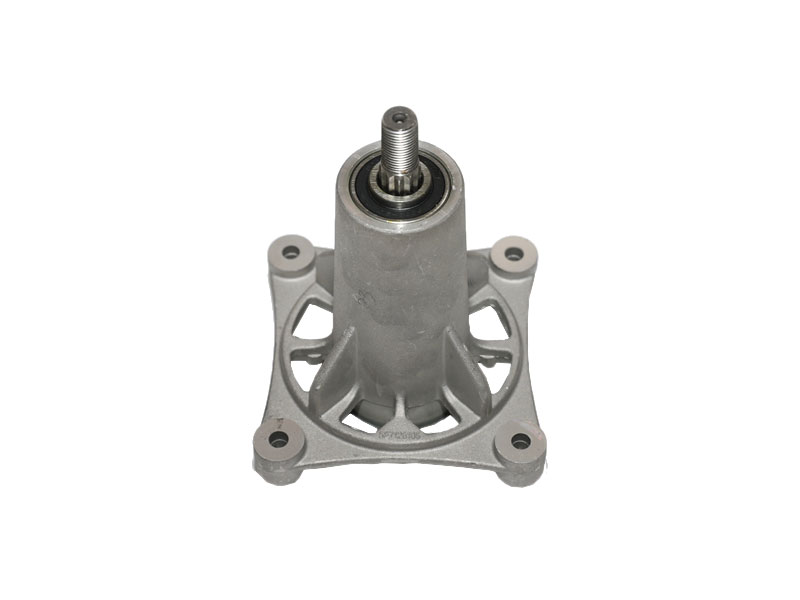
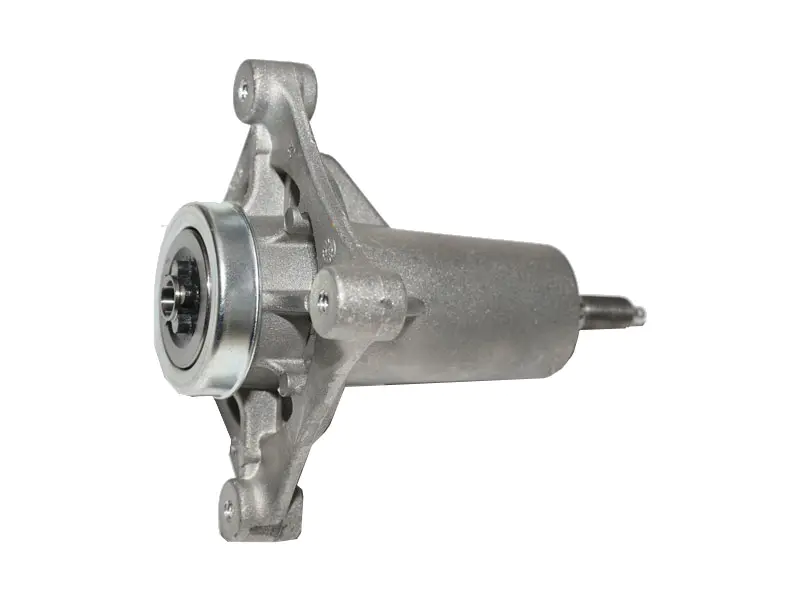
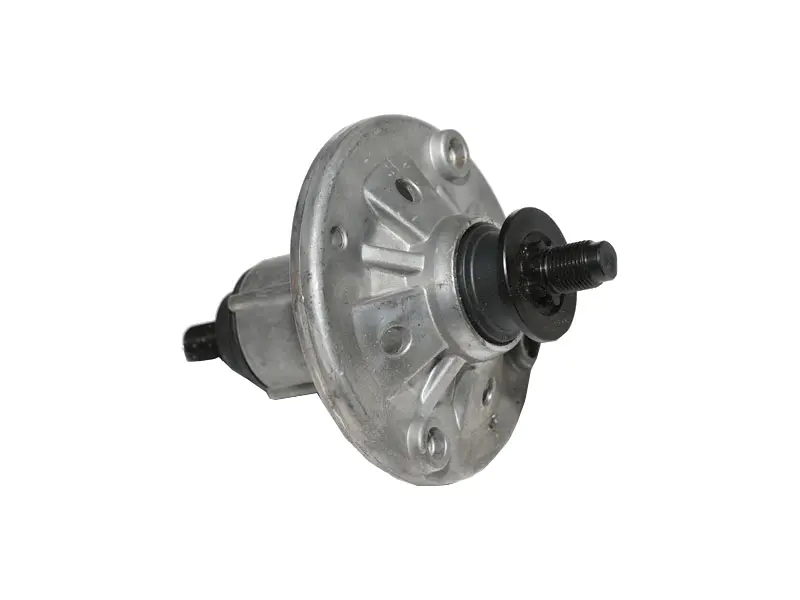
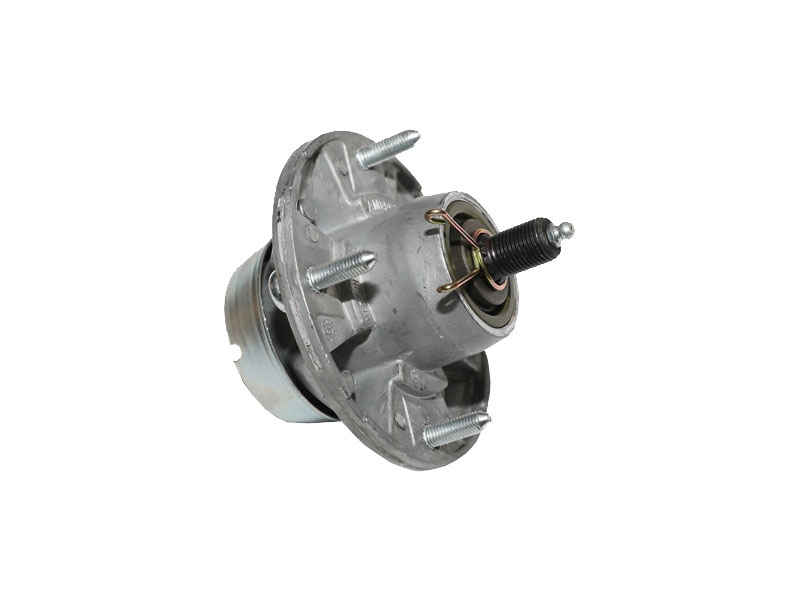
A lawn mower spindle is the rotating shaft assembly mounted to the mower deck that holds and drives the cutting blade. It is the mechanical link between the engine's power — delivered via belt, pulley, and deck engagement system — and the blade itself. Every time the blade turns, it does so because the spindle is turning beneath it.
On a riding lawn mower or zero-turn machine, there is typically one spindle per blade position. A standard 42-inch riding mower deck carries two spindles; a 54-inch or 60-inch deck typically carries three. Walk-behind mowers use a single central spindle. Each spindle operates independently, meaning one can fail while the others continue functioning — though the symptom is usually immediately obvious from the cut quality.
The spindle assembly is one of the highest-wear components on any mowing machine. It rotates at blade tip speeds approaching 200 mph during normal operation, absorbs impact shock every time the blade contacts an obstacle, and is exposed to grass clippings, moisture, and abrasive soil debris throughout its working life. Understanding how it is built, how to maintain it, and when to replace it is fundamental to keeping a mower in service.
Parts of a Spindle: Spindle Assembly Diagram and Components
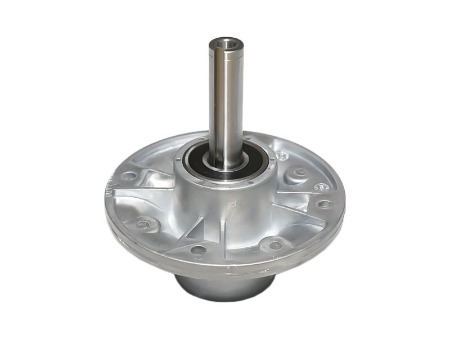
A complete lawn mower spindle assembly consists of several distinct parts, each with a specific function. Knowing the parts of a spindle is essential for diagnosing failures and ordering the correct replacement components.
- Spindle shaft: The central steel shaft that transmits rotational torque from the pulley above the deck to the blade below. The upper end is keyed or splined to accept the drive pulley; the lower end is threaded or taper-fitted to secure the blade with a retaining bolt.
- Spindle housing: The cast iron or aluminum housing bolted to the top of the mower deck that encloses and supports the shaft. It contains the bearing bores and, in greaseable designs, the grease fittings (Zerk fittings).
- Bearings: Typically two sealed or greaseable ball bearings — one upper, one lower — pressed into the housing bores to support the shaft radially and absorb thrust loads. These are the most commonly worn component in any spindle assembly.
- Drive pulley: Mounted to the top of the spindle shaft above the deck, the pulley receives the drive belt from the engine or transmission and converts belt tension into shaft rotation.
- Blade mounting adapter: On some designs, a separate adapter plate or blade carrier fits onto the lower shaft end, providing the anti-rotation feature that prevents the blade from spinning free of the shaft under load.
- Seals and dust shields: Rubber lip seals or pressed steel shields at the upper and lower bearing positions exclude debris and retain grease in serviceable designs.
- Blade bolt and washer: The high-tensile bolt — typically 5/8-inch or M16 — that clamps the blade to the lower shaft end. This bolt must be torqued to specification; both under-torquing (blade slippage) and over-torquing (shaft thread damage) cause failures.
On sealed pre-lubricated assemblies — now common on OEM decks — the bearings, seals, and housing are supplied as a single non-serviceable unit. When bearings fail, the entire housing assembly is replaced rather than pressing out and repressing individual bearing cups. On older or commercial-grade designs, bearings are replaceable independently, which reduces long-term parts cost but requires a hydraulic press for correct installation.
Signs of a Bad Spindle: Symptoms to Watch For
Identifying bad spindle symptoms early prevents the secondary damage — bent deck mounting flanges, destroyed drive belts, and thrown blades — that results from running a failed spindle assembly to complete mechanical collapse. The following are the most reliable indicators that a spindle on a riding lawn mower or walk-behind is failing or has already failed.
Unusual Noise During Operation
A grinding, rumbling, or rattling noise emanating from the deck during blade engagement is the earliest and most common symptom of bearing failure inside the spindle housing. The noise typically begins intermittently — appearing when the blade first engages or when the mower turns — and progresses to a continuous loud grind as bearing wear accelerates. A squealing noise that stops when the blades are disengaged points specifically to the spindle bearings rather than engine or transmission components.
Blade Wobble or Visible Shaft Play
With the engine off, spark plug disconnected, and blade stationary, grasp the blade tip and attempt to move it up and down perpendicular to its rotation axis. Any detectable vertical play — more than 1–2 mm — indicates worn bearings that can no longer hold the shaft in alignment. On a new or properly functioning spindle, the shaft should feel completely rigid with no perceptible movement.
Uneven or Streaky Cut Quality
A spindle with worn bearings allows the blade to wobble through its arc rather than rotating in a true flat plane. The result is an uneven cut with streaks of uncut or torn grass across the mowing path — even when the blade itself is sharp and correctly balanced. If deck leveling adjustments do not resolve streaky cut quality, spindle bearing condition is the next variable to check.
Vibration Through the Deck or Handles
Excessive vibration felt through the mower deck, steering wheel, or handles during mowing — beyond normal operating vibration — indicates a rotating imbalance. This is most often caused by a bent spindle shaft (from blade strike), a failed bearing allowing shaft eccentricity, or a blade that has lost a section and is running out of balance. Vibration from a failing spindle tends to increase progressively with RPM, distinguishing it from the constant vibration of a loose or damaged blade.
Visible Damage to the Housing or Shaft
Physical inspection of the spindle housing may reveal cracks in the casting, deformed bearing bores, grease leakage past failed seals, or rust and corrosion penetrating to the bearing races. Any crack in the housing — even hairline — is cause for immediate replacement; a fractured housing can release the spinning assembly during operation.
Bent Shaft on a Lawn Mower: Causes, Diagnosis, and Consequences
A bent spindle shaft is one of the most serious spindle failures because the shaft itself — not just the bearings — must be replaced, and the impact force that bends a hardened steel shaft is typically severe enough to damage bearings, seals, and sometimes the housing simultaneously.
The most common cause is blade strike on a fixed object — a tree root, buried rock, concrete edging, or metal stake — at full operating RPM. The sudden deceleration of one end of the blade transmits an enormous bending moment through the blade bolt to the shaft. Even a single high-speed strike can bend a shaft beyond serviceable tolerance.
Diagnosing a bent shaft requires a dial indicator mounted against the lower shaft journal while the shaft is rotated by hand. A runout measurement exceeding 0.010 inches (0.25 mm) total indicated runout is the general rejection threshold for mower spindle shafts — above this, vibration and bearing wear during operation are unacceptable. Visual inspection alone is insufficient; a shaft that appears straight to the eye can have enough runout to destroy a new set of bearings within hours of operation.
A bent spindle shaft cannot be straightened to a serviceable condition in the field. Attempting to straighten a hardened shaft introduces internal stress concentrations that make subsequent fracture more likely, not less. Replacement is the only correct course of action.
Lawn Mower Spindle Repair vs. Full Assembly Replacement
The decision between repairing a lawn mower spindle — replacing individual components such as bearings or seals — and replacing the complete assembly depends on the spindle design, the nature of the failure, and the cost comparison between parts and labor.
| Failure Type | Repair Option | Replace Assembly? |
|---|---|---|
| Worn bearings only (housing intact) | Press out and replace bearings if design allows | Preferred on sealed assemblies — simpler and often similar cost |
| Bent or worn spindle shaft | Replace shaft only if housing is undamaged and press tools available | Usually yes — inspect housing bores for deformation before reusing |
| Cracked or deformed housing | Not repairable | Yes — always |
| Failed seals with bearing contamination | Replace seals and bearings together | Practical choice on modern sealed assemblies |
| Blade strike damage (shaft + bearings) | Partial repair rarely cost-effective | Yes — replace complete assembly |
For most homeowner-grade riding mowers, complete spindle assembly replacement is the practical default. Pre-assembled replacement spindles are available for virtually all major mower brands — Husqvarna, John Deere, Cub Cadet, Craftsman, Toro, Ariens — and the all-in cost of a replacement assembly is often only marginally higher than individual bearing and seal components, without requiring a hydraulic press for installation.
Mower Deck Spindle Replacement: Step-by-Step
Replacing a spindle on a riding lawn mower deck is a straightforward procedure requiring basic hand tools and approximately 30–60 minutes per spindle for a first-time repair. The following steps apply to the majority of residential and light commercial riding mower designs.
- Safety preparation: Park on a flat surface, engage the parking brake, remove the ignition key, and disconnect the spark plug wire(s). Lower the deck to its lowest position to provide working clearance, then disengage the deck if it has a separate engagement lever.
- Remove the deck: On most riding mowers, the deck must be removed from the machine to access spindle hardware properly. Disconnect the deck lift linkage, remove the drive belt from the spindle pulleys, and slide the deck out from beneath the frame on the mower's designated removal path.
- Remove the blade: Hold the blade with a heavy glove or block of wood to prevent rotation, then remove the center blade bolt using a breaker bar or impact wrench. Note the blade orientation (cutting edge direction) for reinstallation.
- Remove the drive pulley: Remove the retaining bolt or snap ring from the top of the spindle shaft and pull the pulley free. Some pulleys require a puller tool if they have seized onto the shaft taper.
- Remove the spindle housing bolts: Three or four bolts typically secure the spindle housing to the top of the deck. Remove these and the entire spindle assembly — housing, shaft, and bearings — drops away from the deck.
- Install the new assembly: Position the new spindle assembly through the deck mounting hole from below, aligning the housing bolt holes with the deck tabs. Install and torque the housing bolts to the manufacturer's specification — typically 35–45 ft-lb for most residential mower decks.
- Reinstall pulley and blade: Fit the pulley to the upper shaft, secure with its retaining fastener, then install the blade to the lower shaft end with a new blade bolt torqued to specification — typically 35–50 ft-lb depending on the model.
- Reinstall belt and deck: Route the drive belt over the new spindle pulley according to the deck belt diagram (usually printed on a sticker inside the deck or in the owner's manual), reinstall the deck, reconnect all linkages, and test operation at low RPM before returning to full mowing speed.
Lawn Mower Spindle Replacement Cost
Lawn mower spindle replacement cost varies by mower brand, deck size, and whether the work is done as a DIY repair or by a dealer service department.
Parts cost for a replacement spindle assembly typically ranges from USD 20–40 for aftermarket assemblies fitting popular residential brands, to USD 60–120 for OEM assemblies from John Deere, Husqvarna, or Toro dealerships. Commercial mower spindles — Ferris, Scag, Exmark — run USD 80–200+ per assembly depending on deck width and spindle shaft diameter.
Labor cost at a dealer or small engine shop typically adds USD 50–120 per spindle, depending on whether deck removal is required and local shop rates. A three-spindle 54-inch deck replacement at a dealer can therefore reach USD 400–600 in total cost for parts and labor combined — making the DIY approach economically compelling for any owner comfortable with basic mechanical work.
Aftermarket spindles from reputable suppliers — Oregon, MaxPower, Rotary, Stens — are dimensionally equivalent to OEM parts for most common residential mowers and carry warranties of 90 days to one year. For a mower under active use where the deck is otherwise in good condition, aftermarket assemblies represent strong value. For commercial equipment under heavy daily use, OEM parts are typically worth the premium for their quality control consistency and longer warranty terms.
Greasing Mower Spindles: Intervals, Grease Types, and Technique
Greasing mower spindles is the single highest-return maintenance activity for extending spindle bearing life — and it is also one of the most commonly neglected. Many mower owners are unaware their spindles have grease fittings at all, particularly on older or commercial-grade decks where Zerk fittings are present on each housing.
Modern sealed-bearing spindle assemblies are marketed as "maintenance-free" and do not have external grease fittings — the bearings are pre-packed at the factory and sealed for life. These assemblies rely entirely on the original grease charge, which makes them sensitive to heat, contamination ingress through worn seals, and extended hours of use beyond the bearing's design life. When the original grease depletes or degrades, failure follows without warning.
For spindles with Zerk fittings, the correct greasing procedure is:
- Grease type: Use a lithium-complex or polyurea multi-purpose grease rated for high-speed bearing applications — NLGI Grade 2 consistency. Do not use chassis grease, wheel bearing grease, or any petroleum-based grease not rated for high-speed rotating applications.
- Interval: Every 25 hours of operation under normal mowing conditions. In sandy, dusty, or wet conditions, shorten the interval to every 10–15 hours. Most residential mowers average 50–100 hours per season, meaning two to four greasing events per year is typical.
- Quantity: Apply grease until fresh grease is seen purging from the bearing seal lips — typically 2–4 pumps of a standard hand grease gun per fitting. Over-greasing forces grease past the seals and onto the belt and pulley surface, causing belt slip and premature belt failure.
- Technique: Wipe the Zerk fitting clean before attaching the grease gun coupler to prevent injecting dirt directly into the bearing. After greasing, wipe away any purged grease from the seal area to prevent it from attracting debris.
Lawn Mower Wheel Assembly and Its Relationship to Deck Spindles
The lawn mower wheel assembly — the hub, axle, and wheel bearings supporting each ground-contact wheel — is mechanically separate from the deck spindle system but is frequently confused with it during diagnosis, particularly on walk-behind mowers where vibration or noise is not easily localized.
The key distinction: spindle noise and vibration occur only when the blades are engaged. Wheel assembly noise and vibration are present whenever the mower is in motion, regardless of blade engagement status. Performing a simple test — driving the mower at operating speed with blades disengaged — isolates wheel assembly problems from deck spindle problems with high reliability.
Wheel assembly failures relevant to riding mowers include worn or seized axle bushings, cracked wheel hubs, and loose retaining clips that allow lateral wheel movement. On deck wheels — the small caster or fixed wheels that support the outer edges of a floating deck — worn wheel assemblies directly affect cut height consistency and deck levelness, symptoms that overlap with spindle bearing wear in their effect on mowing quality. Inspecting both systems together when cut quality degrades is the most efficient diagnostic approach.