English
 中文简体
中文简体 Español
 svenska



Content
What Lawn Mower Spindles Do and Why They Matter
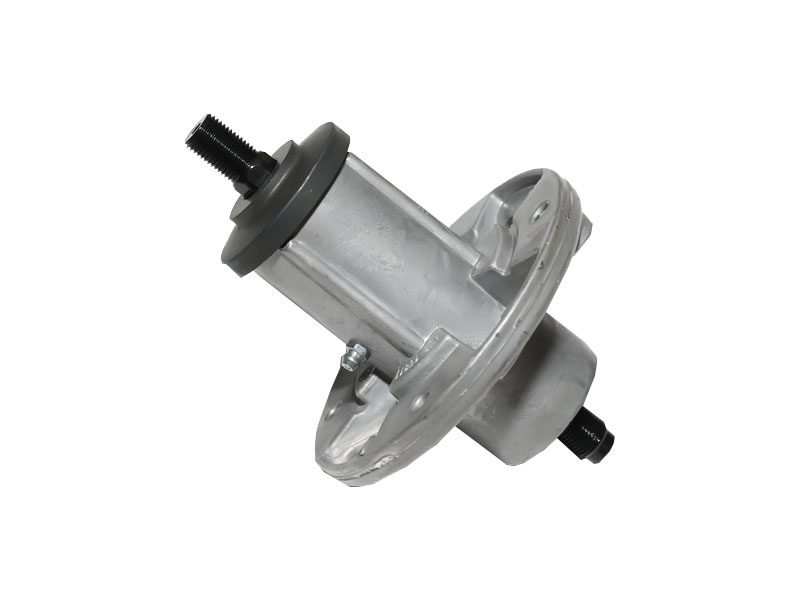
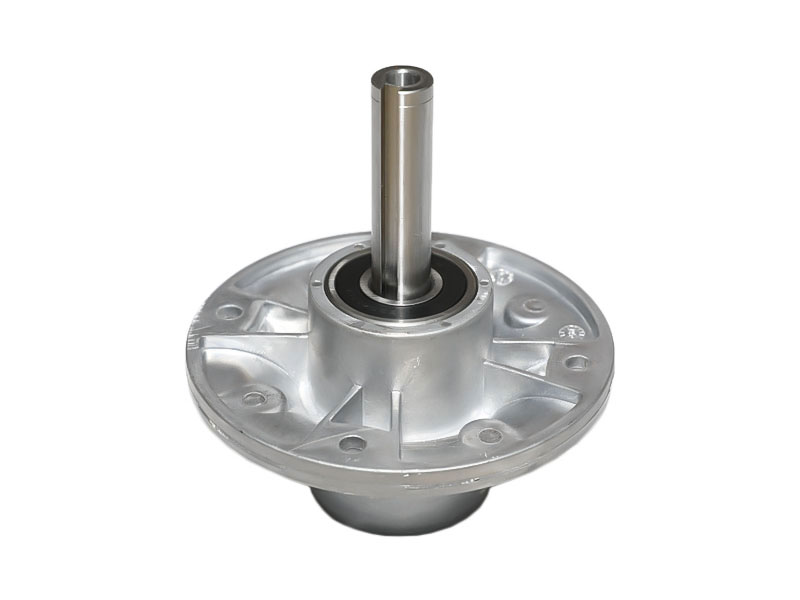
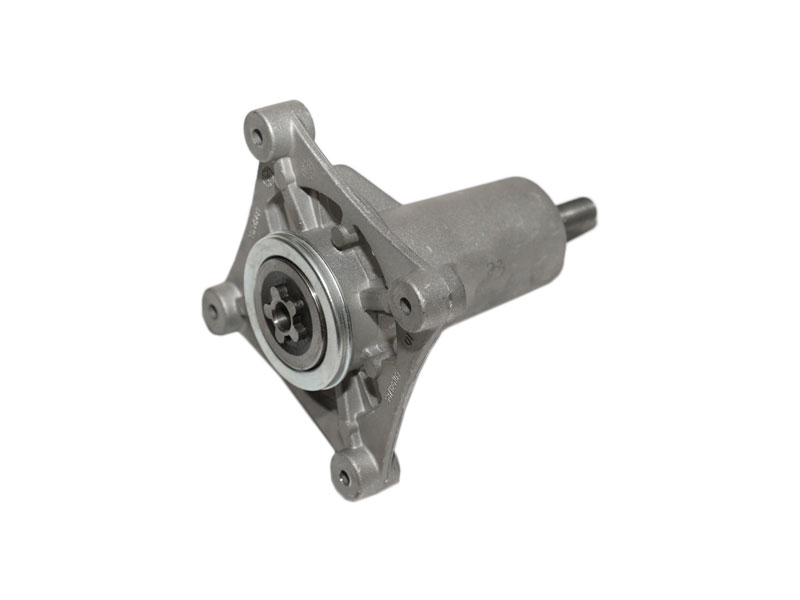
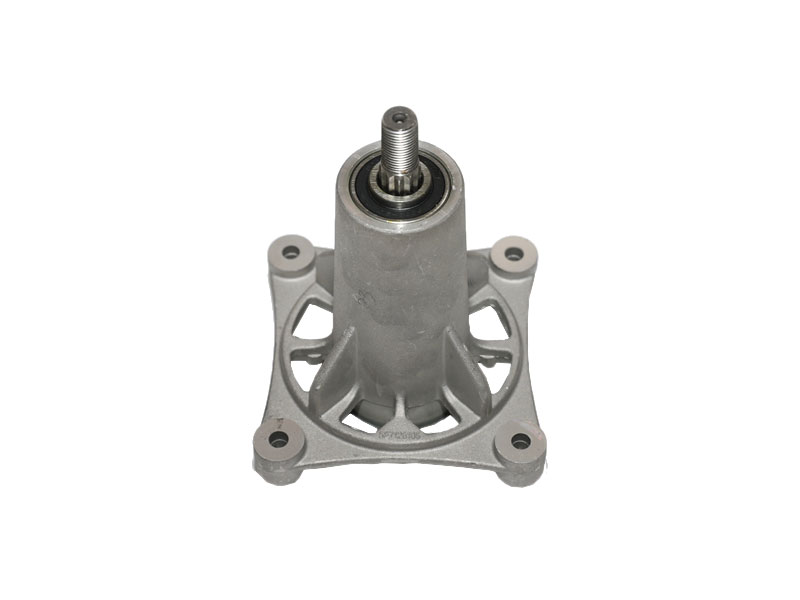
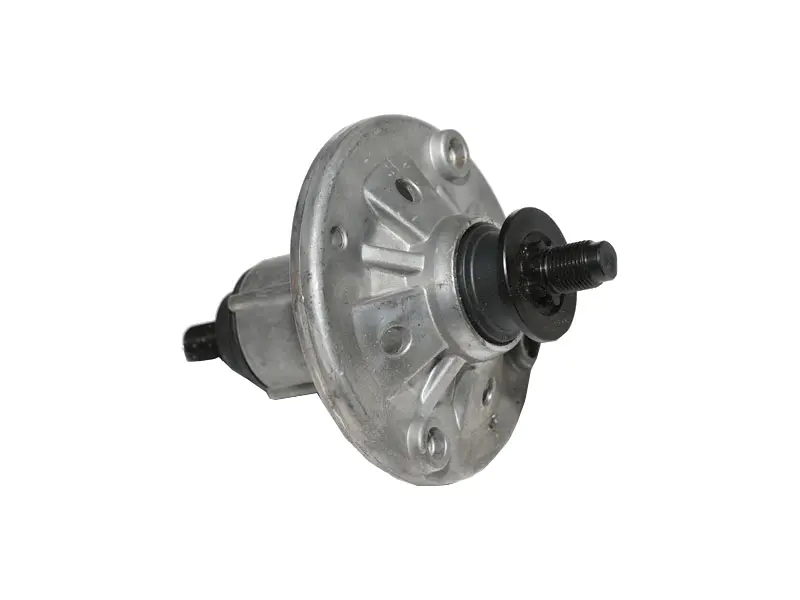
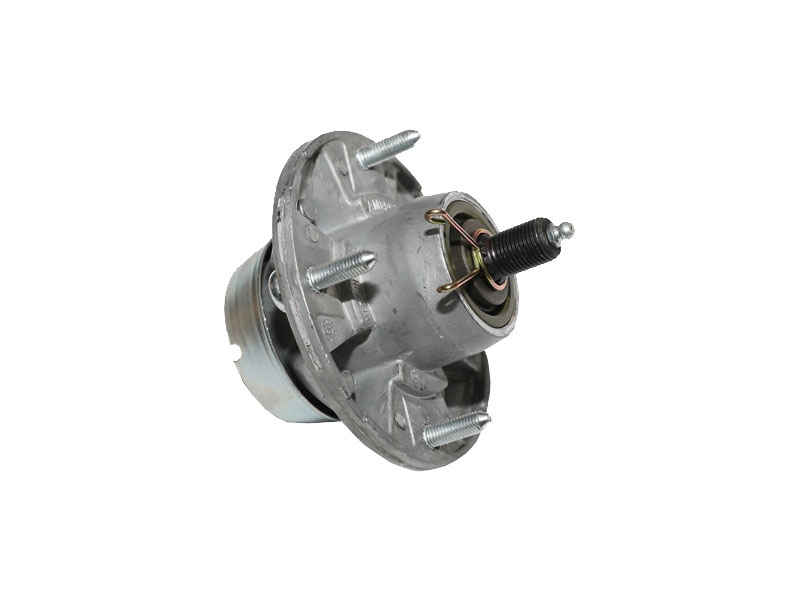
Lawn mower spindles are the rotating shaft assemblies mounted to the underside of a mower deck that hold and drive the cutting blades. Each spindle consists of a central shaft, an upper and lower bearing set housed within a cast housing, and a blade attachment point at the lower end — typically a tapered or straight shaft secured by a bolt. When the mower's drive system engages the deck, the spindle shaft rotates at speeds typically between 2,800 and 3,600 RPM, transmitting that rotational force directly to the blade.
Without a correctly functioning mower deck spindle, no amount of engine power reaches the blade effectively. A worn or failed spindle bearing introduces blade wobble, which degrades cut quality, stresses the deck shell, and — if left unaddressed — allows the blade to contact the deck housing, creating a dangerous and expensive failure. Spindles are among the highest-wear components on any riding or zero-turn mower precisely because they operate in direct proximity to the ground, absorbing the shock of every rock, root, and hard obstruction the blade encounters.
On residential riding mowers, a single or dual-spindle deck configuration is standard. Commercial zero-turn mowers with 48" to 72" cutting widths typically employ three spindles arranged across the deck width, each independently bearing the load of its own blade. This means spindle selection, maintenance, and replacement must be managed as a complete deck assembly — the performance of the weakest spindle determines the overall cut quality of the entire deck.
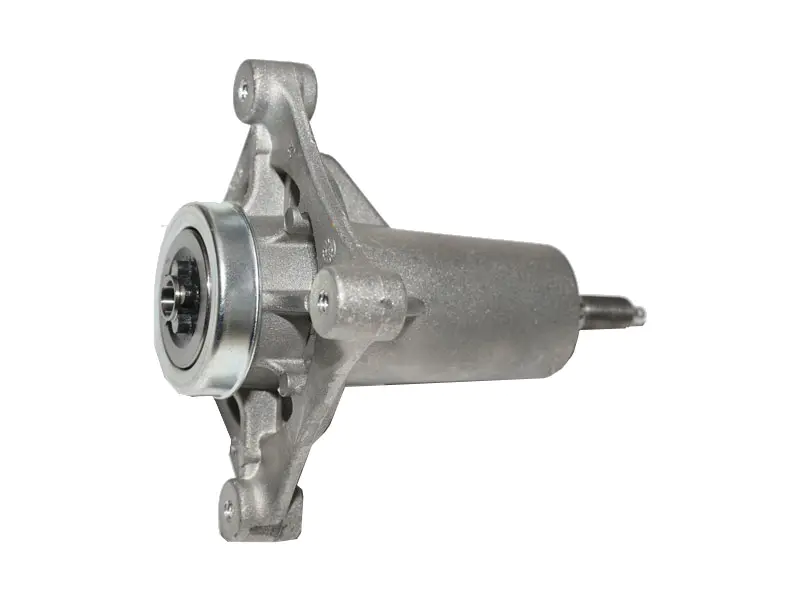
Anatomy of a Mower Deck Spindle Assembly
Understanding the individual components of a mower deck spindle makes both diagnosis and parts sourcing significantly more straightforward. A complete spindle assembly comprises the following elements:
- Spindle housing: The outer cast iron or cast aluminium body that mounts to the deck plate and contains the bearing races. Housing geometry is OEM-specific — bolt pattern, bearing bore diameter, and mounting flange dimensions must match the original exactly for a replacement to seat correctly.
- Upper and lower bearings: Most spindle assemblies use sealed deep-groove ball bearings rated for radial and axial (thrust) loads simultaneously. The lower bearing typically carries the higher load due to blade-strike shock forces. Bearing specifications — inner diameter, outer diameter, and width — follow standard ABEC/ISO designation codes (e.g., 6205-2RS, 6206-2RS) and are replaceable independently of the housing on most designs.
- Spindle shaft: The hardened steel shaft that passes through both bearings and the housing. The upper end accepts the drive pulley (belt-driven) or direct drive coupling; the lower end is machined to accept the blade via a centre bolt, often with a keyway or anti-rotation flat to prevent blade slippage under load.
- Drive pulley: Mounted to the upper end of the shaft, the pulley transmits power from the deck drive belt. Pulley diameter determines blade tip speed — a critical safety and performance parameter governed by ANSI B71.1 (residential) and B71.4 (commercial) standards, which limit blade tip speed to 19,000 ft/min (approximately 96 m/s) for walk-behind and riding mowers.
- Blade hardware: The centre bolt, blade adapter (where used), and any anti-scalp or blade-to-shaft alignment components. Blade bolt torque specifications vary by manufacturer but typically fall in the range of 70–130 ft-lb (95–176 N·m) — under-torquing is a frequent cause of blade loss in the field.
Types of Lawn Mower Spindles by Drive Configuration
Not all lawn mower spindles use the same power transmission method. The drive configuration affects spindle design, maintenance requirements, and the failure modes most likely to be encountered in service.
Belt-Driven Spindles
The overwhelming majority of residential and commercial riding mowers use V-belt drive systems where a single or multi-groove belt connects the engine or PTO shaft to one or more deck spindle pulleys. Belt-driven spindles are the most common format and the most widely available for aftermarket replacement. The belt introduces a degree of slip and shock absorption between the engine and blade — a characteristic that actually extends spindle bearing life by cushioning the impulse load of blade-strike events compared to direct drive systems.
On multi-spindle decks, belt routing determines whether spindles rotate in the same direction or contra-rotate. Most three-spindle zero-turn decks run the outer two spindles in one direction and the centre spindle in the opposite direction to eliminate the central strip of uncut grass that would otherwise result from blade tip overlap gaps.
Gear-Driven Spindles
Some commercial and professional rotary mowers — particularly those designed for municipal or sports turf applications — use gear boxes to transfer power between spindles rather than belts. Gear-driven configurations offer higher power transmission efficiency and eliminate belt replacement as a maintenance task, but they transfer blade-strike shock loads directly through the gear train to adjacent spindles and the drive shaft, increasing the risk of cascading damage when a blade strikes a significant obstruction.
Direct Electric Drive Spindles
Battery-electric mowers — a rapidly growing segment of both residential and commercial markets — increasingly use individual electric motors integrated directly into each spindle housing, eliminating belts, pulleys, and mechanical PTO systems entirely. Each blade is independently powered and speed-controlled, enabling load-adaptive blade RPM that maintains consistent tip speed regardless of grass density. This architecture simplifies the mechanical spindle assembly significantly but shifts maintenance complexity to the motor and motor controller electronics rather than bearings and belts.
Diagnosing Spindle Wear and Failure
Early identification of spindle bearing wear prevents the progression from a routine maintenance replacement to a deck-damaging failure. The diagnostic indicators below allow operators and technicians to distinguish spindle problems from other common deck issues such as belt wear, blade imbalance, or deck shell distortion.
Vibration and Roughness Through the Deck
A worn spindle bearing introduces irregular rolling element contact — either from race spalling, contamination, or loss of radial clearance — that manifests as a vibration felt through the deck and operator platform. This vibration is typically present at operating RPM and diminishes or changes character when the deck is disengaged. A failed belt or imbalanced blade produces a similar symptom, so confirming the spindle as the source requires physical inspection after disengagement.
Audible Noise During Operation
Spindle bearing failure characteristically produces a grinding, rumbling, or squealing noise from the deck during operation. A grinding or rumbling tone typically indicates contamination or race spalling in the bearing; a high-pitched squeal often indicates lubrication loss in a non-sealed bearing or early-stage outer race damage. These sounds are distinct from belt squeal (which occurs at engagement/disengagement transitions) and blade-strike clatter (which is a discrete impact event rather than a continuous tone).
Blade Wobble Test
With the engine fully stopped, ignition key removed, and the spark plug wire disconnected, manually grasp each blade at its tips and attempt to rock it up and down perpendicular to its rotation plane. Any detectable play at the blade tips — beyond the negligible clearance of a new assembly — indicates bearing wear or shaft damage sufficient to warrant spindle inspection or replacement. A blade that drops perceptibly under its own weight when the deck is tipped is exhibiting advanced bearing failure and should not be operated further until the spindle is replaced.
Uneven or Streaked Cut Pattern
A worn lawn mower spindle allows the blade to run slightly out of plane, producing a characteristic wavy or ribbed cut pattern — sometimes called "washboarding" — across the mown surface. On a three-spindle deck, a streaked band of slightly taller grass running parallel to the mowing direction typically indicates the spindle at that lateral position is either worn or misaligned. This symptom is frequently misattributed to blade sharpness or deck levelling issues; confirming spindle condition should precede any deck height adjustment attempt.
OEM vs. Aftermarket Spindles: How to Evaluate Replacement Options
The aftermarket for lawn mower spindles is large and highly fragmented, with quality ranging from direct OEM equivalents to significantly inferior copies that fail within a single season. Buyers sourcing replacement spindles should evaluate aftermarket options against the following criteria before purchase:
| Evaluation Factor | OEM Spindle | Quality Aftermarket | Low-Cost Aftermarket |
|---|---|---|---|
| Housing material | Cast iron or high-grade aluminium alloy | Cast iron or equivalent alloy | Often lower-grade aluminium or zamak |
| Bearing specification | Matched to OEM load rating | Named-brand bearings (SKF, NSK, FAG) | Unbranded; often ABEC 1 or unrated |
| Shaft hardness | Case-hardened, typically 58–62 HRC | Hardened per spec | Variable; often under-hardened |
| Dimensional accuracy | Precision-machined to OEM drawing | Cross-referenced to OEM; bolt-on fit | May require shimming or modification |
| Expected service life | 300–600+ operating hours | 200–500 operating hours | Often below 100 operating hours |
For commercial mowing operations where a mower may log 500–1,000 hours per season, the total cost of ownership calculation almost universally favours OEM or quality aftermarket spindles over low-cost alternatives. A spindle that fails at 80 hours in peak mowing season costs far more in downtime, emergency labour, and potential secondary deck damage than the USD 30–50 saved on the initial purchase.
For residential mowers averaging 50–100 hours per season, a quality aftermarket spindle from a reputable supplier — with a named-brand bearing and cast iron or quality aluminium housing — represents a reasonable balance of cost and durability. Confirming the OEM part number cross-reference before purchase is essential; most quality aftermarket suppliers publish verified cross-reference charts against Husqvarna, John Deere, Scag, Exmark, Toro, and other major OEM part numbers.
Spindle Replacement: Key Steps and Common Errors
Replacing a mower deck spindle is a straightforward procedure for anyone comfortable with basic mechanical work, but several steps are consistently rushed or skipped in field replacements, leading to premature failure of the new component.
Remove and Inspect the Blade Before Removing the Spindle
Always remove and inspect the cutting blade before extracting the spindle assembly. A blade that has sustained a significant strike event — indicated by bending, a visible crack, or a notched or rolled cutting edge — must be replaced, not resharpened. A bent blade installed on a new spindle immediately re-introduces the imbalance that likely accelerated the original spindle's bearing failure. Blade balance should be verified with a blade balancer after sharpening; an imbalance of as little as 0.5 oz-in (3.5 g·cm) generates measurable vibration at operating RPM that shortens bearing life.
Inspect the Deck Shell Around the Spindle Mount
A failed spindle bearing that has been run for an extended period often causes the spindle housing to move within its mounting hole, elongating or cracking the deck plate around the mounting bolts. Before installing a new spindle, inspect the mounting hole and bolt pattern on the deck for any elongation, cracks, or distortion. A spindle mounted to a compromised deck plate will not run true regardless of the replacement component's quality.
Torque All Fasteners to Specification
Spindle housing bolts, pulley retaining nuts, and blade centre bolts must all be torqued to the manufacturer's specified values using a calibrated torque wrench — not impact gun judgment. The blade centre bolt in particular is a safety-critical fastener; most manufacturers specify thread-locking compound (Loctite 243 or equivalent) in addition to the specified torque value on blade bolt installations.
Replace the Drive Belt When Replacing the Spindle
A deck drive belt that has been running against a worn spindle pulley — which may have developed lateral runout, surface scoring, or edge chipping — will have sustained accelerated wear at the contact zone. Installing a new spindle on a worn belt means the new assembly begins its service life immediately under degraded drive conditions. Belt and spindle should be treated as a paired replacement on commercial equipment; on residential machines, the belt should at mini