English
 中文简体
中文简体 Español
 svenska



Content
What Are Mower Deck Spindles and Why They Matter
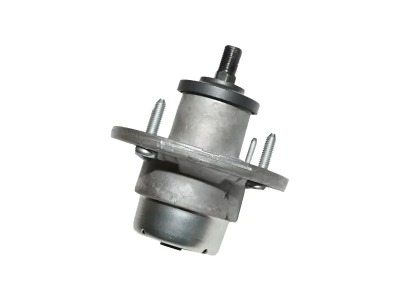
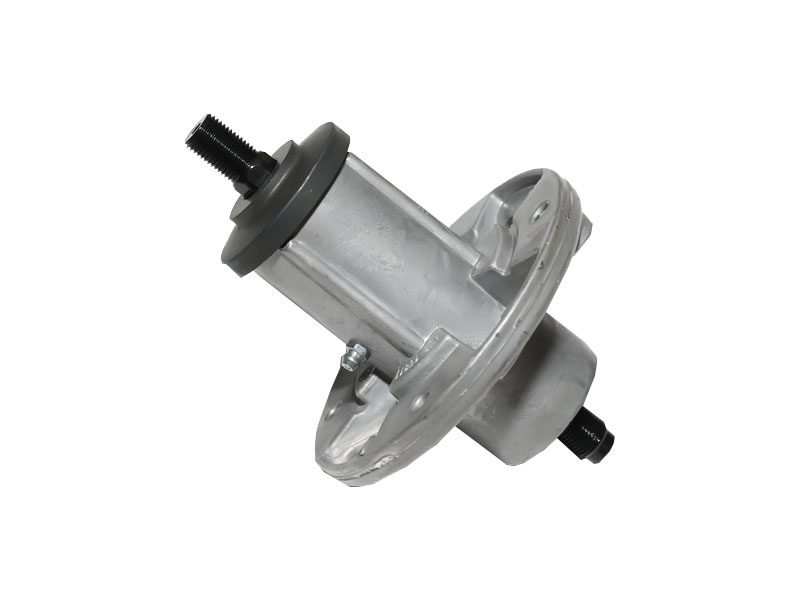
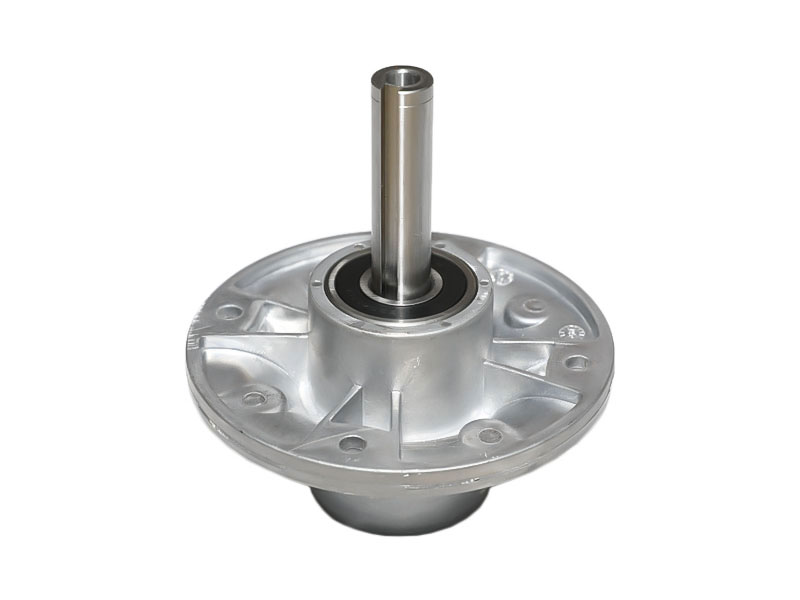
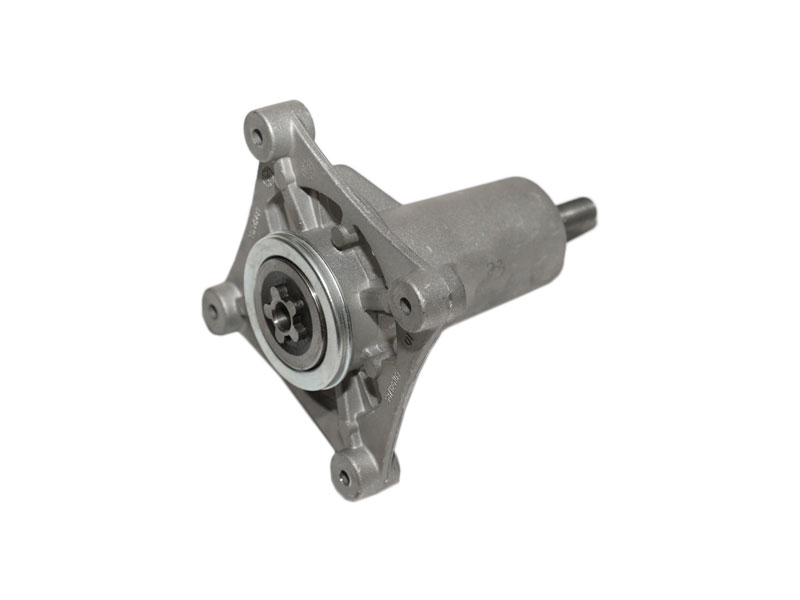
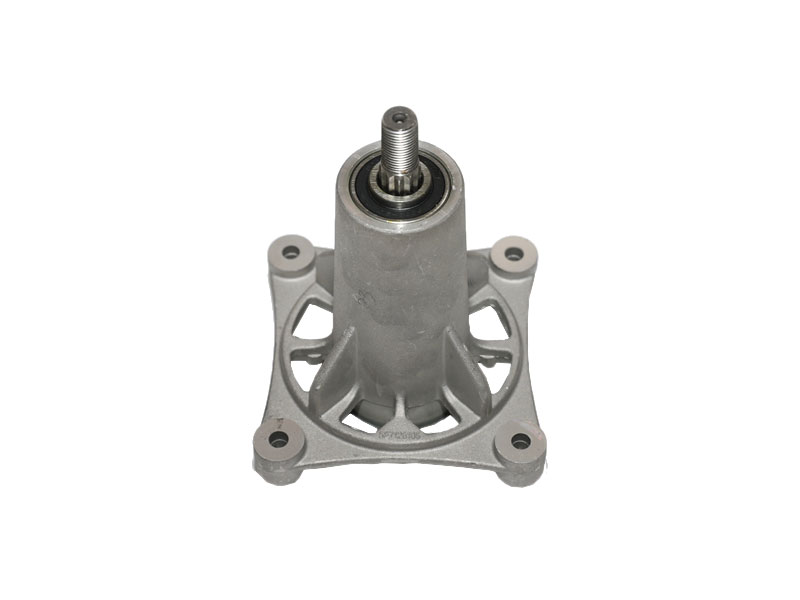
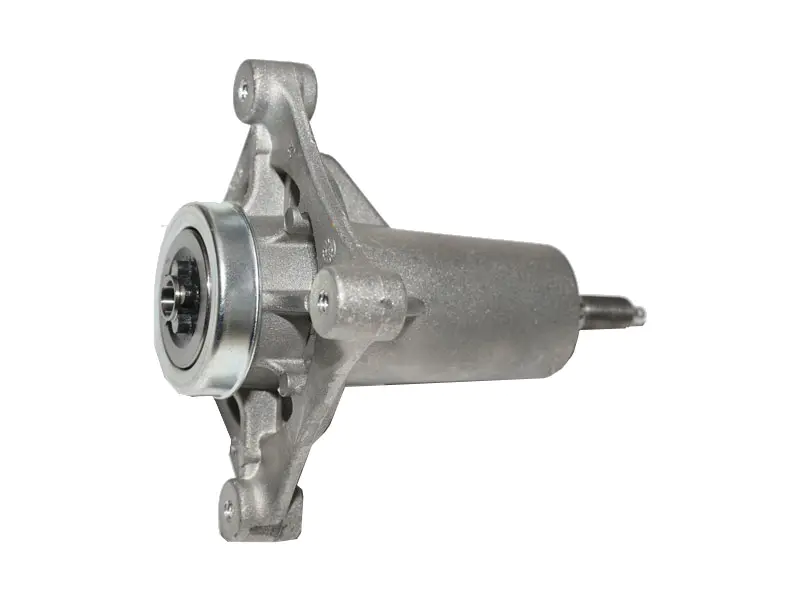
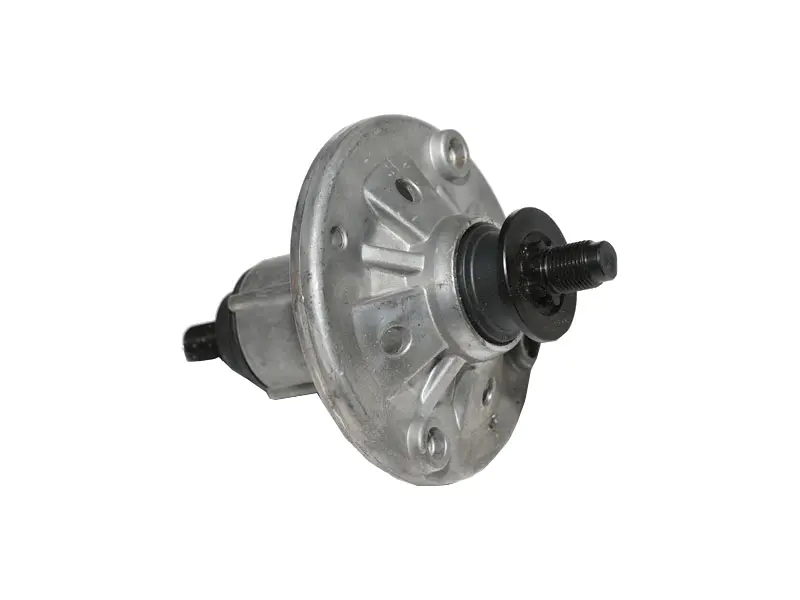
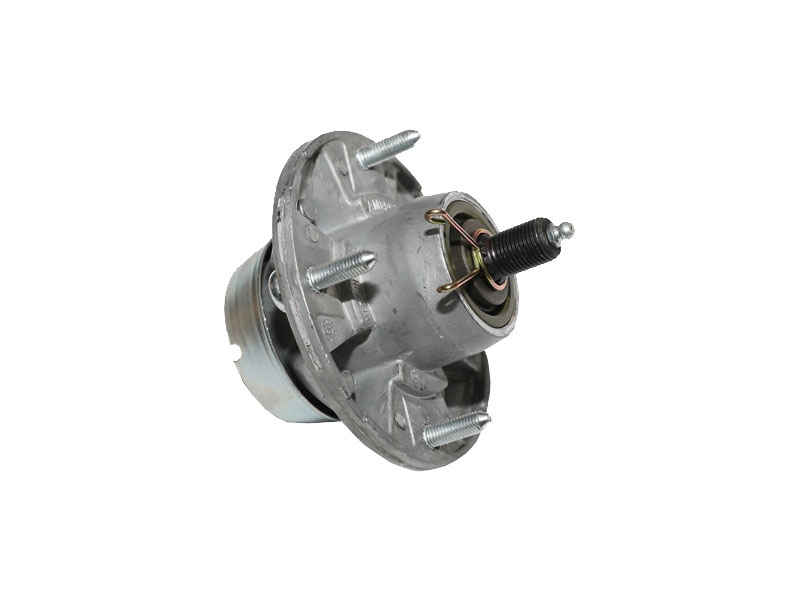
Mower Deck Spindles are the core components of the mower deck cutting system. They are responsible for transferring the engine’s power through the belt to the blades, allowing the blades to rotate at high speed for cutting. Each Mower Deck Spindle typically consists of a spindle shaft, bearings, housing, and mounting bolts. The precise coordination of these parts directly determines the smoothness of the cut and the stability of the machine.
When Mower Deck Spindles are in good working condition, the blades can rotate smoothly and at high speed, achieving a clean and even cut. However, once they become worn, loose, or the bearings are damaged, noise, vibration, uneven cutting, or even damage to other drive components may occur.
Main Functions of Mower Deck Spindles
- Power Transmission: Transfers the engine’s rotational energy to the blades.
- Stable Cutting: Maintains blade speed and position stability, preventing uneven lawn height.
- Equipment Longevity: Reduces friction and wear between the blades and deck, protecting other drivetrain parts.
Common Mower Deck Spindles Parameter Comparison
| Parameter Category | Common Range / Description | Importance |
|---|---|---|
| Spindle Length | 4–9 inches (depending on deck model and blade diameter) | Affects blade mounting position and cutting height |
| Shaft Diameter | 0.5–1 inch | Determines blade hole compatibility and stability |
| Housing Material | Aluminum alloy / Steel | Aluminum is lightweight and corrosion-resistant, steel is more impact-resistant |
| Bearing Type | Single-row ball bearing / Double-row ball bearing | Double-row is more durable with higher load capacity |
| Lubrication Method | Maintenance-free sealed bearings / Grease fitting design | Grease fittings are better for high-frequency use |
| Blade Interface | Star-shaped / Round hole | Determines blade fit and anti-slip capability |
| Mounting Hole Spacing | 3–5 inches (varies by deck model) | Must match the original deck mounting holes exactly |
Understanding Mower Deck Spindles: Maintenance, Replacement, And Key Considerations
1. Core Structure of Mower Deck Spindles
- Spindle Shaft: Carries and drives the blade rotation, serving as the core of power transmission.
- Bearings: Reduce friction and keep rotation smooth, typically single-row or double-row ball bearings.
- Housing: Protects internal components from impact and contamination.
- Mounting Hardware: Includes bolts, washers, and lock nuts to secure Mower Deck Spindles to the deck.
2. Key Maintenance Points for Mower Deck Spindles
| Maintenance Task | Recommended Frequency | Purpose and Notes |
|---|---|---|
| Remove grass and debris | After each use | Prevent heat buildup, corrosion, or jamming in bearings and housing |
| Lubricate bearings (if applicable) | Every 25–50 hours or once per season | Reduce friction and noise, prevent premature wear |
| Check bearing play or looseness | Each season or when vibration occurs | Detect wear and looseness early to avoid blade imbalance |
| Inspect mounting bolts and blade tightness | During each maintenance check | Prevent loosening during operation, ensuring safety |
| Check blade balance | After blade replacement or repair | Ensure smooth cutting and reduce vibration |
3. Replacement Recommendations for Mower Deck Spindles
Replacement should be considered when:
- Noticeable abnormal noise or friction sounds occur during operation
- Blades spin unevenly or wobble
- Bearings seize, wear severely, or rust
- Spindle shaft is bent or deformed
General Replacement Steps (refer to the specific model’s manual)
- Disconnect the engine ignition system to ensure safety.
- Remove the belt and detach the blades.
- Unscrew mounting bolts and remove the old Mower Deck Spindles.
- Install the new unit and torque bolts to the specified values.
- Reinstall blades and belt, then perform a test run check.
4. Key Considerations for Selection and Installation
| Parameter Category | Description and Selection Advice |
|---|---|
| Spindle Length | Must match the original model to maintain proper cutting height and blade spacing |
| Bearing Type | Double-row ball bearings provide greater load capacity, ideal for heavy-duty use |
| Housing Material | Steel offers higher impact resistance; aluminum alloy is lighter and corrosion-resistant |
| Lubrication Method | Models with grease fittings are better for prolonged high-load operations |
| Blade Interface | Must match the blade hole size and shape exactly to prevent slippage or loosening |
| Mounting Hole Spacing | Must align perfectly with the original deck holes to avoid installation misalignment |
Common Signs of Worn or Damaged Mower Deck Spindles
1. Unusual Noise
Symptom: Metallic grinding, clicking, or high-pitched squealing during operation.
Cause: Bearings lack lubrication or are worn, causing direct contact between the spindle shaft and housing.
2. Excessive Vibration or Wobbling
Symptom: The handle or seat vibrates excessively during mowing, and the whole machine may shake.
Cause: Bent spindle shaft or unbalanced blade.
3. Uneven Cutting
Symptom: Lawn shows uneven height, missed patches, or double-cut areas.
Cause: Mower Deck Spindles have shifted blade rotation angles, misaligning the cutting line.
4. Overheating or Burning Smell
Symptom: Deck area emits a burning odor after extended operation, and the housing feels hot to the touch.
Cause: Damaged bearings cause excessive friction.
5. Visible Physical Damage
Symptom: Cracked housing, scratched spindle shaft, or leaking bearing seals.
Cause: Prolonged impact, collisions with hard objects, or improper lubrication.
Common Faults and Causes Comparison
| Observed Symptom | Possible Cause | Suggested Action |
|---|---|---|
| Unusual noise | Worn or poorly lubricated bearings | Check lubrication; replace bearings or entire Mower Deck Spindles |
| Uneven cutting | Bent spindle shaft, unbalanced blade | Check blade balance; replace damaged Mower Deck Spindles |
| Severe vibration | Loose blade mounting, worn mounting holes | Tighten blade; inspect for wear in mounting points |
| Overheated housing | Bearing seizure or lack of lubrication | Lubricate or replace bearings |
| Cracked housing or shaft | Impact damage, metal fatigue | Replace entire Mower Deck Spindles |
| Blade rotation feels stiff or stuck | Bearing failure or debris blockage | Remove debris; replace damaged parts |
Why Early Detection Matters
Neglecting early signs of Mower Deck Spindle damage can quickly worsen the problem, leading to:
- Significant drop in cutting quality
- Additional wear on belts, blades, and even the engine
- Dramatically increased repair costs
Tips to Extend the Lifespan of Mower Deck Spindles
Mower Deck Spindles are essential to the efficient operation of a mower, and their lifespan directly impacts cutting performance and overall maintenance costs. Whether for personal lawn care or professional landscaping, extending the service life of Mower Deck Spindles reduces downtime and replacement frequency.
Drawing on the extensive mechanical manufacturing and precision bearing experience of Hangzhou Shengda Bearing Co., Ltd., here are practical tips to help ensure long-lasting Mower Deck Spindles.
1. Regular Cleaning and Inspection
After each use, clean away grass clippings and dirt around Mower Deck Spindles to prevent debris from entering the bearings and causing wear. Check for housing cracks, bent shafts, and blade balance.
2. Proper Lubrication
For grease-fitting Mower Deck Spindles, lubricate every 25–50 hours of operation. Using the right grease can effectively reduce bearing friction and heat buildup, slowing wear.
3. Avoid Hard Impacts
Avoid hitting stones, branches, or metal debris during mowing, as these impacts can bend the spindle shaft or crack the housing.
4. Control Cutting Height and Load
Adjust cutting height to avoid mowing overly tall or dense grass in one pass, reducing load on Mower Deck Spindles. Prolonged high-load operation accelerates bearing wear and heat generation.
5. Seasonal Maintenance and Storage
Before the end of the mowing season or extended storage, thoroughly clean Mower Deck Spindles and lubricate or seal the bearings. Store in a dry, well-ventilated area to prevent rust and seal deterioration.
Mower Deck Spindles Lifespan Impact Factors
| Factor | Correct Practice | Potential Issue |
|---|---|---|
| Cleaning Frequency | Clean immediately after each use | Moist grass buildup can cause bearing rust |
| Lubrication | Add grease at recommended intervals | Lack of lubrication increases friction and wear |
| Operating Environment | Avoid high-moisture, debris-filled conditions | Foreign matter entering bearings causes jamming |
| Load Control | Adjust cutting height and speed appropriately | High-load operation accelerates wear |
| Storage Conditions | Keep in a dry, dust-free, ventilated space | Humid environments cause corrosion |
Why the Experience of Hangzhou Shengda Bearing Co., Ltd. Matters
- Precision Manufacturing Capability: Equipped with advanced processing equipment to ensure dimensional accuracy and durability of Mower Deck Spindles components.
- Strict Quality Control: Fully implements ISO/TS16949:2002 standards to guarantee consistent quality of bearings and mechanical parts.
- Durable Materials and Design: Years of experience in developing and producing non-standard bearings and mechanical components allow optimization of Mower Deck Spindles for enhanced structural performance and longevity.