English
 中文简体
中文简体 Español
 svenska



The spindle assembly is the mechanical heart of any lawn mower deck. Tasked with transferring power from the engine drive belt to the cutting blades, these components must withstand high rotational speeds, significant lateral forces, and harsh environmental conditions. For commercial landscaping fleets and industrial manufacturers, selecting the right spindle is not merely a matter of fitment, but a strategic decision that affects equipment uptime, cut quality, and long-term operational costs.
Content
- 1 Understanding the Role of the Spindle Assembly
- 2 Material Analysis: Cast Iron vs. Aluminum Housings
- 3 Technical Comparison of Housing Materials
- 4 Bearing Configurations and Load Handling
- 5 Maintenance Protocols for Maximum Longevity
- 6 Identifying Signs of Spindle Failure
- 7 The Impact of Spindle Quality on Cutting Performance
- 8 FAQ
- 9 References
Understanding the Role of the Spindle Assembly
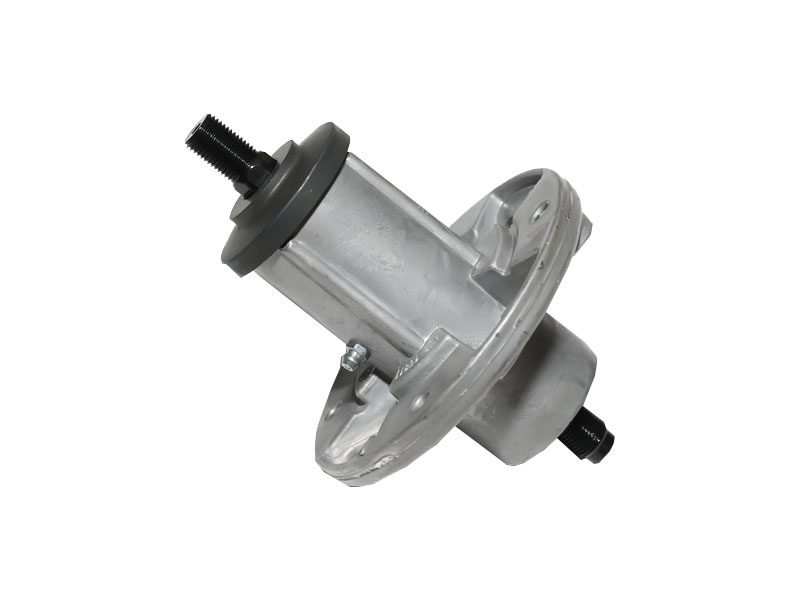
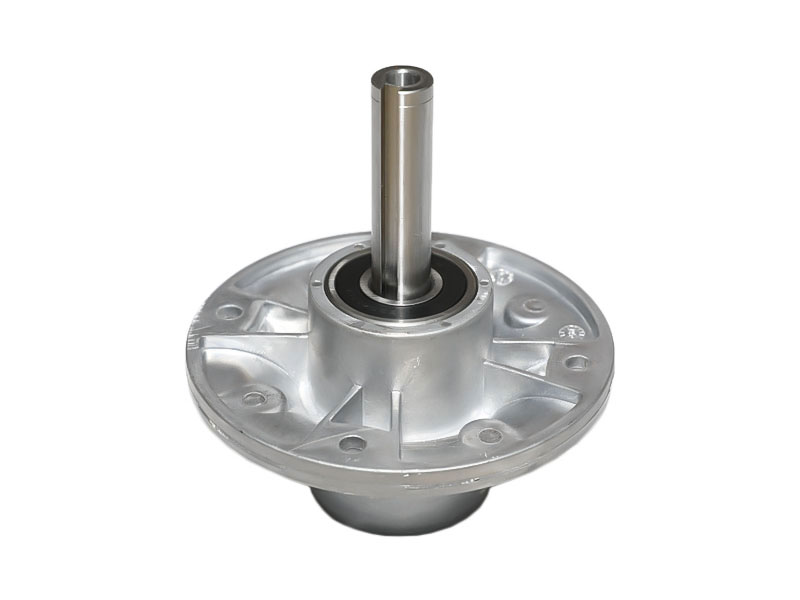
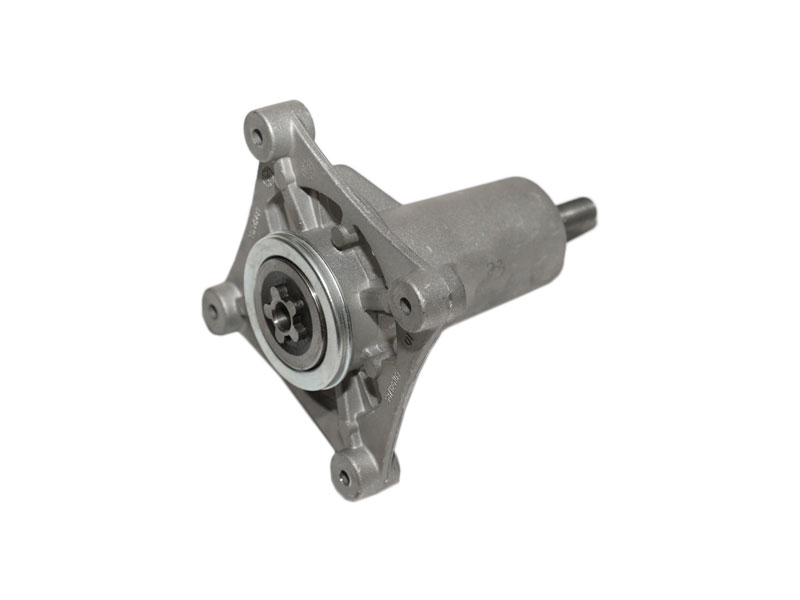
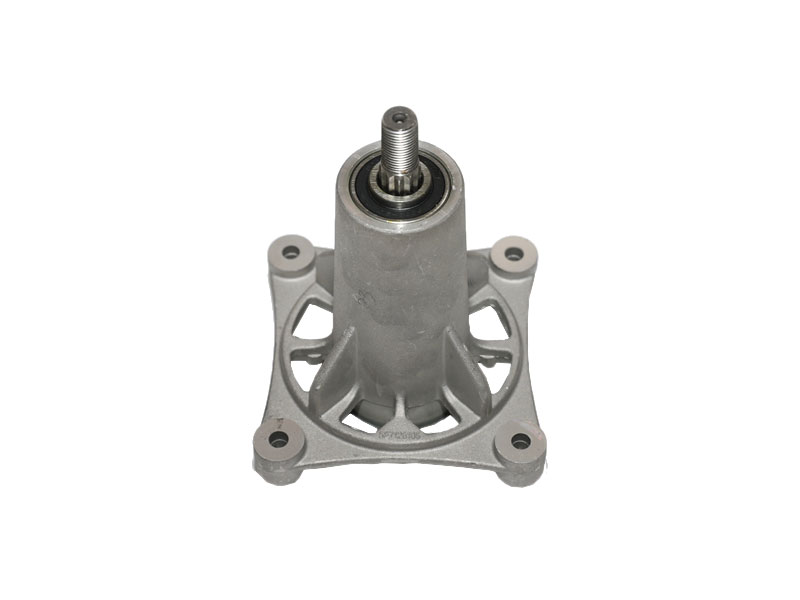
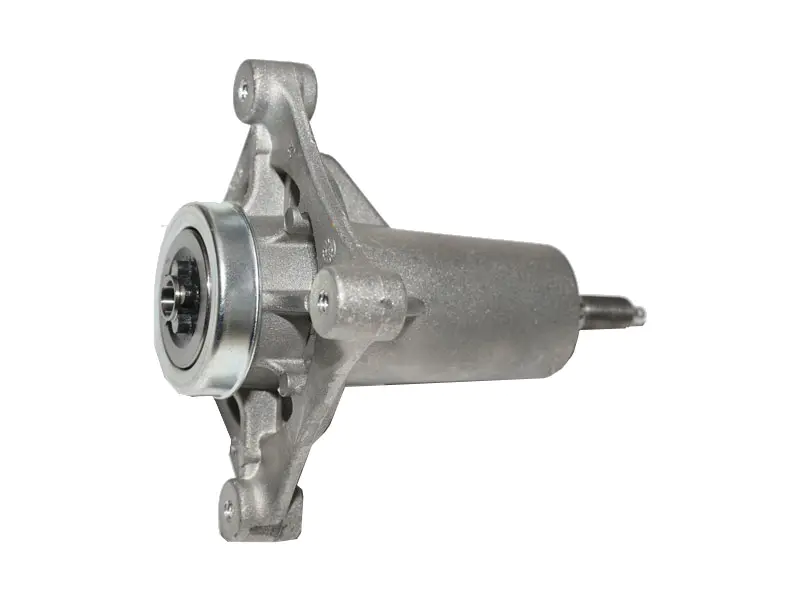
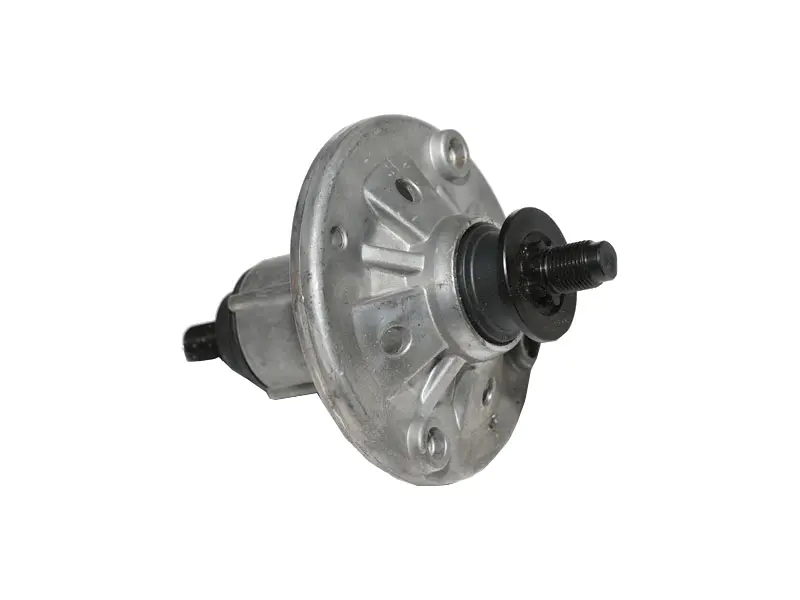
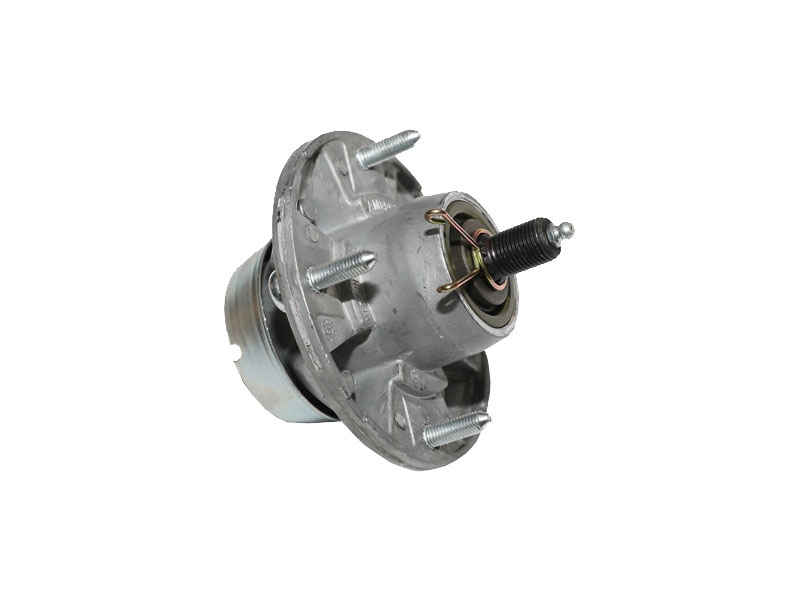
A lawn mower spindle acts as the central pivot point for the cutting blade. It consists of a housing, a shaft, bearings, and often a grease fitting or seal system. During a standard eight-hour workday, a commercial mower spindle can rotate over 1.8 million times. This constant motion generates immense heat and friction. Furthermore, the spindle must absorb the shock of the blade striking obstacles such as rocks, thick roots, or uneven turf.
When a spindle begins to fail, the symptoms are often progressive. Initial signs include a slight increase in deck vibration or a subtle change in the pitch of the mower’s sound. If left unaddressed, this leads to uneven cutting heights, accelerated belt wear, and eventually, catastrophic bearing failure that can damage the mower deck itself.
Material Analysis: Cast Iron vs. Aluminum Housings
One of the most significant debates in spindle design is the choice of housing material. Most original equipment manufacturers (OEM) and aftermarket suppliers utilize either cast iron (often ductile iron) or aluminum alloys. Each material offers distinct advantages depending on the application.
Cast Iron Spindle Housings
Cast iron is the gold standard for heavy-duty commercial mowers. Ductile iron, specifically, provides superior strength and fatigue resistance.
- Durability: Cast iron is significantly more resistant to impact. If a blade hits a solid object, a cast iron housing is less likely to crack or deform.
- Heat Dissipation: While aluminum conducts heat faster, the sheer mass of a cast iron housing allows it to act as a heat sink, maintaining more stable temperatures during prolonged use.
- Vibration Dampening: The density of iron helps absorb harmonic vibrations, leading to a smoother operation and less wear on the deck shell.
Aluminum Spindle Housings
Aluminum housings are common in residential and light commercial equipment where weight and cost are primary considerations.
- Weight Reduction: Aluminum is much lighter than iron, which can slightly improve the fuel efficiency and maneuverability of smaller mowers.
- Corrosion Resistance: Aluminum naturally forms a protective oxide layer, making it highly resistant to rust in high-moisture environments.
- Cost-Effectiveness: For non-commercial users, aluminum provides a reliable performance at a lower price point.
Technical Comparison of Housing Materials
| Feature | Cast Iron (Ductile) | Aluminum Alloy |
|---|---|---|
| Tensile Strength | High | Medium |
| Impact Resistance | Excellent | Moderate |
| Weight | Heavy | Light |
| Common Application | Commercial / Zero-Turn | Residential / Push Mower |
| Vibration Absorption | Superior | Moderate |
| Cost | Higher | Lower |
Bearing Configurations and Load Handling
While the housing provides the structure, the bearings determine the spindle’s lifespan. There are two primary bearing types used in modern spindle assemblies: sealed ball bearings and tapered roller bearings.
Sealed Ball Bearings
Most standard spindles use deep-groove ball bearings (such as the 6205-2RS series). These are often “maintenance-free,” meaning they are lubricated at the factory and sealed to prevent debris entry. They are excellent for high-speed rotation but have limited capacity for extreme axial loads (up to-and-down movement).
Tapered Roller Bearings
Tapered roller bearings are designed to handle both radial (spinning) and axial (thrust) loads simultaneously. They offer up to 50% more load capacity than standard ball bearings. These are typically found in high-end commercial spindles and require regular greasing via a zerk fitting.
Maintenance Protocols for Maximum Longevity
To prevent premature failure, a rigorous maintenance schedule is required. This is especially true for greaseable spindles, which are designed to have old, contaminated grease pushed out by fresh lubricant.
- Daily Inspection: Before operation, the spindle should be checked for any “play” or wobbling. This can be done by safely attempting to move the blade or pulley by hand (while the engine is off).
- Lubrication Intervals: For commercial use, spindles should be greased every 25 to 50 hours of operation. In high-moisture areas or when cutting dewy grass, more frequent greasing is necessary to displace water.
- Cleaning the Deck: Grass clippings trap moisture against the spindle housing, which can lead to seal degradation. Cleaning the top of the mower deck after each use prevents “hot spots” where heat cannot escape the housing.
Identifying Signs of Spindle Failure
Early detection of a failing spindle can save hundreds of dollars in repair costs. Operators should be trained to look for the following “red flag” indicators:
- Excessive Heat: After a period of use, if one spindle housing is significantly hotter than the others, the internal bearings are likely experiencing high friction.
- Unusual Noise: A high-pitched whine or a grinding sound usually indicates that the bearing races have become pitted or the lubricant has failed.
- Uneven Cut: If the mower is leaving a “strip” of uncut grass or if the cut height is inconsistent across the deck, the spindle shaft may be bent or the bearings may have excessive vertical play.
The Impact of Spindle Quality on Cutting Performance
A high-quality spindle ensures that the blade remains perfectly perpendicular to the ground and parallel to the other blades in a multi-blade deck. If a spindle is even slightly misaligned due to wear or a bent shaft, the “tip speed” of the blade is compromised. This results in ragged grass tips, which turn brown and leave the lawn susceptible to disease. For professional turf management, the precision of the spindle is as important as the sharpness of the blade.
FAQ
1. How do I know if I should choose a greaseable or a maintenance-free spindle?
Maintenance-free spindles are ideal for residential users who prefer convenience. However, for commercial operations, greaseable spindles are preferred because they allow the operator to flush out moisture and contaminants, significantly extending the life of the unit in harsh conditions.
2. Can I replace a single spindle, or should I replace all of them on the deck at once?
While you can replace a single spindle, it is often recommended to inspect all spindles when one fails. Since they are usually the same age and have been subjected to the same workload, if one bearing has failed, the others may be nearing the end of their service life.
3. What causes a spindle shaft to bend?
The most common cause is the blade striking a fixed object like a stump, rock, or curb. Even a minor impact at high RPM can exert enough force to bend the steel shaft or crack the housing.
4. Why is my new spindle making a humming sound?
A humming sound in a new spindle could indicate that the belt is too tight, putting excessive lateral load on the bearings, or that the spindle was not properly greased at the factory. Ensure the pulley is aligned and the belt tension is within manufacturer specifications.
5. How often should I check the torque on the spindle mounting bolts?
Vibration can loosen mounting bolts over time. It is a best practice to check the torque settings every 100 hours of operation or during your seasonal tune-up to ensure the spindle remains securely seated against the deck.
References
- Standard Specification for Ductile Iron Castings, ASTM International.
- Rolling Bearing Load Ratings and Fatigue Life, International Organization for Standardization (ISO).
- Mechanical Design of Power Transmission Systems, Journal of Engineering and Technology.
- Turfgrass Management and Equipment Maintenance, Professional Landcare Network (PLANET).
- Tribology in Agricultural Machinery: Bearing Lubrication and Wear, University of Agricultural Sciences Research.