English
 中文简体
中文简体 Español
 svenska



Content
- 1 Signs of a Bad Spindle on Your Lawn Mower
- 2 Lawn Mower Spindle Assembly Construction
- 3 Zero Turn Mower Spindle Specifics
- 4 Lawn Mower Spindle Repair Procedures
- 5 Preventive Maintenance and Service Intervals
- 6 Replacement versus Repair Economics
- 7 Troubleshooting Specific Symptoms
- 8 Safety Considerations for Spindle Service
Signs of a Bad Spindle on Your Lawn Mower
A failing lawn mower spindle manifests through distinct symptoms that progress from subtle performance degradation to catastrophic mechanical failure. Recognizing these warning signs early prevents collateral damage to blades, decks, and drive systems. The most immediate indicator involves unusual noise during blade engagement, specifically grinding, squealing, or rattling sounds emanating from beneath the deck that differ from normal engine and blade aerodynamic noise.
Visual and operational symptoms provide additional diagnostic evidence. Excessive vibration transmitted through the operator platform, particularly at specific engine speeds, suggests spindle imbalance from bearing wear or bent shafts. Uneven cutting patterns leaving strips of uncut grass between blades indicate one or more spindles failing to maintain proper blade speed or alignment. In advanced failure stages, visible blade wobble or physical oil leakage around spindle housings confirms internal bearing degradation requiring immediate attention to prevent deck damage or blade detachment.
Lawn Mower Spindle Assembly Construction
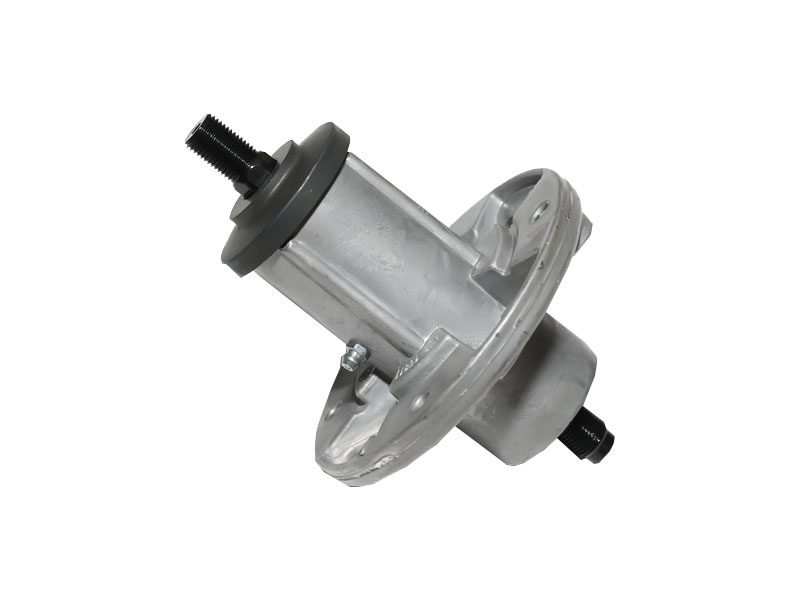
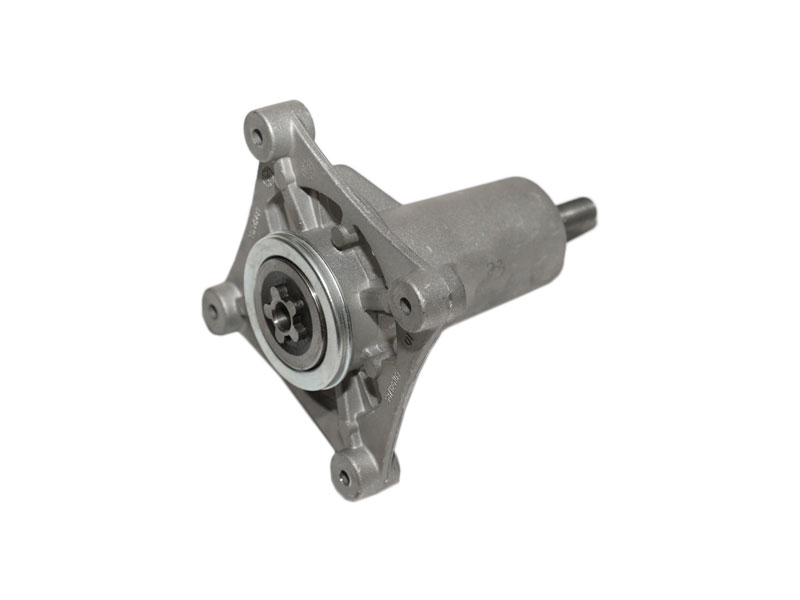
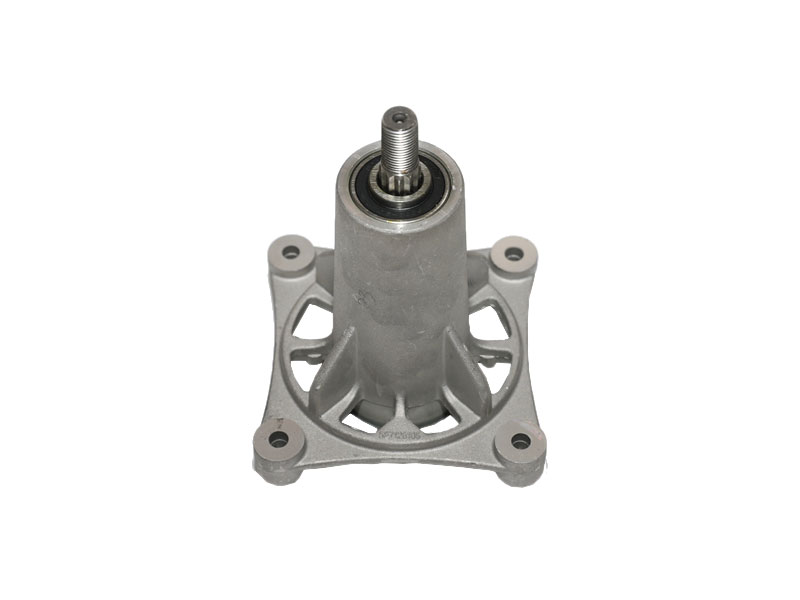
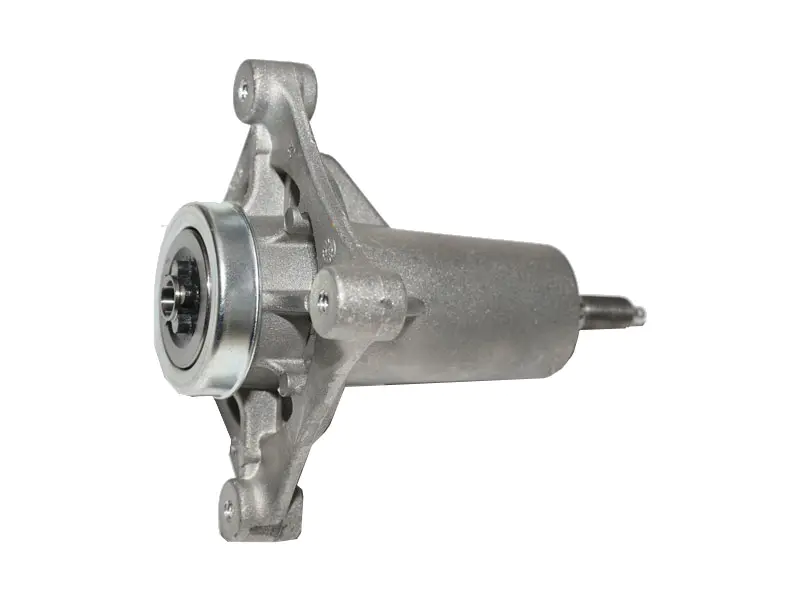
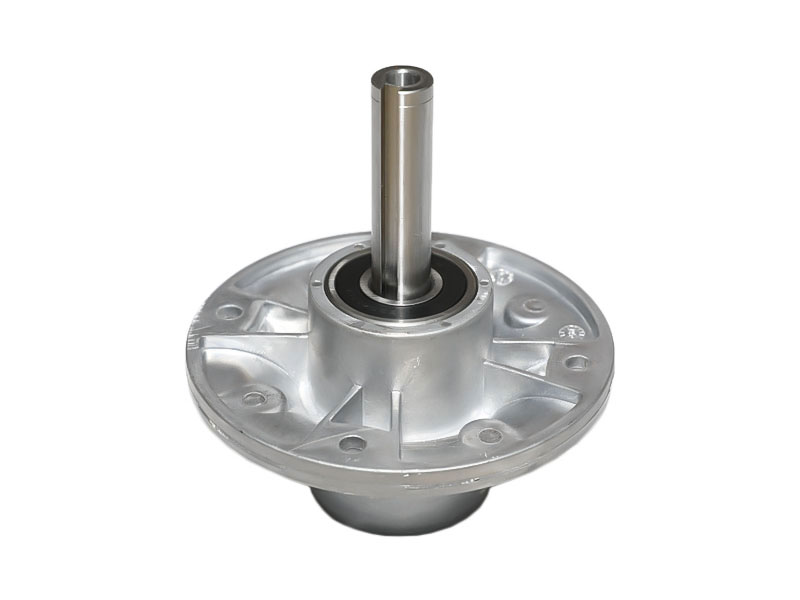
Understanding spindle assembly architecture explains failure mechanisms and guides repair decisions. A typical lawn mower spindle assembly integrates multiple components into a sealed rotating system supporting blade attachment and power transmission.
| Component | Material | Function | Common Failure Mode |
|---|---|---|---|
| Housing | Cast aluminum or steel | Structural support and sealing | Cracking from impact |
| Shaft | Steel alloy | Power transmission and blade mount | Bending from blade impact |
| Bearings | Steel with seals | Radial and thrust load support | Wear from contamination |
| Pulley | Cast iron or steel | Belt drive interface | Bore wear or cracking |
| Blade Bolt | Grade 8 steel | Blade retention | Shearing from overload |
| Seals | Rubber or synthetic | Contamination exclusion | Hardening and leakage |
Bearing Configuration Types
Residential lawn mower spindles typically utilize single-row deep groove ball bearings rated for moderate radial loads and occasional thrust loads from blade engagement. Commercial and zero turn mower spindle assemblies often employ tapered roller bearings or paired angular contact bearings managing higher sustained loads and frequent directional changes. Bearing bore diameters range from 17mm to 25mm for residential units and 30mm to 40mm for heavy-duty commercial applications, with corresponding load capacity differences of 300% or greater.
Zero Turn Mower Spindle Specifics
Zero turn mower spindles operate under more severe conditions than standard lawn tractor spindles, requiring enhanced durability and precision. The higher ground speeds of zero turn machines, typically 8-12 mph versus 5-7 mph for lawn tractors, increase blade tip speeds and centrifugal forces on spindle components.
Commercial Duty Requirements
Zero turn mower spindles utilize larger diameter shafts, typically 25mm to 30mm, with reinforced housings and commercial-grade bearings rated for 1,000+ hours of operation. Many designs incorporate grease fittings enabling periodic lubrication absent in sealed residential spindles. The blade attachment interface often features splined or keyed connections rather than simple tapered fits, preventing blade slippage under high-torque commercial cutting conditions.
Deck Mounting Variations
Zero turn mower decks employ various spindle mounting configurations including top-mount, bottom-mount, and through-deck designs. Top-mount spindles attach from above with bolts accessible without deck removal, facilitating faster maintenance. Bottom-mount designs require deck removal for spindle access but offer superior structural rigidity. Understanding your specific mounting type determines repair procedure complexity and tool requirements.
Lawn Mower Spindle Repair Procedures
Spindle repair ranges from simple bearing replacement to complete assembly overhaul depending on component condition and economic considerations.
Bearing Replacement Process
Disassembly begins with deck removal and blade detachment, followed by pulley removal using pullers to prevent shaft damage. Housing disassembly reveals bearing arrangements typically press-fit onto shafts and into housings. Hydraulic presses or bearing pullers remove worn bearings without scoring shaft surfaces. Replacement bearings must match original specifications including bore diameter, outer diameter, width, and seal type. Installation requires press tools applying force to bearing races rather than rolling elements, with shafts and housings cleaned to interference fit tolerances of 0.01-0.03mm.
Shaft Inspection and Straightening
Lawn mower blade spindle shafts experiencing blade impact events may develop bends exceeding 0.1mm runout, causing vibration and premature bearing wear. Dial indicator measurement at multiple points identifies bend locations. Minor bends under 0.5mm deviation may be corrected using hydraulic presses with V-block supports, though work-hardened shafts require annealing before straightening to prevent fracture. Shafts with cracks, significant diameter reduction at bearing seats, or bends exceeding 1.0mm require replacement.
Housing Repair and Replacement
Cast aluminum housings developing cracks from impact or fatigue may be repaired using TIG welding with appropriate aluminum filler rod, followed by re-machining of bearing bores to original specifications. Steel housings accommodate welding more readily but require rust treatment and repainting. Housing bores worn oversize from bearing spin can be sleeved with steel inserts or repaired with specialized polymer bearing mount compounds restoring interference fit requirements.
Preventive Maintenance and Service Intervals
Systematic maintenance extends spindle service life from typical 200-400 hours to 600+ hours, reducing total ownership costs and preventing mid-season failures.
Lubrication Protocols
Greaseable spindles require service every 25 operating hours or annually, whichever occurs first. Lithium-complex greases with NLGI 2 consistency and extreme pressure additives suit high-load spindle applications. Grease quantities of 30-50 grams per spindle purge contaminated old grease through relief ports while filling bearing cavities. Over-greasing damages seals and attracts debris, while under-greasing accelerates wear. Sealed spindles lack lubrication points and rely on factory fill for their service life.
Blade Balance and Inspection
Unbalanced blades create cyclic loading accelerating bearing fatigue and shaft bending. Static balancing using blade balancers ensures center of mass alignment with rotational axis, with acceptable imbalance under 15 gram-centimeters for standard blades. Blade inspection identifies cracks, particularly at mounting holes and along edges, that could result in catastrophic blade failure. Sharpening practices must maintain equal material removal from both blade ends to preserve balance.
Deck Cleaning and Protection
Grass accumulation around spindle housings retains moisture promoting corrosion and seal degradation. Post-mowing cleaning with compressed air or water spray removes debris, followed by complete drying before storage. Rust-inhibiting coatings on housing exteriors and shaft surfaces provide additional protection, particularly for machines stored outdoors or in humid environments.
Replacement versus Repair Economics
Cost analysis guides decisions between spindle repair and complete replacement, considering component pricing, labor requirements, and reliability expectations.
Component Cost Analysis
Complete spindle assemblies for residential mowers range from $40 to $120 depending on brand and specifications. Individual bearings cost $8 to $25 each, with most spindles requiring two bearings. Shaft replacements range $15 to $40, while housing components cost $20 to $60. For standard residential spindles, complete replacement often proves economically favorable when bearing replacement requires significant disassembly labor or when multiple components show wear.
Commercial Spindle Considerations
Heavy-duty zero turn mower spindles with replacement costs of $150 to $400 justify more extensive repair efforts. Rebuild kits containing bearings, seals, and hardware for $50 to $100 enable economical restoration of otherwise sound assemblies. The higher initial investment in commercial spindles correlates with rebuildable designs featuring serviceable components rather than sealed disposable construction common in residential equipment.
Troubleshooting Specific Symptoms
Systematic diagnosis connects specific operational symptoms to underlying spindle failures, enabling targeted repairs.
Noise Diagnosis
Squealing during blade engagement indicates dry or failing bearings requiring immediate lubrication or replacement. Grinding noises suggest bearing cage failure or debris ingress causing metal-to-metal contact. Rattling at idle that intensifies with speed often indicates loose blade mounting or worn blade bolt threads. Knocking sounds synchronous with blade rotation signal cracked housings or severely bent shafts requiring immediate shutdown to prevent catastrophic failure.
Cut Quality Issues
Streaking or uneven cut height across the deck width indicates one spindle rotating slower than others due to bearing drag or belt slip. Scalping in specific deck areas suggests spindle housing looseness allowing deck level changes during operation. Vibration-induced operator discomfort correlates with spindle imbalance from bent shafts or uneven blade wear, measurable as runout exceeding 0.5mm at blade tips.
Safety Considerations for Spindle Service
Spindle maintenance involves significant safety hazards requiring proper procedures and protective equipment.
Mechanical Hazards
Blade removal requires securing blades from rotation using blade holders or locking tools preventing sudden movement. Spring-loaded belt tensioners can release unexpectedly during disassembly; blocking tensioner travel prevents pinch injuries. Spindle shafts under belt tension load during removal; gradual tension release prevents component projection. Proper lifting techniques for mower decks, typically weighing 40-80 kg, prevent back strain.
Chemical and Environmental Exposure
Used grease may contain metal particles from bearing wear; nitrile gloves prevent skin exposure during cleaning. Solvents used for degassing require adequate ventilation and respiratory protection. Sharp metal burrs on damaged shafts and housing edges cause lacerations requiring cut-resistant gloves during inspection and handling.