English
 中文简体
中文简体 Español
 svenska



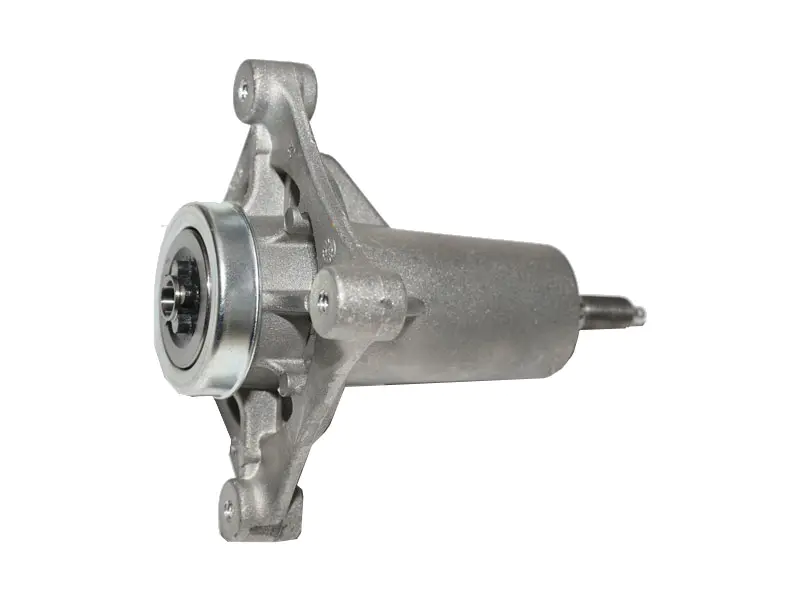
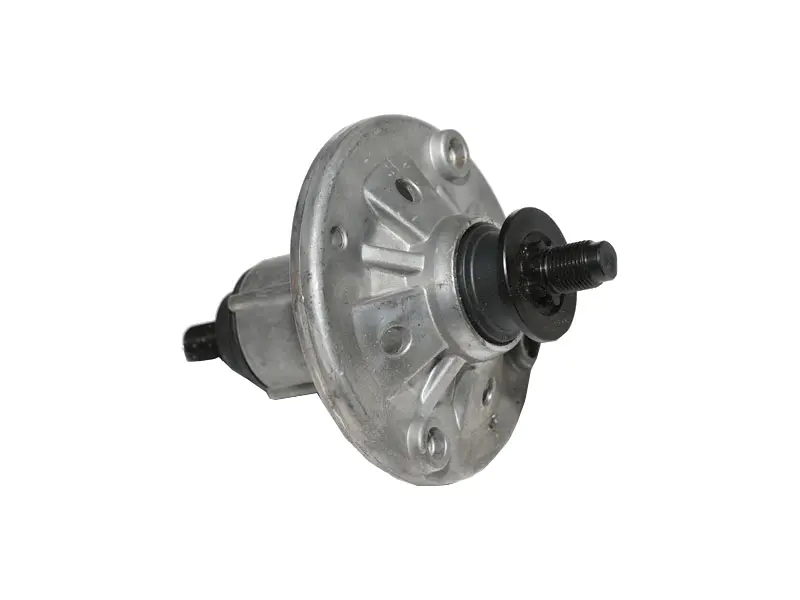
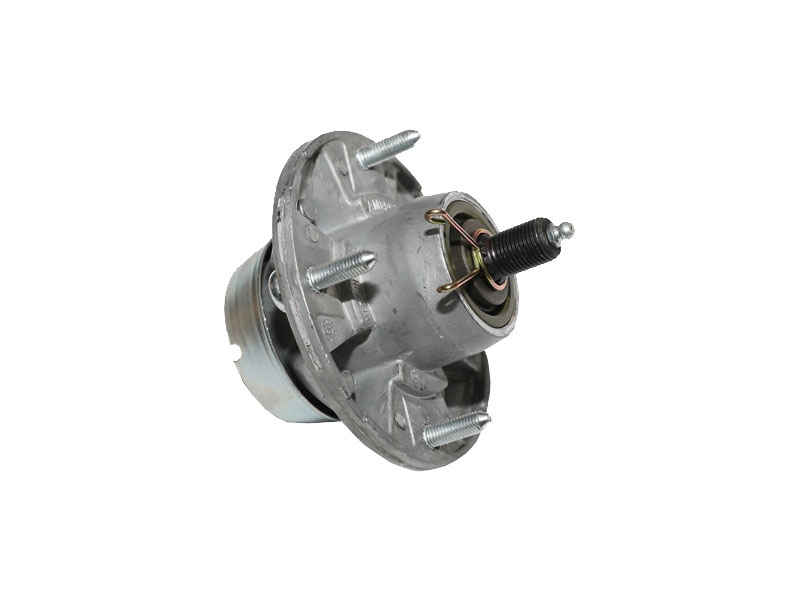
Effective lawn maintenance depends on the precision and durability of a mower’s cutting deck, where the lawn mower spindle serves as the critical mechanical heart. For B2B buyers, distributors, and large-scale manufacturing enterprises, selecting the right spindle is not merely a matter of compatibility but a strategic decision affecting machine longevity, maintenance overhead, and end-user satisfaction. This article provides a comprehensive technical comparison of various spindle designs, materials, and bearing configurations to assist in professional procurement.
Content
- 1 The Role of Spindle Assemblies in Cutting Efficiency
- 2 Housing Materials: Cast Iron vs. Aluminum Alloys
- 3 Bearing Configurations: Ball Bearings vs. Tapered Roller Bearings
- 4 Shaft Material and Precision Engineering
- 5 Mounting Interfaces: Star vs. Round vs. Hex
- 6 Maintenance Systems: Greaseable vs. Maintenance-Free
- 7 Quality Control and Manufacturing Standards
- 8 FAQ
- 9 References
The Role of Spindle Assemblies in Cutting Efficiency
A spindle assembly is the central hub that transfers rotational energy from the mower’s engine, via a belt and pulley system, to the cutting blades. In a high-performance commercial mower, a spindle may rotate over 1.8 million times during an eight-hour shift. This extreme operational stress requires the assembly to manage significant radial and axial loads while maintaining perfect blade alignment. Any deviation or “wobble” in the spindle shaft leads to uneven grass cutting, increased vibration, and accelerated wear on the drive belts.
Housing Materials: Cast Iron vs. Aluminum Alloys
The housing is the protective enclosure for the internal bearings and shaft. The choice of material significantly impacts the spindle’s shock resistance and thermal dissipation.
- Cast Iron Housings: Predominantly used in heavy-duty commercial and industrial mowers. Cast iron offers superior structural integrity and high shock-load strength. It is less likely to crack or deform when the mower blade strikes a solid object like a rock or curb. Its density also helps in dampening vibrations.
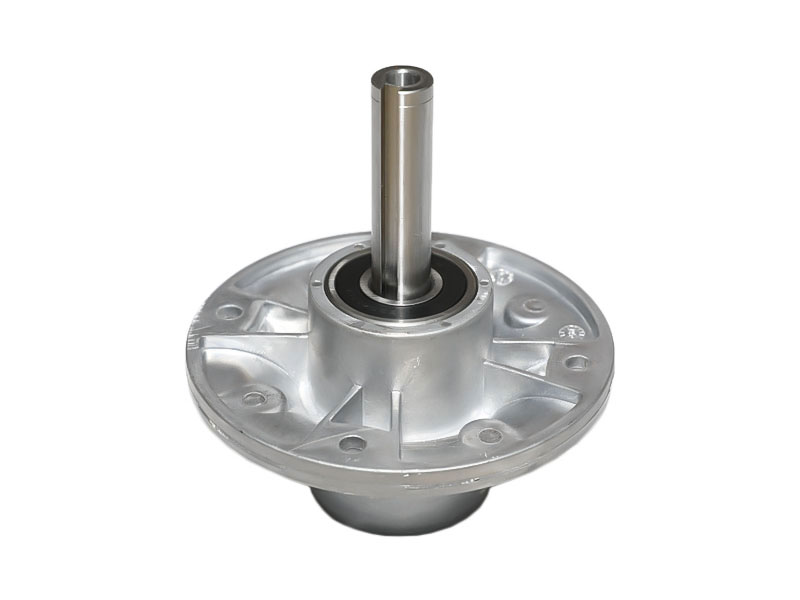
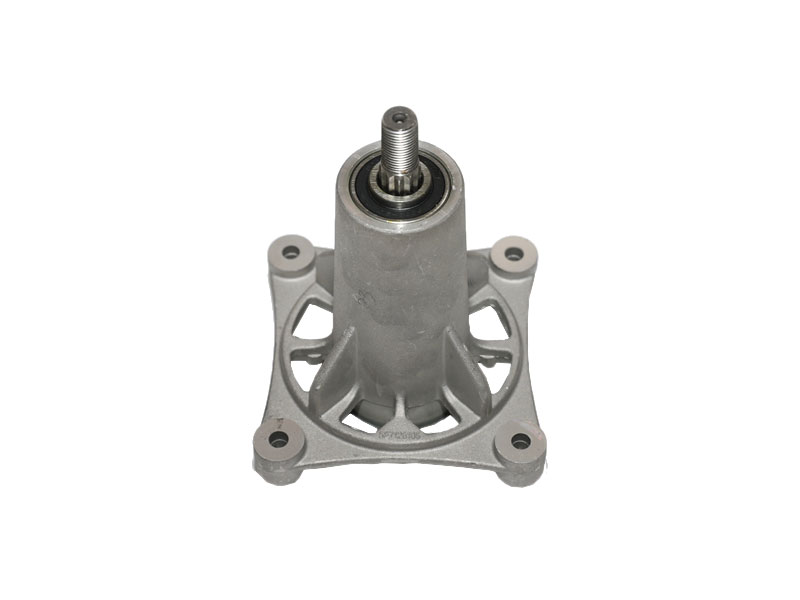
- Aluminum Alloy Housings: Common in residential and light-commercial models. Aluminum is valued for its lightweight properties and excellent heat dissipation. High-grade die-cast aluminum spindles are often reinforced with ribbing to improve strength while keeping the overall deck weight manageable.
Bearing Configurations: Ball Bearings vs. Tapered Roller Bearings
The type of bearing used determines the load capacity and service life of the spindle assembly.
| Bearing Type | Load Characteristics | Maintenance Profile | Typical Application |
|---|---|---|---|
| Deep Groove Ball Bearings | Efficient for radial loads; limited axial capacity. | Often “Sealed for Life” (Maintenance-Free). | Residential and light-duty commercial mowers. |
| Tapered Roller Bearings | High capacity for both radial and heavy thrust (axial) loads. | Typically greaseable; requires periodic lubrication. | Industrial-grade and high-acreage zero-turn mowers. |
| Double-Row Bearings | Increased stability and reduced shaft deflection. | Available in both sealed and greaseable versions. | Mid-range commercial decks. |
Shaft Material and Precision Engineering
The spindle shaft is the component that experiences the highest torque. Most professional-grade spindles utilize high-carbon steel (such as SUJ2) or martensitic stainless steel. These materials undergo induction hardening or quenching and tempering to achieve a surface hardness of 56HRC to 60HRC. Precision grinding is then applied to achieve a surface roughness of Ra0.4 or less, ensuring a perfect fit with the bearing inner race and reducing friction-induced heat.
Mounting Interfaces: Star vs. Round vs. Hex
The connection between the spindle and the blade must be secure to prevent slippage.
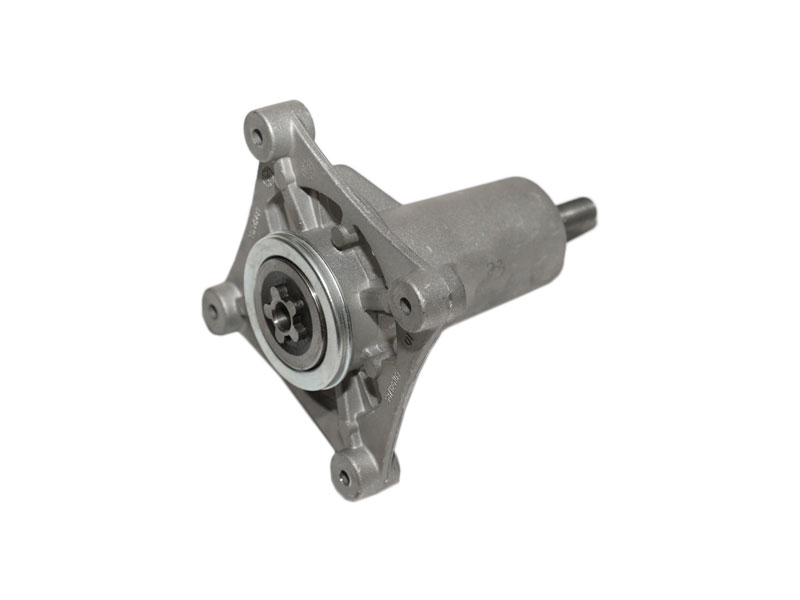
- Star Pattern (5-Point, 6-Point, 7-Point): This design provides a positive mechanical lock, which is excellent for high-torque applications. It prevents the blade from spinning on the shaft even under heavy load.
- Round/Keyed Shafts: A traditional design where a woodruff key or a flat side on the shaft ensures alignment. It is easy to manufacture and widely used in universal replacement markets.
- H-Pattern / Bow Tie: Often found in specialized OEM designs to ensure that only specific, proprietary blades can be fitted to the spindle.
Maintenance Systems: Greaseable vs. Maintenance-Free
The debate between greaseable and “sealed-for-life” spindles is central to fleet management.
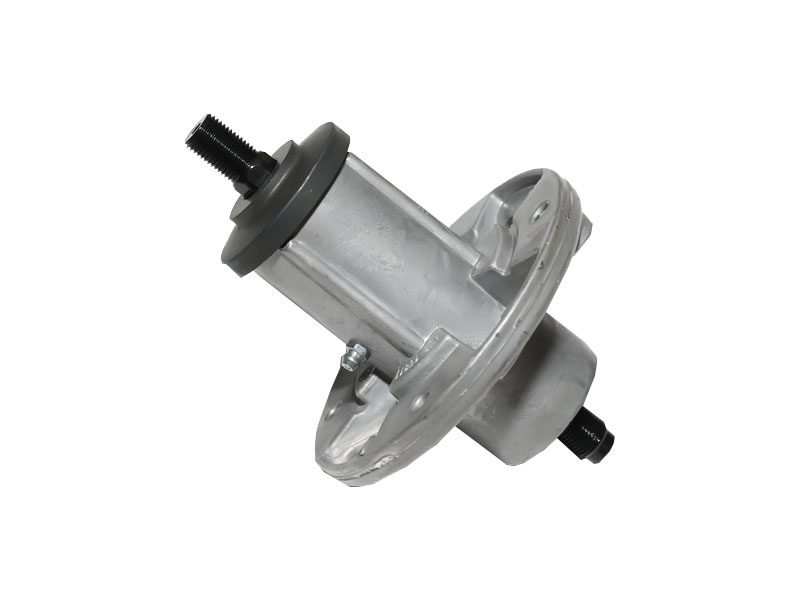
- Greaseable Spindles: Equipped with a Zerk fitting (grease nipple). They allow for the purging of contaminants (moisture and dust) by pumping in fresh grease. This is the preferred choice for commercial operators who work in dusty or wet environments.
- Maintenance-Free Spindles: These use high-quality synthetic grease and advanced multi-lip seals to prevent ingress. They are designed to eliminate labor costs associated with regular greasing but must be replaced entirely once the internal lubricant degrades or the seal fails.
Quality Control and Manufacturing Standards
As a global supplier, adhering to ISO 9001:2015 standards is mandatory for ensuring consistency. High-quality manufacturing involves:
- Dynamic Balancing: Every spindle assembly must be balanced to minimize centrifugal forces at high RPM.
- Vibration Testing: Measuring the displacement and velocity of the shaft under load.
- Salt Spray Testing: For spindles intended for coastal or humid markets, the housing and hardware must resist corrosion.
FAQ
1. What are the signs that a spindle assembly needs replacement?
The most common indicators include excessive deck vibration, a loud grinding or squealing noise during operation, and an uneven “stepped” cut in the grass. Physically, if the pulley can be rocked back and forth by hand, the bearings are worn.
2. Can I replace the bearings instead of the entire spindle assembly?
Yes, for many professional housings (especially cast iron), the bearings and shaft can be pressed out and replaced. However, if the housing is cracked or the bearing seat is worn, the entire assembly must be replaced to ensure safety.
3. Why do some spindles have 4 mounting holes and others 3 or 6?
The mounting pattern depends on the mower deck’s design and the expected torque. More mounting bolts generally distribute the stress more evenly across the deck shell, reducing the risk of the deck metal tearing under impact.
4. How often should greaseable spindles be lubricated?
For commercial use, it is recommended to grease the spindles every 25 to 50 operational hours. In extremely dusty or wet conditions, some manufacturers recommend a daily purge of grease.
5. What is the difference between an OEM and a high-quality aftermarket spindle?
OEM spindles are built to the exact specifications of the mower brand. High-quality aftermarket spindles from reputable manufacturers often meet or exceed these specs, sometimes offering upgrades like improved seal designs or higher-grade grease.
References
- Mechanical Design of Agricultural Machinery, 4th Edition.
- ISO 9001:2015 Quality Management Systems Requirements for Manufacturing.
- Standard Specification for Carbon and Alloy Steel Forgings for Magnetic Retaining Rings for Turbine Generators (Context: High-speed rotational shaft standards).
- Bearing Selection Guide for Industrial Power Transmission.
- Metallurgical Analysis of Induction Hardened Shafting in Outdoor Power Equipment.