English
 中文简体
中文简体 Español
 svenska



In the world of high-accuracy machining, the spindle is the heart of the machine tool. Its ability to maintain structural rigidity and rotational accuracy under extreme thermal and mechanical loads depends entirely on the quality of its internal components. Precision Spindle Assembly Parts must be manufactured to sub-micron tolerances to ensure long-term reliability. For mechanical engineers and maintenance professionals, understanding the interaction between bearings, shafts, and sealing systems is vital for optimizing performance and minimizing downtime. This guide delves into the critical technical specifications of high-speed spindle bearing replacement and the essential CNC spindle maintenance checklist required for modern manufacturing.
Content
- 1 1. Critical Components of a Precision Spindle Assembly
- 2 2. The Science of Bearing Preload and Rigidity
- 3 3. Sealing Systems and Contamination Control
- 4 4. Predictive Maintenance and Technical Diagnosis
- 5 5. Conclusion: Precision as a Standard
- 6 Frequently Asked Questions (FAQ)
- 6.1 1. How often should high-speed spindle bearing replacement be performed?
- 6.2 2. What are the symptoms of incorrect spindle bearing preload adjustment?
- 6.3 3. Why is spindle runout measurement techniques critical for 5-axis machining?
- 6.4 4. Can spindle shaft straightening and repair save a damaged spindle?
- 6.5 5. Which spindle bearing types for CNC machines are best for heavy milling?
- 7 Industry References
1. Critical Components of a Precision Spindle Assembly
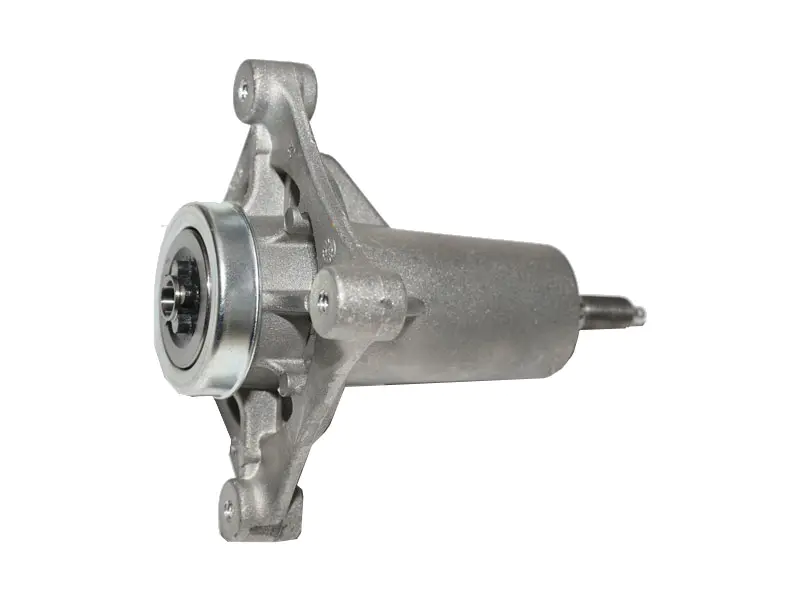
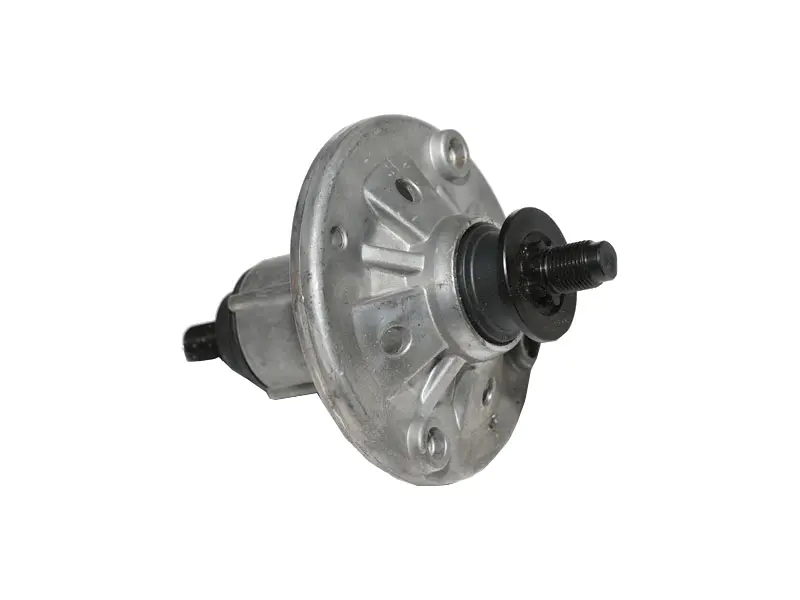
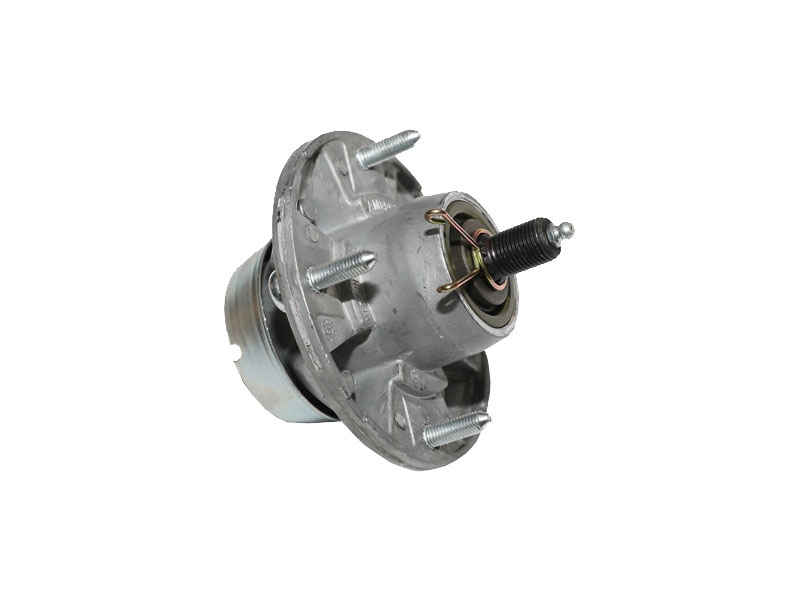
A standard Precision Spindle Assembly Parts kit consists of several interconnected elements, each serving a specific mechanical function. The shaft (or arbor) must exhibit high surface hardness and dimensional stability, while the housing must provide excellent damping characteristics. However, the most critical interface is the bearing set. For engineers, the choice between ceramic and steel balls significantly alters the spindle's maximum RPM and thermal profile. While steel bearings offer higher load-carrying capacity at lower speeds, ceramic hybrid bearings are the industry standard for high-speed applications due to their lower centrifugal forces and reduced heat generation.
Comparison: Steel vs. Ceramic Hybrid Bearings
When selecting spindle bearing types for CNC machines, engineers must balance load requirements against the desired thermal stability and speed ratings.
| Specification | Steel Ball Bearings | Ceramic Hybrid Bearings |
| Density (kg/m³) | 7,800 (Higher mass) | 3,200 (Lower mass) |
| Thermal Expansion | Standard (Requires complex cooling) | Low (Higher thermal stability) |
| Max RPM Capability | Moderate | High (30-50% increase) |
| Elastic Modulus | 210 GPa | 310 GPa (Higher rigidity) |
2. The Science of Bearing Preload and Rigidity
Achieving the correct spindle bearing preload adjustment is a sophisticated engineering task. Preload is the permanent axial load applied to a bearing to eliminate internal clearance and increase system rigidity. Too little preload leads to vibration and ""chatter"" during cutting, while excessive preload results in rapid heat buildup and premature failure. In high-precision environments, vibration analysis for spindle health is used to verify if the preload remains within the designed tolerance. Proper spindle parts assembly requires specialized hydraulic or mechanical tools to ensure that the contact angle of the bearing remains consistent throughout the duty cycle.
3. Sealing Systems and Contamination Control
Precision components are highly sensitive to particulate contamination and coolant ingress. Modern spindles utilize a combination of mechanical labyrinth seals and air-purging systems. While labyrinth seals rely on a complex physical path to prevent fluid entry, air seals create a positive pressure barrier that actively pushes contaminants away from the bearings. For engineers designing Precision Spindle Assembly Parts, the trade-off usually involves the complexity of the pneumatic system versus the simplicity of a non-contact seal. Effective sealing is the primary factor in extending the spindle bearing service life in harsh machining environments.
Comparison: Labyrinth Seals vs. Air Purge Seals
Labyrinth seals provide excellent friction-free protection for general use, but air purge systems are mandatory for environments with high coolant spray or fine dust.
| Feature | Labyrinth Sealing | Air Purge Sealing |
| Contact Type | Non-contact (Zero friction) | Non-contact (Active pressure) |
| Maintenance Level | Low | Moderate (Requires clean air supply) |
| Contaminant Resistance | Good (Physical barrier) | Superior (Active exclusion) |
4. Predictive Maintenance and Technical Diagnosis
To avoid catastrophic failure, a robust CNC spindle maintenance checklist must be implemented. This includes regular checks of the drawbar force, shaft runout, and thermal growth. Advanced facilities utilize spindle runout measurement techniques, such as using laser interferometers or high-precision dial indicators, to detect deviations as small as 0.002mm. If a deviation is found, it usually indicates that spindle shaft straightening and repair or a complete high-speed spindle bearing replacement is necessary to restore the machine's accuracy. Monitoring the ""signature"" of a spindle through vibration sensors allows for ""just-in-time"" maintenance, replacing parts only when wear is technically detected rather than on a fixed schedule.
Key Elements of the CNC Spindle Maintenance Checklist:
- Vibration Monitoring: Regular FFT analysis to detect bearing cage wear or unbalance.
- Lubrication Analysis: Ensuring grease or air-oil systems are delivering the correct volume.
- Clamping Force Test: Verifying the drawbar springs haven't fatigued over time.
- Runout Verification: Measuring the taper and face accuracy to ensure tool repeatability.
5. Conclusion: Precision as a Standard
The reliability of a Precision Spindle Assembly Parts system is the result of rigorous engineering and proactive maintenance. From the selection of spindle bearing types for CNC machines to the execution of spindle runout measurement techniques, every detail contributes to the final surface finish of the machined part. By prioritizing vibration analysis for spindle health and adhering to a professional CNC spindle maintenance checklist, manufacturers can ensure their high-speed spindles operate at peak efficiency for thousands of hours.
Frequently Asked Questions (FAQ)
1. How often should high-speed spindle bearing replacement be performed?
There is no fixed timeframe; it depends on the load, speed, and environment. However, using vibration analysis for spindle health can help predict failure 200-500 hours before it occurs, allowing for planned replacement.
2. What are the symptoms of incorrect spindle bearing preload adjustment?
Inadequate preload often manifests as poor surface finish and tool chatter. Over-preloading is usually identified by a rapid rise in spindle temperature (exceeding 60°C) shortly after startup.
3. Why is spindle runout measurement techniques critical for 5-axis machining?
In 5-axis machining, even a tiny runout at the spindle nose is magnified at the tool tip. Maintaining runout below 0.003mm is essential for geometric accuracy on complex curved surfaces.
4. Can spindle shaft straightening and repair save a damaged spindle?
Yes, if the deformation is within a certain limit. Professional repair involves stress-relieving the shaft and precision grinding the bearing seats to restore original concentricity.
5. Which spindle bearing types for CNC machines are best for heavy milling?
For heavy-duty, high-torque milling, steel tapered roller bearings or double-row cylindrical roller bearings are preferred due to their high radial load capacity compared to angular contact ball bearings.
Industry References
- ISO 1940-1: Mechanical vibration — Balance quality requirements for rotors in a constant (rigid) state.
- ANSI/ASME B5.54: Methods for Performance Evaluation of Computer Numerical Control Machining Centers.
- Bearing Technology Journal: Advanced Materials for High-Speed Machine Tool Spindles.
- Tribology International: Analysis of Lubrication and Thermal Effects in Precision Bearings.