English
 中文简体
中文简体 Español
 svenska



Content
What Lawn Mower Deck Spindles Do and Why They Fail
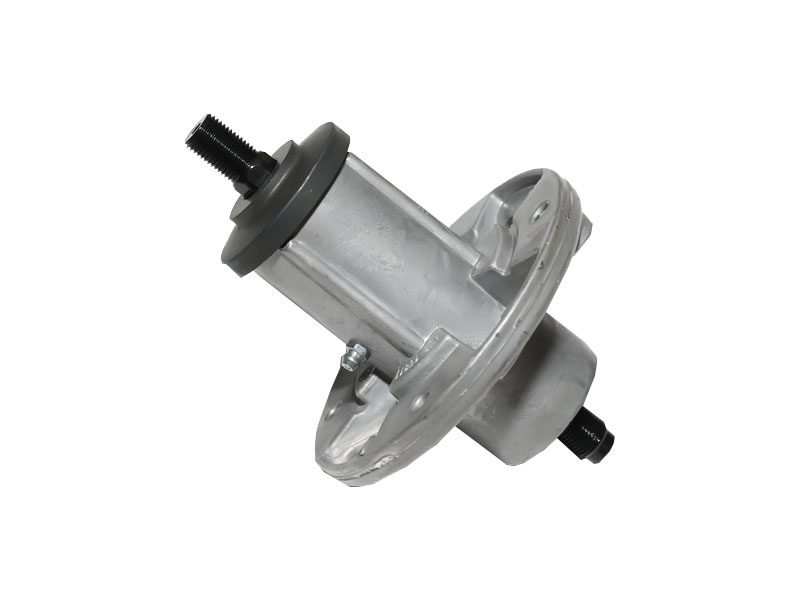
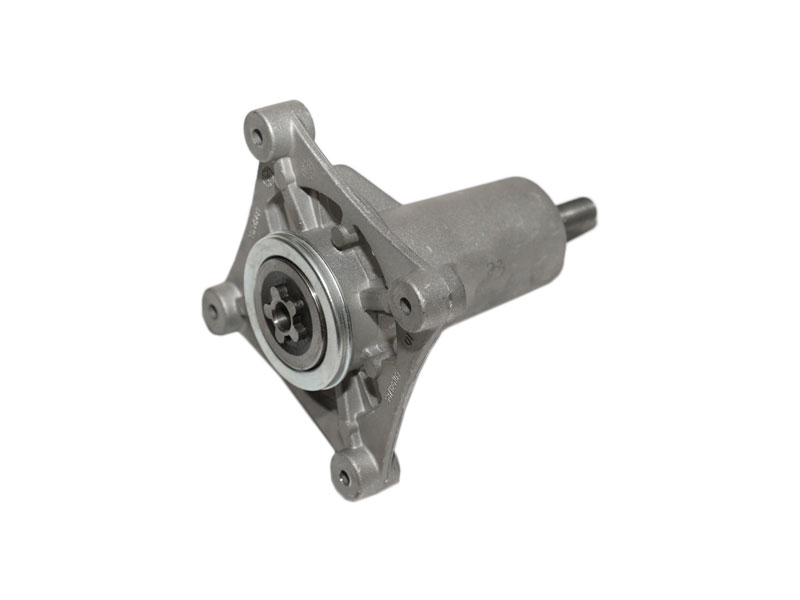
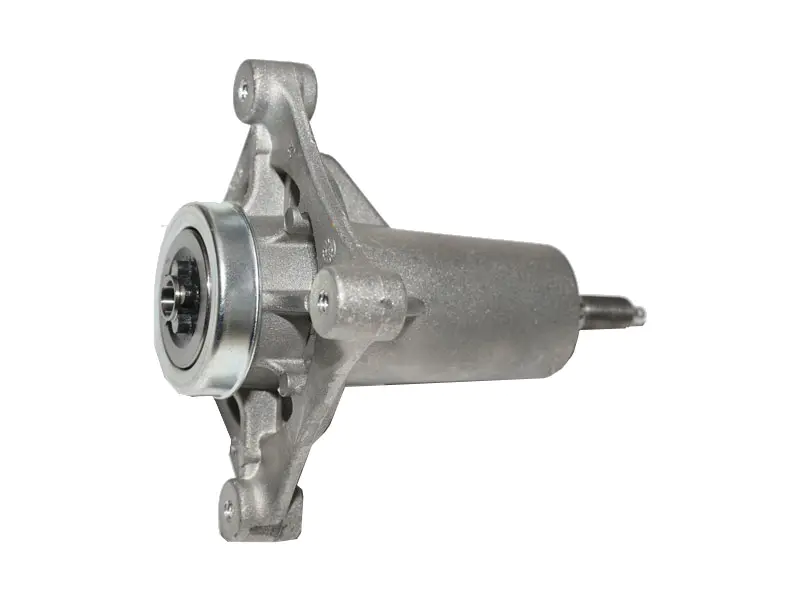
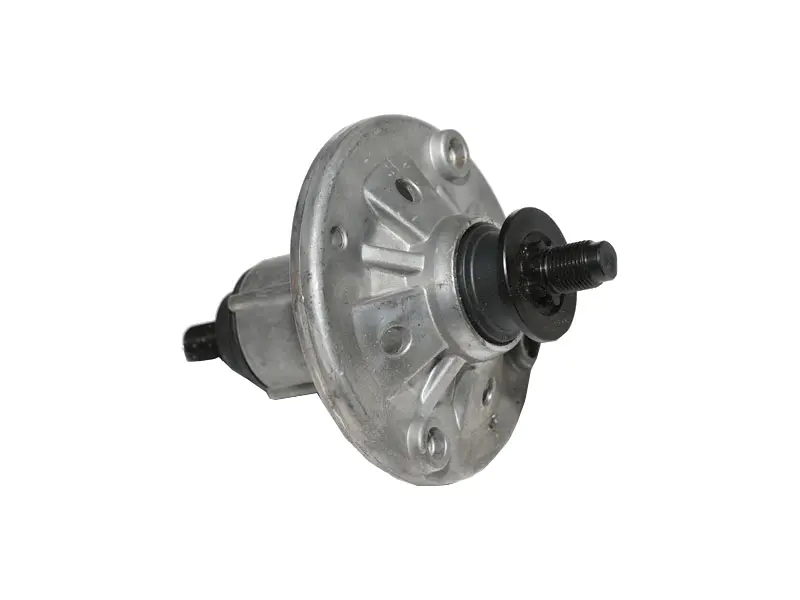
A lawn mower deck spindle is the rotating assembly that connects the mower blade to the deck and transfers power from the belt or electric motor to the cutting blade. Each spindle consists of a hardened steel shaft, one or two sealed or greaseable bearings housed in a cast iron or steel housing, and a blade mounting hub at the bottom. On a typical zero-turn or riding mower with a 48"–72" deck, there are two to four spindles—each driving one blade independently.
Spindles fail for predictable reasons: bearing wear from contamination or lack of lubrication, blade strike damage that bends the shaft, corrosion of the housing from consistent grass moisture exposure, and fatigue cracks in the shaft from repeated high-impact loads. A failing spindle typically announces itself through a loud squealing or grinding noise during operation, visible wobble in the blade, or vibration transmitted through the deck and handle. Left unaddressed, a seized or damaged spindle will destroy the drive belt, damage the deck shell, or cause the blade to detach at speed—a serious safety hazard.
Greaseable vs Maintenance Free Spindles: The Core Difference
Lawn mower deck spindles are manufactured in two fundamental configurations, and the choice between them affects both ongoing maintenance requirements and long-term service life.
Greaseable spindles use open or shielded bearings that require periodic lubrication through a grease zerk fitting. When properly maintained—typically greased every 25–50 operating hours or at the start of each mowing season—they can last the life of the machine. The tradeoff is that they depend entirely on the operator following a maintenance schedule. Skipped greasing intervals allow moisture and debris to reach the bearing races, accelerating wear dramatically. In commercial mowing environments, greaseable spindles are often preferred because maintenance schedules are followed consistently and the bearings can be re-lubricated in the field.
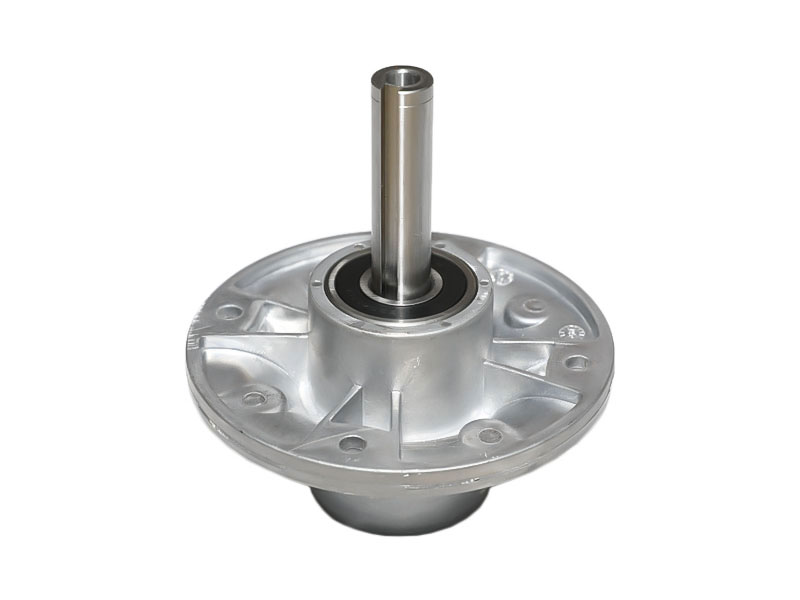
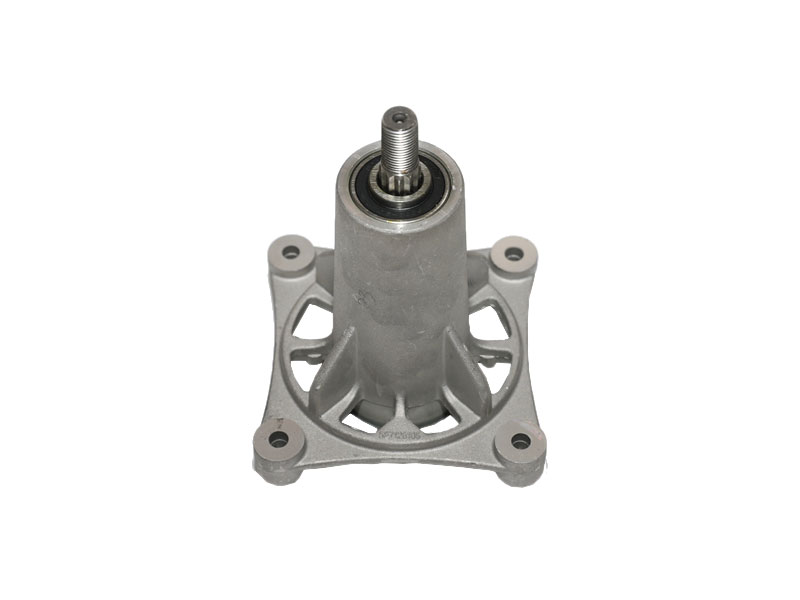
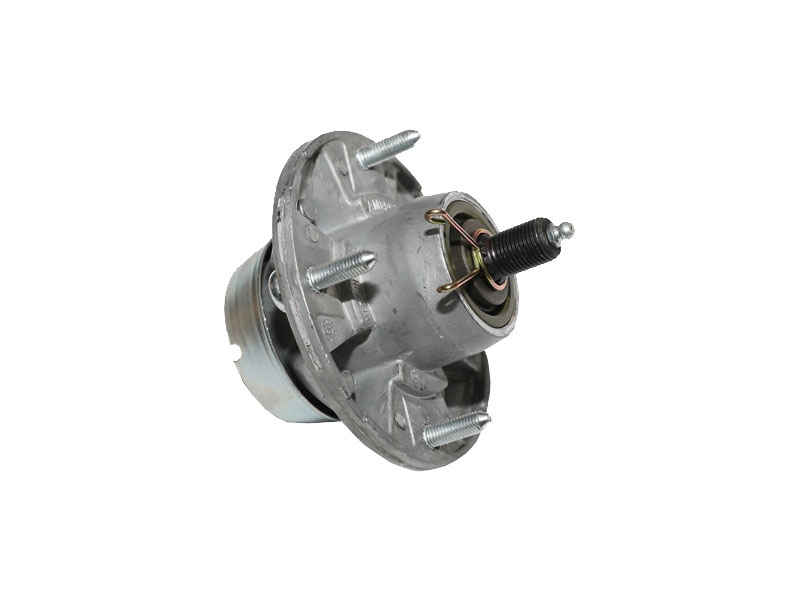
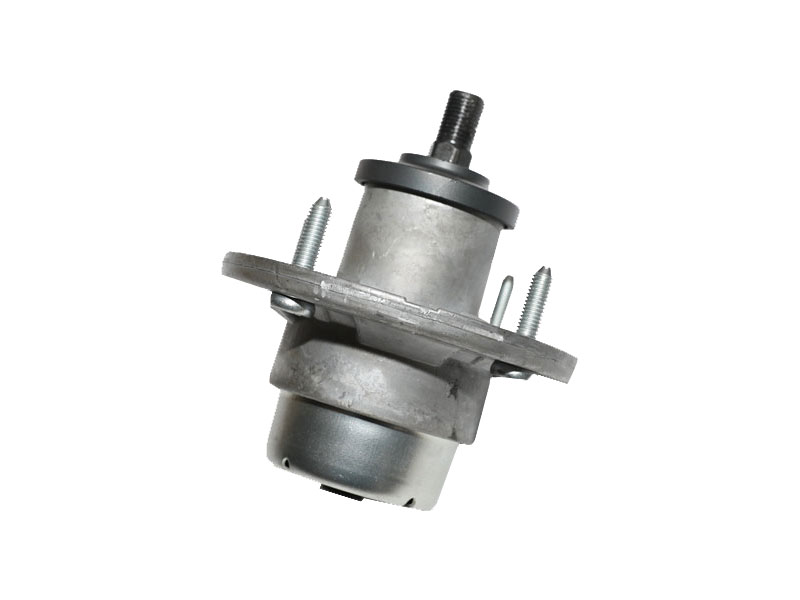
Maintenance free spindles (sometimes called sealed spindles or pre-lubricated spindles) use double-sealed ball bearings that are packed with grease at the factory and permanently sealed against contamination. There is no zerk fitting and no lubrication interval to track. The bearing runs on its factory grease charge for its entire service life, then is replaced as a complete spindle assembly when it wears out. For residential users who rarely follow a greasing schedule, a quality sealed spindle will almost always outlast a greaseable spindle that goes unserviced.
Peer Maintenance Free Spindles: What Sets Them Apart
Peer maintenance free spindles are a widely specified replacement option in the lawn and turf equipment aftermarket, known for their sealed bearing construction and broad OEM cross-reference coverage. The "Peer" designation refers to Peer Bearing Company, a bearing manufacturer whose sealed bearing assemblies are incorporated into spindle housings supplied to the replacement parts market under various brand labels.
What differentiates Peer bearing-equipped spindles in practice comes down to several construction details:
- Double-sealed bearing design: Both inner and outer faces of the bearing are sealed with contact seals, blocking grass clippings, water, and fine grit from reaching the bearing races—the primary failure mode for spindle bearings in mowing applications.
- Pre-packed grease charge: Bearings are lubricated with a high-temperature, water-resistant grease at the manufacturing stage, eliminating variability in field lubrication quality.
- Hardened steel shaft: The blade mounting shaft is heat-treated to resist bending from blade strikes and fatigue cracking from cyclic load.
- OEM-equivalent geometry: Replacement spindles using Peer bearings are typically manufactured to match OEM mounting bolt patterns, shaft diameter, and housing dimensions exactly, allowing direct bolt-on replacement without modification.
These spindles are commonly available as replacements for Husqvarna, Ariens, Gravely, Exmark, Scag, Ferris, Cub Cadet, and John Deere commercial and residential decks, among others. Cross-reference by OEM part number is the most reliable way to confirm fitment before purchase.
How to Diagnose a Bad Deck Spindle
Confirming a spindle problem before replacement avoids the cost of replacing a component that isn't actually failed. A systematic check takes under ten minutes:
- Disengage the blades and shut off the engine. Remove the ignition key and wait for all moving parts to stop completely before working under the deck.
- Remove the drive belt from the spindle pulley. This isolates the spindle from the drivetrain so you can evaluate it independently.
- Grab the blade (wearing heavy gloves) and attempt to rock it up and down. Any vertical play—movement perpendicular to the blade's rotation plane—indicates bearing wear. A healthy spindle should have zero vertical play. Side-to-side play in the rotation direction is normal due to blade mounting clearance.
- Spin the blade by hand and listen. A smooth, quiet rotation with no rough spots or grinding indicates a healthy bearing. Roughness, catches, or a gritty feel under rotation are bearing failure indicators.
- Inspect the shaft visually. Look for bends, cracks at the blade mounting hub, and corrosion pitting at the housing. A bent shaft must be replaced—straightening a hardened steel shaft is not a reliable field repair.
If multiple spindles are being evaluated, note that bearings on the same deck often wear at similar rates. If one spindle shows significant bearing wear and the deck has substantial hours on it, replacing all spindles at the same service event avoids a second teardown shortly afterward.
Replacing a Deck Spindle: What the Job Involves
Spindle replacement is a straightforward mechanical task on most decks, typically requiring basic hand tools and 30–60 minutes per spindle. The general process:
- Remove the belt from the affected spindle pulley.
- Remove the blade—typically a single center bolt torqued to 70–110 ft-lbs depending on manufacturer specification. A blade removal tool or impact wrench with the correct adapter prevents blade rotation during loosening.
- Remove the spindle pulley from the top of the shaft—usually a single bolt or nut.
- Remove the three or four bolts securing the spindle housing to the deck shell. Corroded bolts are common; penetrating oil applied the day before simplifies removal significantly.
- Install the replacement spindle, torque housing bolts to spec, reinstall the pulley and blade, and re-route the belt.
Blade bolt torque is the most commonly skipped specification in DIY spindle replacement. An under-torqued blade bolt can back out during operation and release the blade; an over-torqued bolt stretches the threads and makes future removal difficult. Always use a torque wrench for the final tightening and confirm the spec in the machine's service manual.
Spindle Service Life and Cost Expectations
Quality aftermarket spindles—including maintenance free sealed versions—typically cost $25–$80 per spindle for residential and light commercial applications. Heavy-duty commercial spindles for high-hour professional equipment run $60–$150 each. OEM spindles from major manufacturers (Husqvarna, Scag, Exmark) carry a significant price premium—often 2–3× the aftermarket equivalent—with comparable service life in most applications when the aftermarket part is made to OEM geometry and bearing specifications.
Expected service life varies considerably by application. On a residential mower with average use of 50–75 hours per season, a quality sealed spindle typically lasts 5–10 years. On a commercial mower running 500–1,000+ hours per season, annual spindle inspection and replacement every 1–3 seasons is common practice. Blade strikes from rocks, stumps, or debris dramatically shorten spindle life regardless of bearing quality—a single hard strike that bends the shaft even slightly will destroy the bearing through misalignment within a short time.
| Spindle Type | Maintenance Required | Best For | Typical Cost (each) | Typical Lifespan |
|---|---|---|---|---|
| Greaseable (zerk fitting) | Every 25–50 hrs | Commercial use with disciplined PM | $30–$100 | Long if serviced; short if neglected |
| Maintenance free (sealed) | None | Residential; operators unlikely to grease regularly | $25–$80 | 5–10 yrs residential; 1–3 seasons commercial |
| OEM replacement (sealed or greaseable) | Per OEM spec | Warranty-sensitive or exact-fit applications | $80–$200+ | Comparable to quality aftermarket |