English
 中文简体
中文简体 Español
 svenska



Content
Lawn Mower Parts: How the Machine Works From the Ground Up
Understanding the key parts of a lawn mower — and what each one does — makes maintenance more intuitive, helps diagnose problems faster, and avoids ordering the wrong replacement components. While different mower types (walk-behind, riding, zero-turn) vary in complexity, they share a core set of functional parts that work together to cut grass at a consistent height.
Engine and Power System
The engine is the power source for all mower functions. Walk-behind mowers typically use single-cylinder overhead valve (OHV) engines ranging from 140 to 190 cc. Riding and zero-turn mowers use larger single or twin-cylinder engines from 420 cc up to over 700 cc on commercial models. The engine connects to the blade deck through a vertical crankshaft on most rotary mowers — the crankshaft directly or indirectly drives the blade spindle(s). Key engine-related parts include the carburetor (fuel-air mixing), air filter (combustion air cleaning), spark plug (ignition), oil dipstick and drain plug (lubrication), and the primer bulb or choke control used during cold starts.
Cutting Deck
The cutting deck is the stamped or fabricated steel housing that encloses the blade(s) and spindle assembly beneath the mower. It channels airflow to lift grass before cutting and directs clippings to the side discharge, rear bag, or mulching chamber. Deck width directly determines cutting swath per pass — residential walk-behind decks run 21–22 inches; residential riding decks 42–54 inches; commercial zero-turns 48–72 inches. Deck thickness (gauge) matters for durability: fabricated decks from 7- or 10-gauge steel outlast lighter stamped decks in rocky or heavy-use conditions. The deck connects to the mower frame through adjustable height brackets that set the cutting height, typically in increments of 0.25 inches across a range of 1–4.5 inches.
Drive System
Self-propelled walk-behind mowers use a transmission — either front-wheel, rear-wheel, or all-wheel drive — to power ground movement independently of blade engagement. Riding mowers use a hydrostatic or gear transmission connecting the engine to the rear axle or wheel motors. Zero-turn mowers use two independent hydrostatic pumps, one per rear drive wheel, allowing each wheel to be driven at different speeds or in opposite directions to produce zero-radius turns. Drive-related parts include the drive belt, transmission, differential or axle assembly, and the wheel hubs and tires.
Blade Engagement System
On riding mowers and zero-turns, blade engagement is controlled by an electric PTO (power take-off) clutch mounted on the engine crankshaft below the engine block. When the operator activates the blade engagement switch, the PTO clutch electromagnetically locks, coupling the crankshaft rotation to the deck belt and spinning the blade spindles. Walk-behind mowers use a simpler cable-actuated blade brake clutch (BBC) that simultaneously engages the blade drive and releases a blade brake when the operator squeeze-holds the handle bail.
Deck Belt
The deck belt (also called the blade drive belt) transfers power from the engine pulley or PTO clutch pulley to the blade spindle pulleys. Multi-spindle decks use either a single serpentine belt routed through multiple idler pulleys, or separate primary and secondary belts. The belt rides in V-groove pulleys and is tensioned by a spring-loaded idler arm. Belt wear, glazing, cracking, or pulley misalignment are the most common causes of poor cutting performance on riding mowers — a slipping belt reduces blade tip speed below the threshold needed to cut cleanly and produce adequate vacuum lift in the deck.
Lawn Mower Deck Spindles: The Core of the Cutting System
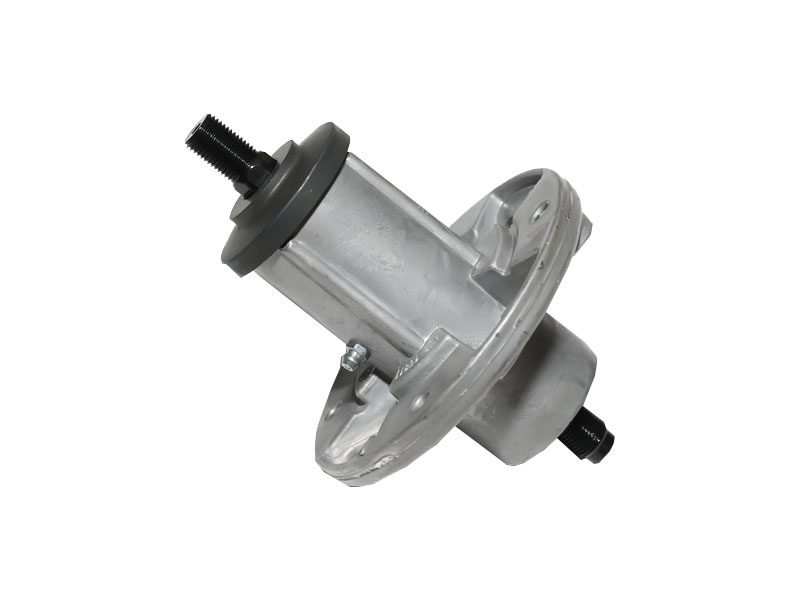
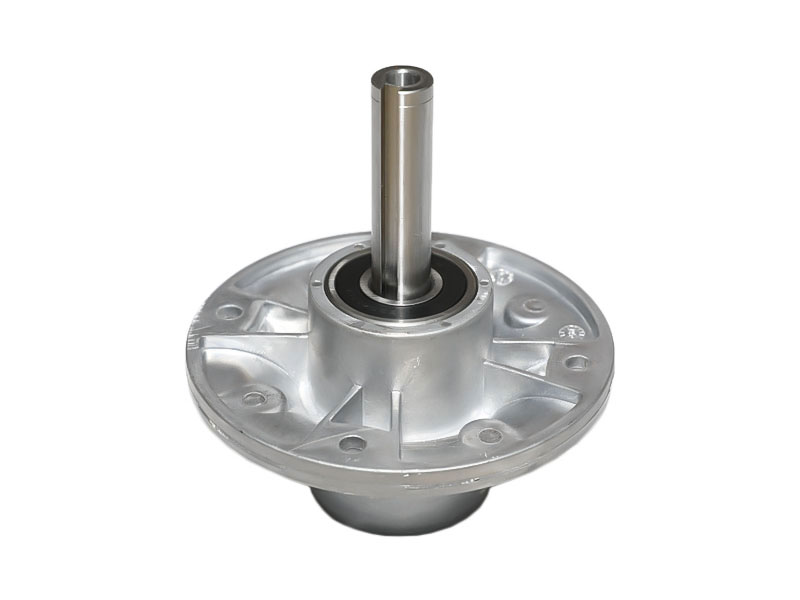
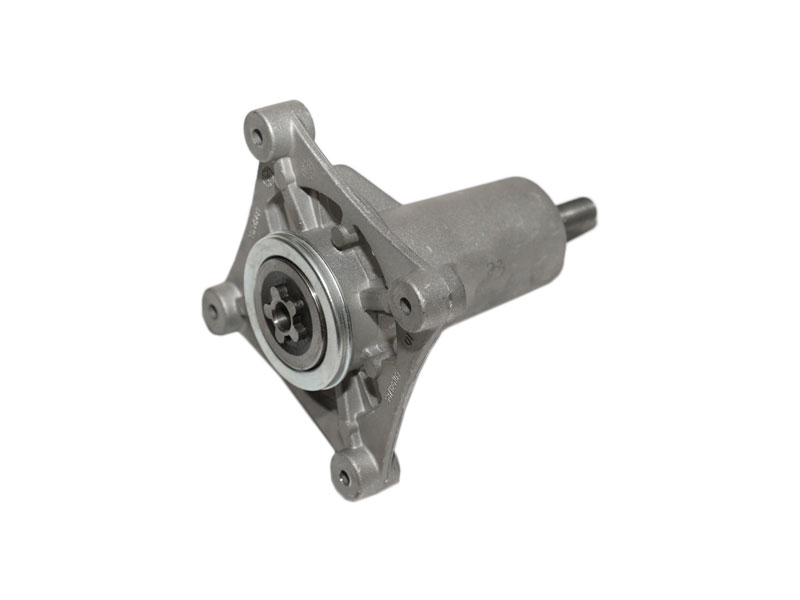
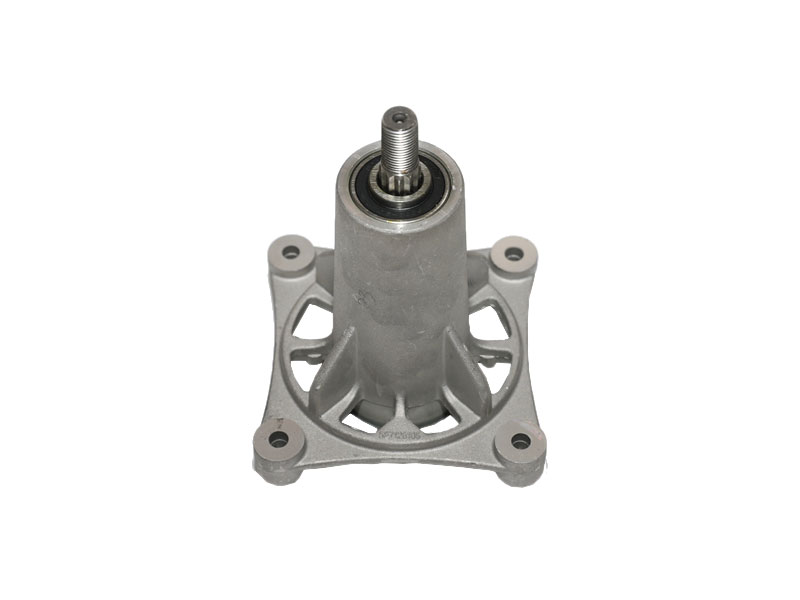
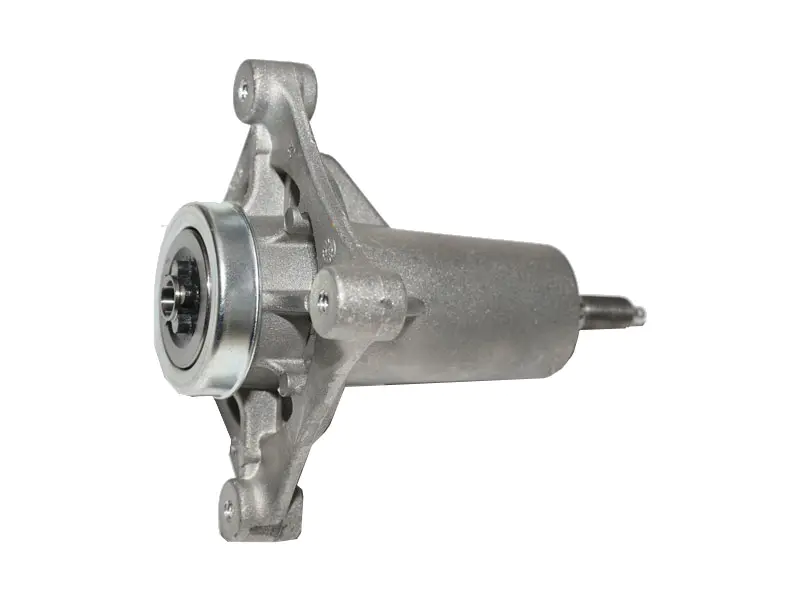
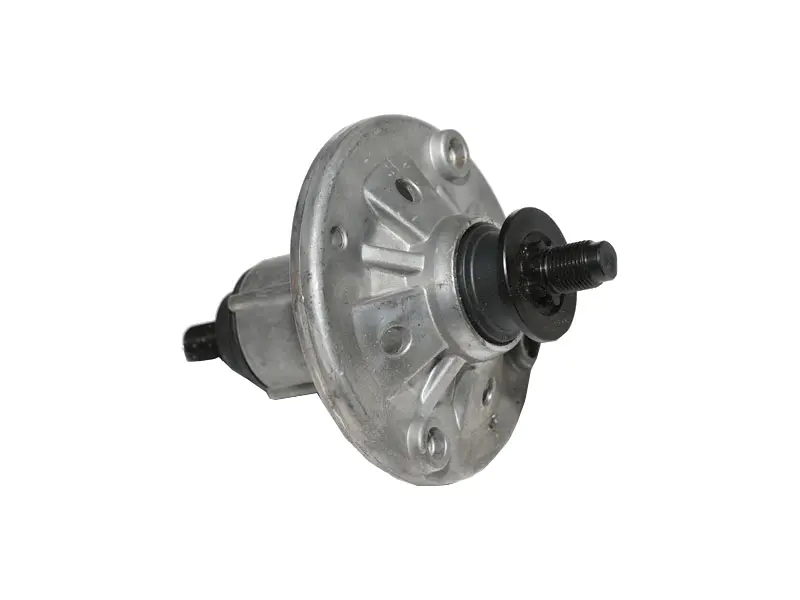
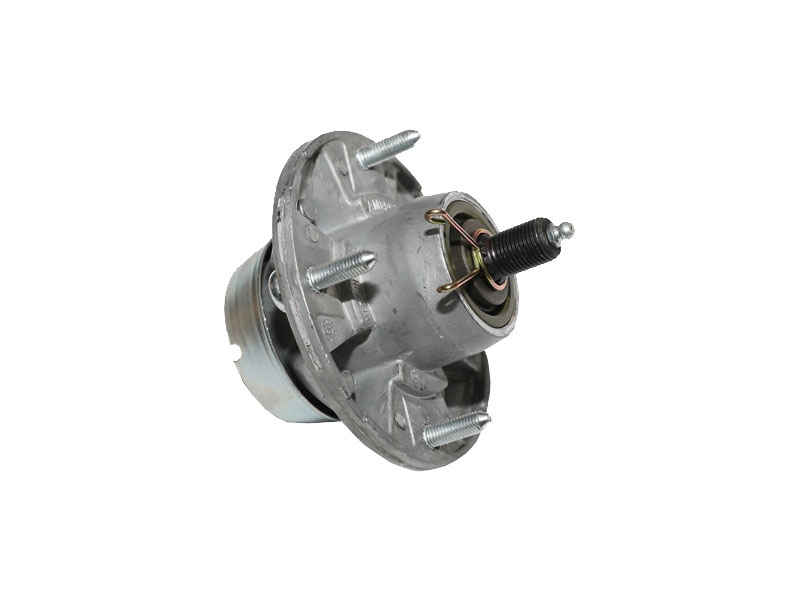
The deck spindle is the rotating assembly that holds each cutting blade and transfers rotational power from the deck belt to the blade at the speeds required for effective cutting — typically 2,800 to 3,400 RPM at the blade. On a 42-inch deck with one spindle and one blade, there is a single spindle in the center of the deck. On a 54-inch or 60-inch deck, two or three spindles are arranged side by side, each carrying one blade, with their cutting arcs overlapping slightly to prevent uncut strips between blades.
Spindle Construction
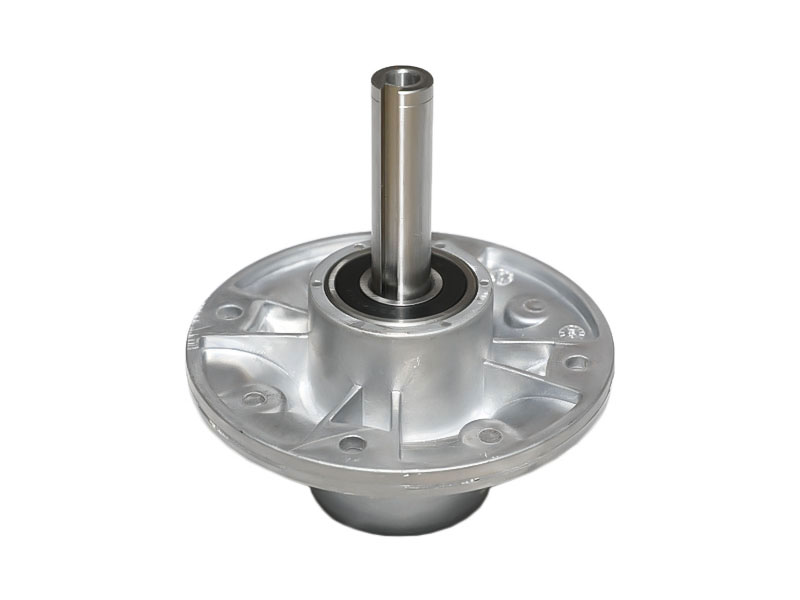
A lawn mower deck spindle consists of a spindle shaft — a hardened steel rod typically 3/4" to 1" in diameter — housed inside a spindle housing (also called the spindle assembly or spindle cartridge). The shaft passes vertically through the housing and is supported by two sealed ball bearings, one at the top and one at the bottom of the housing, that allow the shaft to rotate freely while resisting the radial and axial loads generated by the spinning blade. The top end of the shaft carries a pulley that the deck belt drives; the bottom end has a threaded bolt hole or tapered boss to which the blade is bolted. The housing itself bolts rigidly to the underside of the deck.
The bearings within the spindle housing are the components that fail most frequently. They are exposed to grass clippings, moisture, dirt, and vibration from blade impacts with debris — an environment that shortens bearing service life significantly compared to a protected industrial application. Most residential mower spindle bearings last 100–300 operating hours under normal conditions; commercial mower spindles with larger, sealed bearings and grease-fitting access ports can reach 400–600 hours between service intervals.
Symptoms of Failing Deck Spindles
Recognizing spindle failure early prevents secondary damage to the deck, belts, and pulleys. The most reliable indicators are:
- Vibration through the deck or handles — the earliest and most consistent symptom; a worn or seized spindle bearing produces an imbalance that transmits as noticeable vibration at the operator's hands or through the seat
- Wobbling or tilted blade — when the bearing wears enough to allow play in the shaft, the blade tilts off horizontal; this produces an uneven cut height and scalping on one side of each blade's arc
- Grinding, rumbling, or squealing noise — bearing noise that changes pitch with engine RPM indicates bearing damage; a metallic scraping sound may indicate the blade is contacting the deck due to severe shaft play
- Excessive shaft play — with the blade removed and the engine off, a shaft that can be moved more than 1–2 mm radially at the bottom end has insufficient bearing support and should be replaced
Replacing Deck Spindles: What to Know Before You Order
Lawn mower deck spindles are not universal — they are specific to the mower's deck model, blade bolt pattern, shaft diameter, and pulley configuration. When ordering a replacement, the minimum information needed is the mower's model number and engine model number (both found on a data plate on the mower frame), the deck width, and ideally the OEM part number from the existing spindle housing or the parts diagram in the owner's manual.
Replacement spindles are available in three forms: complete pre-assembled spindle cartridges (housing, shaft, and bearings as a unit, the simplest replacement option), individual spindle housings, and bearing-only kits for spindles designed for field bearing replacement. Pre-assembled spindle cartridges cost more than bearing-only kits but eliminate the need for a press to install new bearings into the housing — a practical advantage for home maintenance. For commercial mowers that see high annual hours, sourcing OEM or heavy-duty aftermarket spindle assemblies with grease fittings (zerks) is worthwhile even at higher initial cost, as greaseable spindles can have their bearings lubricated at regular intervals, significantly extending service life.
Blades, Pulleys, and Idler Arms: Parts That Work With the Spindle
The spindle does not operate in isolation — its performance depends on the condition of the components immediately upstream and downstream of it in the power transmission path.
Cutting Blades
The cutting blade bolts to the bottom of the spindle shaft and is the direct contact point with the grass. Blades are available in three primary configurations: standard 2-in-1 blades (cut and discharge), mulching blades (extra cutting surfaces along the blade length to re-cut clippings into fine particles), and high-lift blades (a pronounced upward curve at the blade tip that generates more airflow for bagging). Blade length and center hole diameter must match the spindle exactly. A blade that is even slightly unbalanced after sharpening transmits cyclic loads into the spindle bearings with every rotation — a 5-gram imbalance at 3,200 RPM generates significant centrifugal force. Always balance blades after sharpening using an inexpensive blade balancer cone before reinstalling.
Spindle Pulleys
The spindle pulley is pressed or bolted to the top of the spindle shaft above the deck surface and is driven by the deck belt. Pulley diameter determines blade RPM relative to engine speed — a smaller pulley spins the blade faster for the same belt speed. Worn or cracked pulleys with damaged V-groove surfaces cause belt slippage and accelerated belt wear; a pulley with a wobble (indicating a bent or damaged bore) transmits vibration into the spindle bearing and shortens its life. When replacing a spindle assembly, inspecting the pulley for groove wear, cracking, and wobble — and replacing it if any are found — prevents premature failure of the new spindle.
Idler Pulleys and Idler Arms
Idler pulleys maintain tension in the deck belt and route it around the spindle pulleys in the correct geometry. A spring-loaded idler arm holds the idler pulley against the belt under constant tension; when the blade engagement is disengaged, the spring tension is released and the belt goes slack. Idler pulley bearings fail in the same environment as spindle bearings — a squealing idler pulley that gets louder with engine RPM indicates bearing failure and should be replaced promptly, as a seized idler pulley will shred the deck belt within minutes of continued operation.
Maintenance Schedule for Deck and Spindle Components
A structured maintenance routine addresses the parts most likely to cause unplanned downtime and protects the investment in the mower over a multi-year service life. The following intervals apply to residential use under normal conditions; commercial use or operation in sandy, wet, or high-debris environments warrants more frequent attention.
- After each use: clear clippings and debris from the deck underside, especially around the spindle housings and pulleys where accumulated material traps moisture against the metal
- Every 25 hours: grease spindle bearings on any spindle assembly with a zerk fitting; check blade bolt torque (typically 35–50 ft-lb depending on model); inspect deck belt for cracking, fraying, or glazing
- Every 50 hours or each season: sharpen or replace blades; inspect all pulleys for wobble and groove wear; check idler arm spring tension and pivot point for wear; inspect deck shell for cracks or rust-through, especially at spindle mounting bolt holes
- Every 100–200 hours: replace deck belt regardless of visible condition on heavily used machines; inspect spindle shafts for radial play with the blade removed; replace any spindle showing measurable play before bearing failure progresses to shaft or housing damage
- End of season: apply rust-inhibiting spray to the deck underside; fog the engine cylinder per manufacturer instructions for storage; fully sharpen or replace blades so the mower is ready at the start of the next season without delay
The most cost-effective maintenance practice for deck spindles on riding mowers and zero-turns is proactive replacement at the first signs of noise or vibration rather than waiting for complete failure. A spindle that fails mid-season can damage the deck, destroy the belt, and in severe cases allow the blade to contact the deck housing — repairs that cost significantly more than a timely spindle replacement at the first symptom.