English
 中文简体
中文简体 Español
 svenska



The spindle assembly is what actually spins the mower blade — everything about cutting height, blade balance, and deck vibration eventually traces back to this one component. A worn or mismatched spindle assembly causes more mower deck problems than almost any other part, which makes knowing how to identify, choose, and maintain one worth understanding before it fails mid-season.
Content
- 1 What Is a Lawn Mower Spindle Assembly
- 2 Mower Deck Spindle Assembly: How It Fits Into the Deck
- 3 Lawn Mower Spindle Parts and Spindle Assembly Components
- 4 Lawn Mower Spindle Bearings
- 5 Lawn Mower Spindle Shaft
- 6 Heavy Duty Mower Spindle Assembly
- 7 Replacement Spindle Assembly for Lawn Mowers: What to Check
- 8 Aftermarket Lawn Mower Parts and Replacement Parts
- 9 How to Replace a Lawn Mower Spindle Assembly
- 10 Lawn Mower Spindle Assembly Maintenance
What Is a Lawn Mower Spindle Assembly
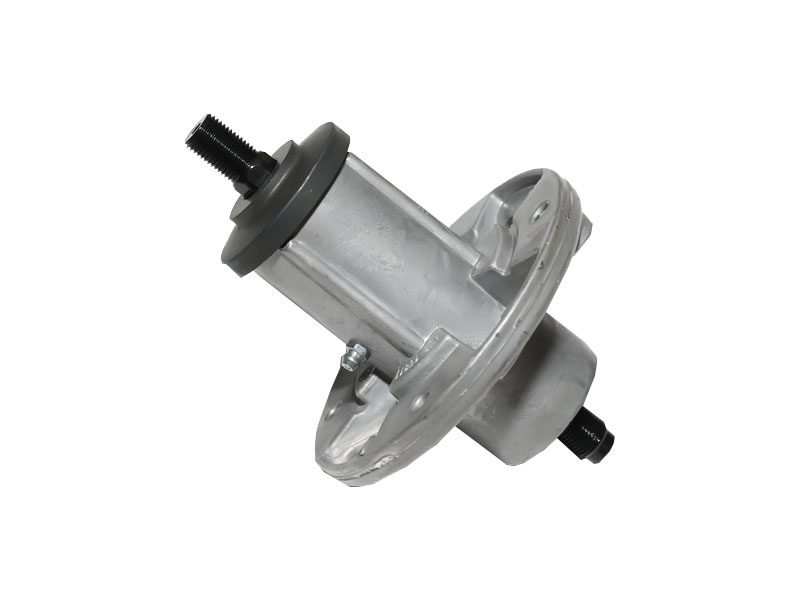
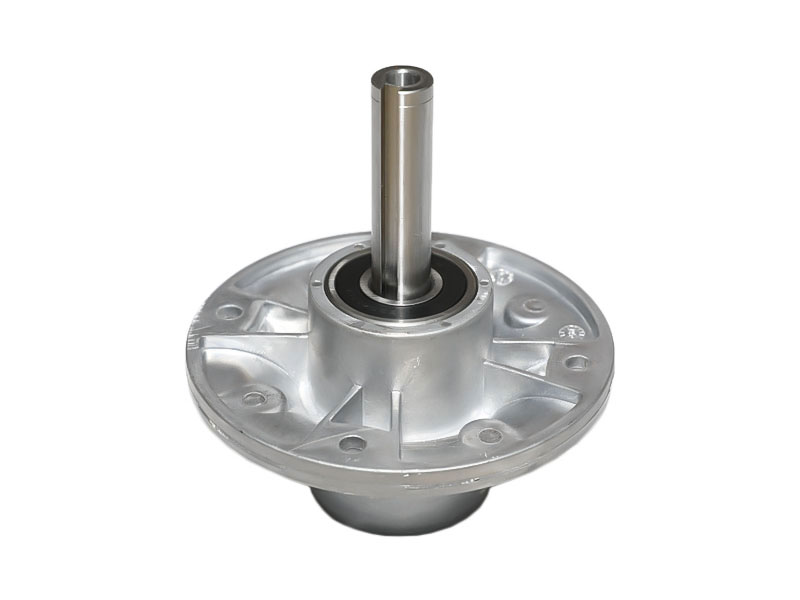
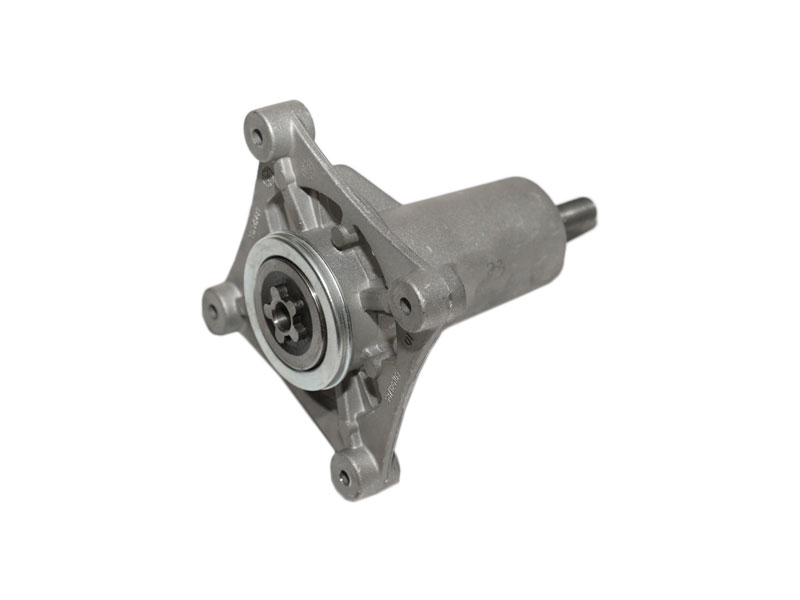
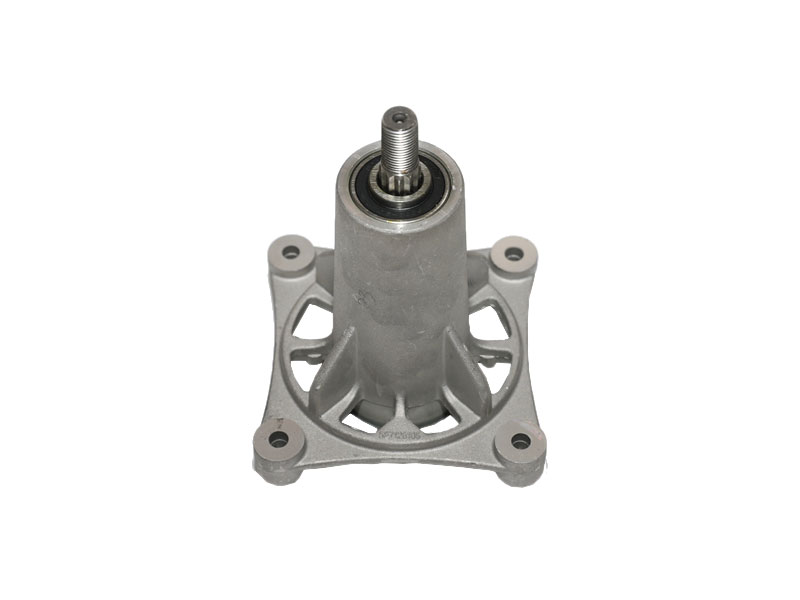
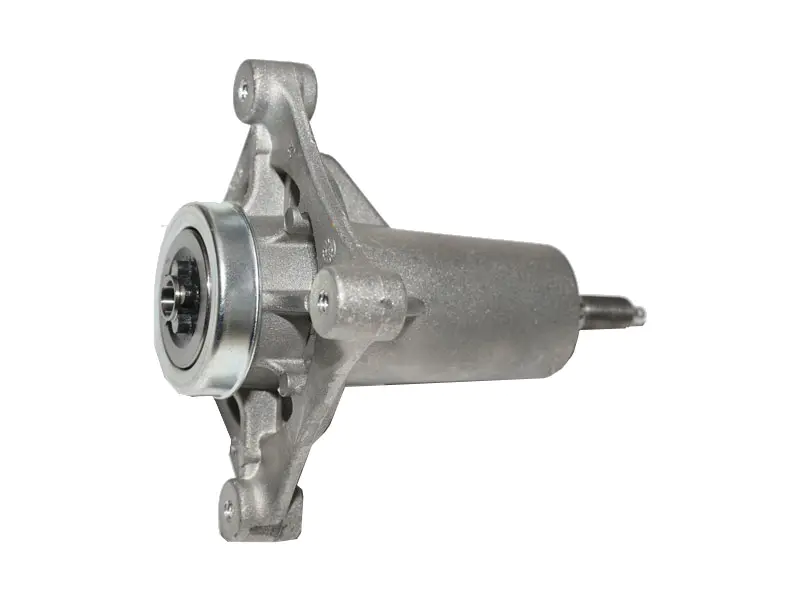
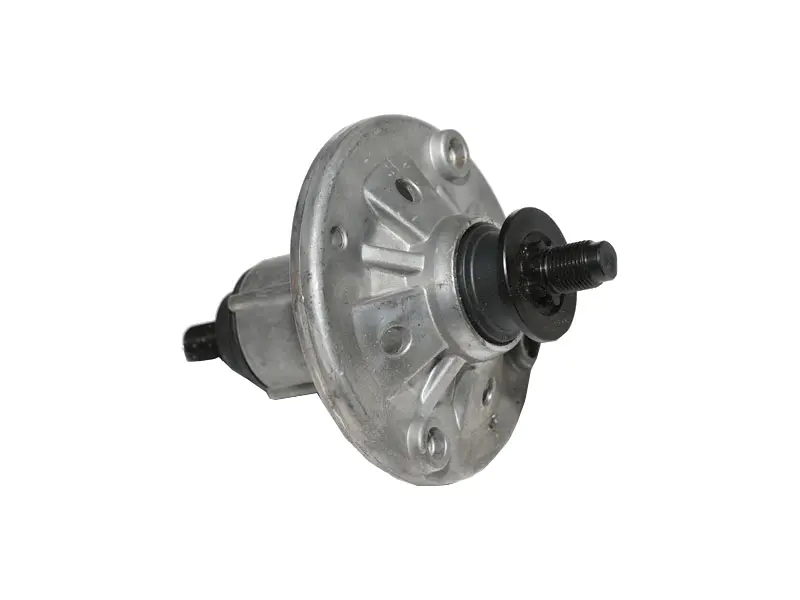
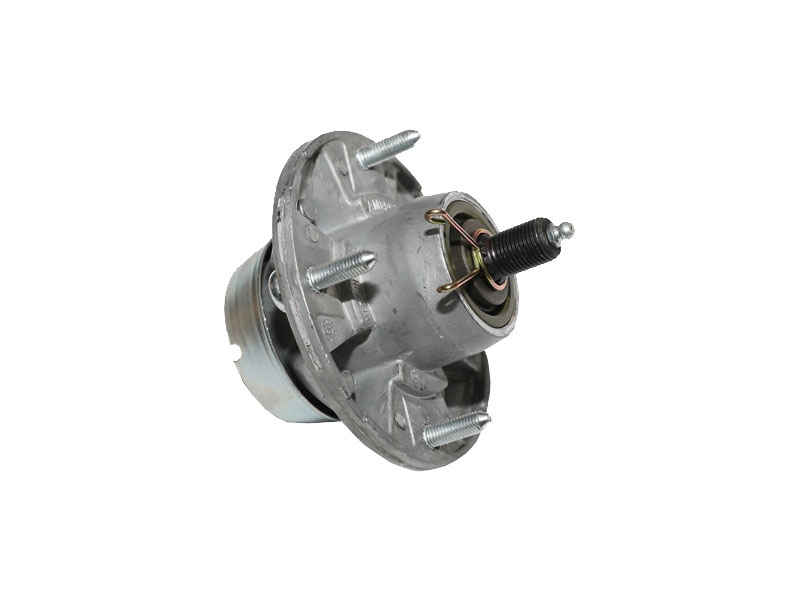
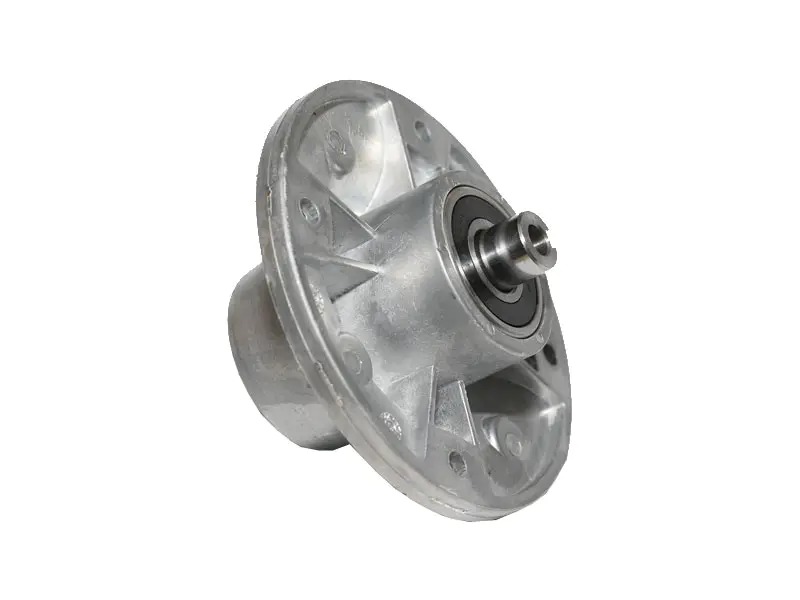
A spindle assembly is the housed unit that holds the vertical shaft connecting the mower deck's drive pulley to the blade below it. It houses the bearings that let the shaft spin freely under load, and it's typically bolted directly to the underside of the mower deck. As the blade's only connection point to the drive system, the spindle assembly has to handle both the rotational force of cutting and the vibration and impact loads from uneven terrain or debris strikes.
Mower Deck Spindle Assembly: How It Fits Into the Deck
Most residential and commercial mowers use one spindle assembly per blade, mounted through the deck housing with the pulley on top (driven by the deck's belt) and the blade mounted directly to the shaft underneath. Multi-blade decks — common on zero-turn and larger riding mowers — run two or three spindle assemblies in parallel, all driven off the same belt system, which means a single worn spindle can throw off the whole deck's cutting balance even if the other spindles are fine.
Lawn Mower Spindle Parts and Spindle Assembly Components
Spindle Housing
The outer casing, typically cast iron or aluminum, that holds the bearings and shaft and mounts to the deck.
Spindle Shaft
The vertical shaft that transfers rotational force from the pulley down to the blade — precision-machined to keep the blade running true.
Bearings
Sealed ball bearings supporting the shaft inside the housing, allowing smooth, low-friction rotation under load.
Pulley
Mounted to the top of the shaft, driven by the deck belt to transmit power from the engine or motor.
Seals
Prevent grass, dirt, and moisture from entering the housing and contaminating the bearings.
Mounting Bolts and Hardware
Secure the assembly to the deck housing, requiring correct torque to prevent loosening under vibration.
Lawn Mower Spindle Bearings
Bearings are typically the first component to fail in a spindle assembly, since they absorb both the rotational load and the shock from blade strikes on rocks, roots, or uneven ground. Sealed bearings are standard on most modern assemblies to keep debris out, but seals degrade over time and heavy use, allowing dirt intrusion that accelerates wear. A spindle with failing bearings usually shows up first as noise or play in the shaft — a wobble or grinding sound under load is a reliable early warning sign before the assembly fails completely.
Lawn Mower Spindle Shaft
The shaft's straightness and precision fit directly affect blade balance and cutting quality — a bent shaft, even slightly, translates into vibration that shows up as an uneven or scalped cut pattern across the lawn. Shaft diameter and length are specific to each deck design, which is why spindle shafts aren't universally interchangeable between mower models even when the overall assembly looks similar.
Heavy Duty Mower Spindle Assembly
Heavy duty spindle assemblies are built for commercial and high-use applications, typically featuring larger, higher-grade bearings, thicker cast housings, and reinforced shafts designed to handle extended run times and more aggressive terrain than standard residential-grade assemblies. For commercial mowing operations or larger properties with rough terrain, upgrading to a heavy duty assembly at replacement time often extends service intervals significantly compared to standard OEM-equivalent parts.
Replacement Spindle Assembly for Lawn Mowers: What to Check
| Spec to Verify | Why It Matters |
|---|---|
| Mower make, model, and deck size | Spindle assemblies are deck-specific — mounting pattern and shaft length must match exactly |
| Pulley diameter | Must match the deck's belt sizing to maintain correct blade speed |
| Shaft diameter and length | Determines blade compatibility and clearance under the deck |
| Bearing type and grade | Affects durability and expected service life under the mower's typical use conditions |
| OEM vs aftermarket | OEM guarantees exact fit; quality aftermarket parts can match performance at lower cost |
Aftermarket Lawn Mower Parts and Replacement Parts
Quality aftermarket spindle assemblies can match or, in some cases with heavy duty upgrades, exceed OEM specifications at a lower price point, but part quality varies significantly between suppliers. Checking that an aftermarket part specifies matching bearing grade, shaft dimensions, and housing material to the OEM equivalent is the most reliable way to avoid a part that fits but wears out prematurely under normal mowing conditions.
How to Replace a Lawn Mower Spindle Assembly
- Disconnect the spark plug and remove the mower deck for safe, accessible work, following the manufacturer's deck removal procedure.
- Remove the blade from the spindle shaft, noting the torque spec for reinstallation later.
- Loosen and remove the deck belt from the spindle pulley.
- Unbolt the spindle assembly from the deck housing and remove it as a complete unit.
- Install the new assembly, torquing mounting bolts to the manufacturer's specification to prevent loosening under vibration.
- Reinstall the belt, blade, and deck, and check blade rotation by hand before restarting the mower.
Lawn Mower Spindle Assembly Maintenance
- Check for shaft play or wobble periodically by hand, with the blade removed and the deck off the ground.
- Listen for grinding or squealing noise during operation, which often indicates bearing wear before visible play develops.
- Clean grass buildup and debris from around the spindle housing regularly to prevent seal damage and moisture intrusion.
- Inspect mounting bolts for proper torque periodically, since deck vibration can gradually loosen hardware over a season.
- Balance and inspect the blade after any impact with a rock, root, or hard object, since blade imbalance accelerates spindle bearing wear.