English
 中文简体
中文简体 Español
 svenska



Content
- 1 What Is a Lawn Mower Spindle Assembly?
- 2 How Does a Lawn Mower Spindle Work?
- 3 Mower Deck Components Explained
- 4 Signs of a Bad Lawn Mower Spindle
- 5 Lawn Mower Making Grinding Noise: Spindle or Something Else?
- 6 Worn Spindle Bearings: What Happens If You Ignore Them
- 7 How Long Does a Lawn Mower Spindle Last?
- 8 How to Replace a Lawn Mower Spindle Assembly
- 9 OEM vs Aftermarket Spindle Assemblies
- 10 How to Choose a Lawn Mower Spindle Assembly
What Is a Lawn Mower Spindle Assembly?
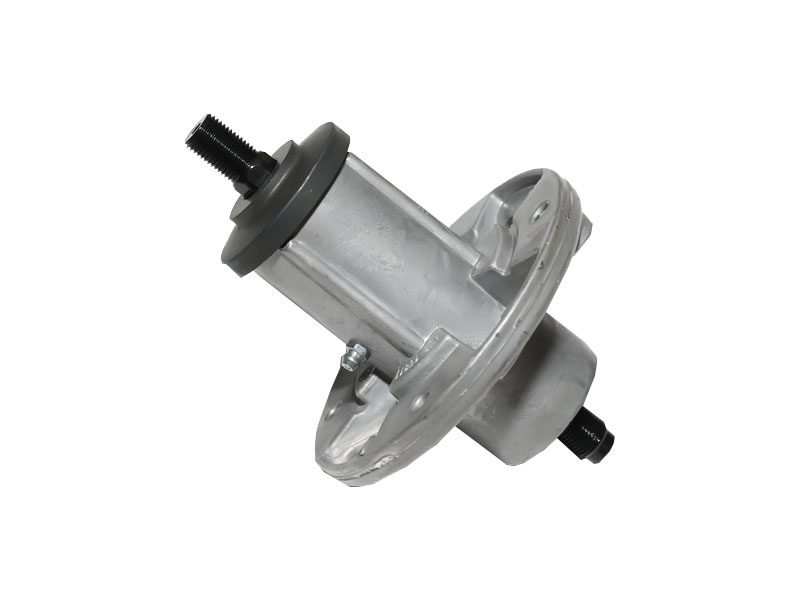
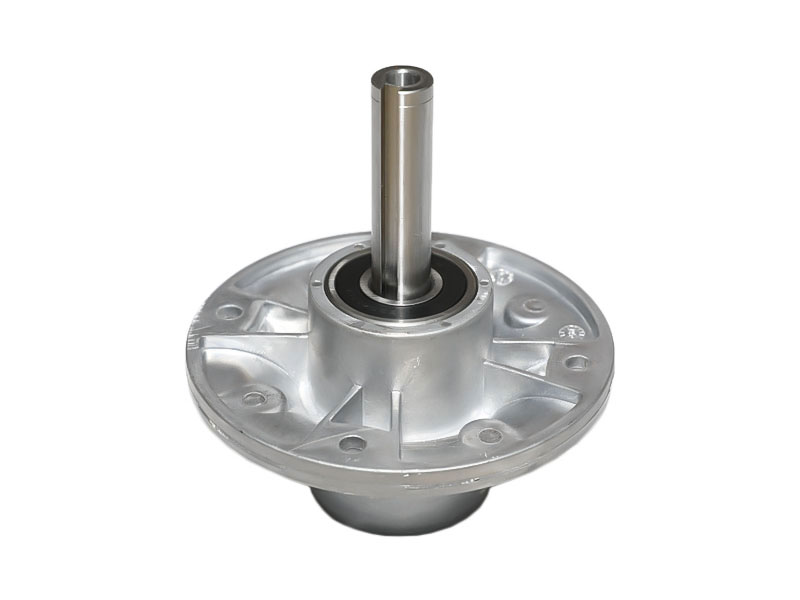
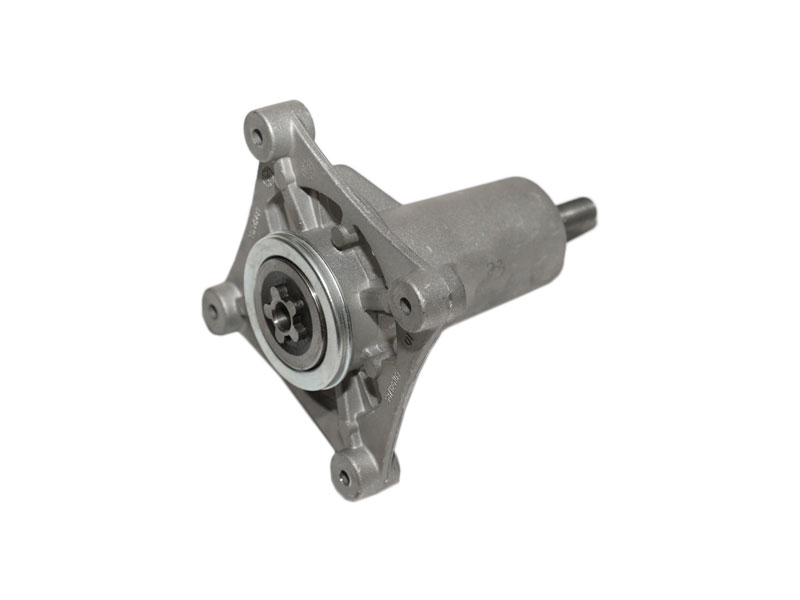
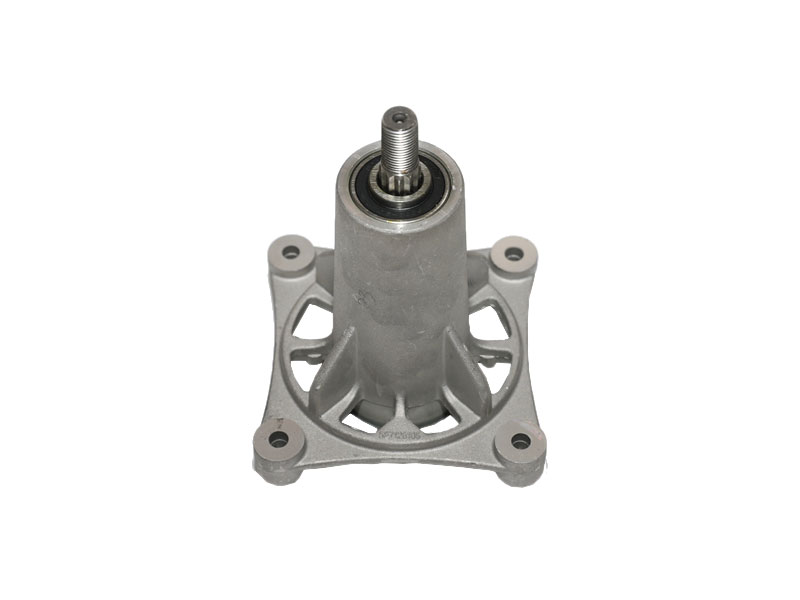
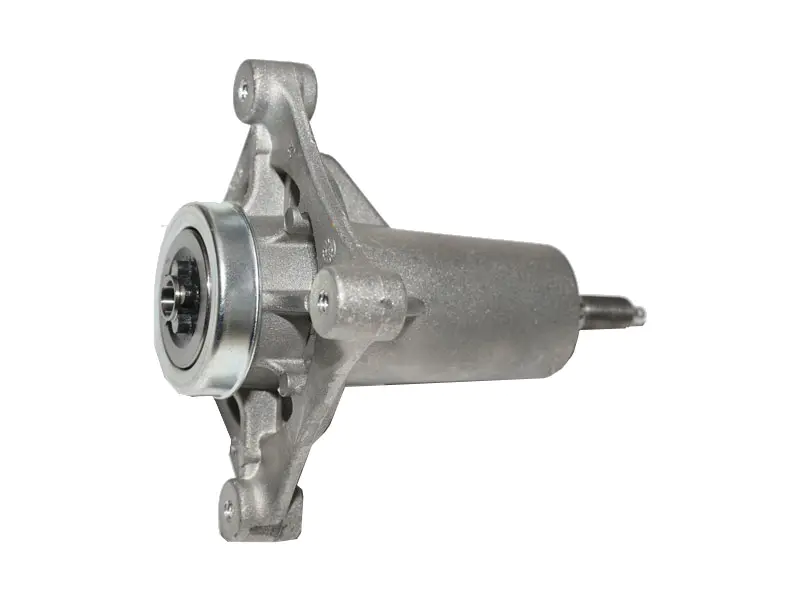
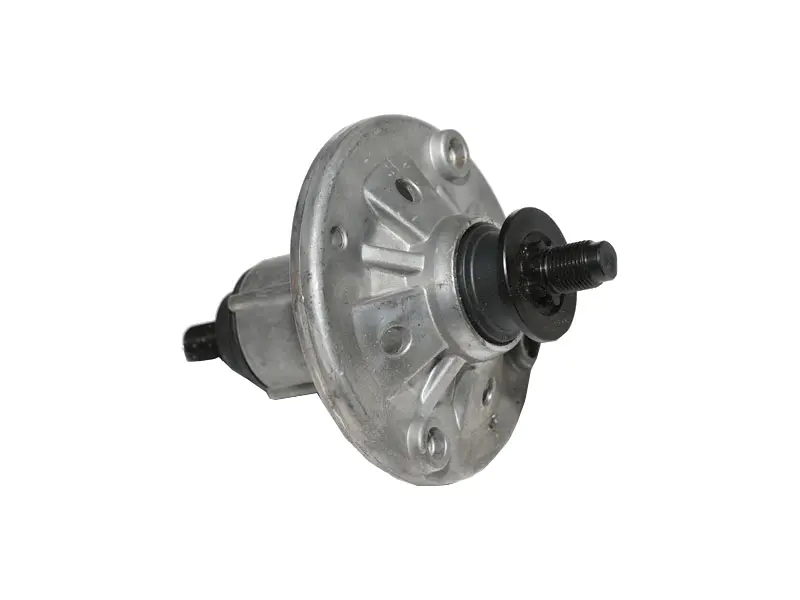
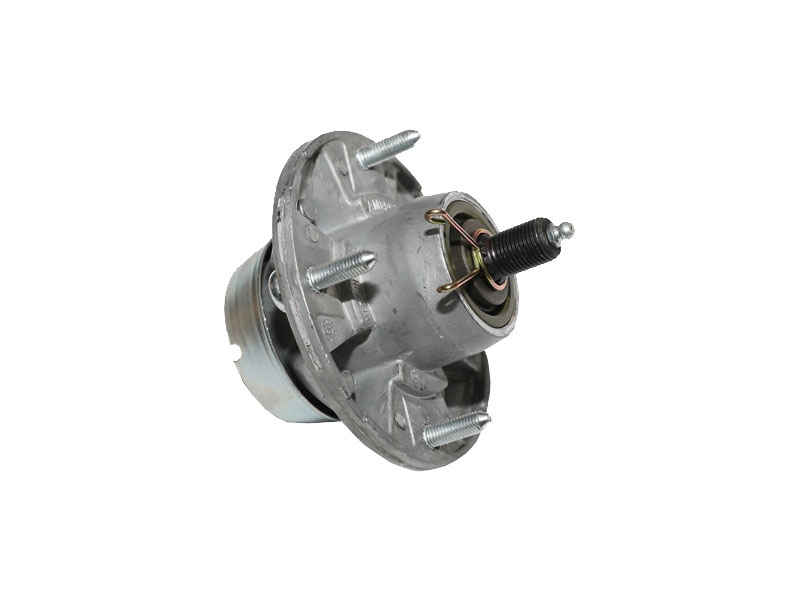
A lawn mower spindle assembly is the mechanical hub that holds and spins the cutting blade beneath the mower deck. It consists of a steel or cast-iron housing, one or two sealed bearings pressed into that housing, a central shaft that passes through the bearings, and attachment hardware for the blade at the bottom and a drive pulley at the top. When the mower engine runs, belt-driven rotation is transferred through the pulley to the shaft, spinning the blade at cutting speed — typically between 2,700 and 3,600 RPM on residential machines.
On walk-behind mowers with a single blade, there is one spindle assembly per deck. Riding mowers and zero-turn mowers commonly use two or three spindle assemblies mounted side-by-side across the deck width, each independently driven by the same belt system to create the overlapping cut width the deck is rated for. A 54-inch zero-turn deck, for example, typically uses three spindles spaced 18 inches apart.
The spindle assembly is a wear component — it endures continuous high-speed rotation, vibration from blade impact with debris, and exposure to moisture, grass clippings, and dirt. Understanding it as a serviceable part, rather than a permanent component, is the starting point for effective mower maintenance.
.jpg)
How Does a Lawn Mower Spindle Work?
The spindle assembly operates as the final drive link between the engine's belt system and the cutting blade. Power flow through the deck follows a consistent sequence: the engine crankshaft drives a main pulley, which drives an idler-tensioned belt, which wraps around the spindle pulley at the top of each spindle shaft. The shaft converts that rotational energy directly to the blade clamped at its lower end.
The bearings inside the spindle housing are the critical enabling component. They allow the shaft to spin freely at high RPM while absorbing both the radial load (the centrifugal forces of blade rotation) and the axial load (downward and upward force from blade impact with grass and debris). Most residential spindle assemblies use double-row ball bearings pressed into each end of the housing, pre-greased and sealed at the factory.
Some commercial-grade spindles use tapered roller bearings instead, which handle higher axial loads more effectively at the cost of requiring periodic re-greasing through a zerk fitting. Greaseable spindles are found on heavy commercial zero-turns and professional grounds maintenance equipment — the maintenance overhead is acceptable given the extended service life they deliver under hard use.
The housing itself mounts to the underside of the mower deck through a flange and bolt pattern. This connection is designed to be rigid — any flex between the housing and deck introduces vibration and accelerates bearing wear — while still allowing the assembly to be unbolted and replaced without specialized tools.
Mower Deck Components Explained
The spindle assembly does not operate in isolation — it is one component in an integrated deck system. Understanding the full assembly helps diagnose problems correctly and avoid replacing the wrong part.
| Component | Function | Typical Failure Mode |
|---|---|---|
| Spindle Assembly | Holds and rotates cutting blade | Bearing failure, shaft bend, housing crack |
| Drive Belt | Transfers engine rotation to spindle pulleys | Cracking, glazing, stretch, breakage |
| Idler Pulley | Maintains belt tension; guides belt path | Bearing seizure, pulley wobble, bracket wear |
| Blade | Cuts grass; generates airflow for discharge | Dulling, nicking, bending from debris strike |
| Blade Adapter / Blade Boss | Connects blade to spindle shaft | Key shear, thread strip, cracking |
| Deck Shell | Encloses blades; directs clipping discharge | Rust perforation, impact deformation |
| Anti-scalp Rollers | Prevents deck gouging on uneven terrain | Bearing seizure, roller wear |
A vibration or noise symptom that appears to originate from the deck could come from any of these components. Systematically ruling out belt, idler, and blade issues before condemning a spindle assembly saves unnecessary parts expense — though in practice, a worn spindle and a worn belt often occur together and are best replaced as a pair.
Signs of a Bad Lawn Mower Spindle
Spindle assembly problems announce themselves in recognizable ways. Catching these symptoms early prevents secondary damage — a failed spindle bearing that is ignored will eventually seize, which can destroy the housing, bend the shaft, damage the deck shell, and throw a blade at dangerous speed.
Grinding or Rumbling Noise From the Deck
A grinding, rumbling, or rattling sound that originates from beneath the deck — particularly one that increases with blade engagement speed — is the most common indicator of worn spindle bearings. The sound is produced by metal-on-metal contact inside the bearing race as the ball bearing elements lose their smooth rolling surface. This is distinct from a squealing belt noise, which is sharper in pitch and typically comes from the belt-pulley interface rather than from beneath the housing.
Visible Wobble in the Blade or Pulley
With the engine off and the spark plug disconnected for safety, grasp the blade at each end and attempt to rock it up and down perpendicular to its rotation plane. Any detectable play indicates bearing wear. A healthy spindle has zero measurable axial play — the shaft should feel completely rigid in its housing. Similarly, grasp the top pulley and check for radial wobble. Wobble at the pulley produces uneven belt wear and accelerates idler pulley bearing failure.
Uneven or Streaky Cutting Pattern
A spindle with worn bearings allows the blade to oscillate slightly during rotation, producing an inconsistent cutting height across the blade's sweep arc. This shows up as an uneven or ribbed grass surface after mowing — commonly misdiagnosed as a blade balance issue. If sharpening and balancing the blade does not resolve a streaky cut, inspect the spindle for play before assuming the blade itself is defective.
Grease or Oil Leaking From the Housing
Grease weeping from around the bearing seals indicates the seals have failed — often a result of bearing heat buildup from wear. On sealed non-greaseable spindles this is not repairable; the assembly requires replacement. On greaseable spindles, seal replacement is possible but typically not cost-effective versus a new assembly unless the housing and shaft are confirmed undamaged.
Lawn Mower Making Grinding Noise: Spindle or Something Else?
A grinding noise from a running mower does not automatically mean spindle failure. The diagnostic approach should systematically eliminate other sources before committing to spindle replacement.
Step 1 — Identify when the noise occurs. Does it appear only when the blades are engaged, or also when the mower is moving without blade engagement? Noise present only under blade engagement points to the deck (spindle, belt, idler). Noise present during ground drive points to transmission, axle bearings, or wheel hubs.
Step 2 — Locate the noise source. With the deck engaged at low throttle in a safe area, approach each spindle housing carefully and listen. On multi-spindle decks, the failing spindle will be noticeably louder than its neighbors. On single-spindle walk-behinds, confirm the noise is coming from the spindle housing rather than the idler pulley or belt guide.
Step 3 — Perform the static check. Engine off, spark plug disconnected. Rock each blade end-to-end and check for bearing play as described above. A grinding noise with no detectable play may indicate a cracked or deformed pulley rather than a bearing failure — inspect the pulley face and hub for cracks.
Step 4 — Check the idler pulley. A seized or badly worn idler pulley bearing produces a grinding noise that is easily mistaken for spindle noise. Rotate the idler pulley by hand with the belt removed — rough rotation or any grinding sensation confirms idler bearing failure. Idler pulleys cost a fraction of a spindle assembly and should always be checked before spindle replacement.
Worn Spindle Bearings: What Happens If You Ignore Them
Worn spindle bearings follow a predictable degradation sequence. In the early stage, bearing wear produces noise and vibration but the spindle continues to function. In the intermediate stage, bearing play increases, cutting quality deteriorates, and belt wear accelerates from the misaligned pulley. In the terminal stage, the bearing cage fragments or the bearing seizes entirely.
A seized spindle bearing generates enough heat to melt the bearing grease, score the shaft, and weld the bearing race to the housing — at which point the housing itself is destroyed and requires replacement. Worse, a seizing spindle can catch the drive belt, snap it under tension, and in some cases allow the blade to contact the deck or eject debris unpredictably.
The practical rule is simple: once bearing play is detectable by hand, the spindle assembly should be replaced before the next mowing session. Attempting to run through a season on a noticeably worn spindle routinely converts a $30–$80 spindle assembly replacement into a $150–$300+ repair involving deck damage and multiple ancillary components.
How Long Does a Lawn Mower Spindle Last?
Spindle assembly service life varies significantly with use intensity, maintenance habits, and terrain. On a residential mower used for a typical suburban lawn — roughly 25–50 hours per season — quality spindle assemblies commonly last 4 to 7 years before bearing wear becomes detectable. On commercial equipment running 500–1,000 hours per season, spindle service intervals are measured in months rather than years.
Several factors shorten spindle life significantly:
- Blade strikes on rocks, roots, and curbs: Each hard impact transmits shock loading directly through the blade into the spindle shaft and bearings. A single serious strike can damage bearing races and shorten spindle life by years.
- Mowing with an unbalanced blade: A blade that is heavier on one end creates a constant cyclical radial load on the bearings at every revolution — equivalent to thousands of small impacts per minute of operation.
- Cutting wet or overly tall grass: Heavy grass loads increase the torque demand on the spindle shaft and drive system, raising operating temperatures and stress levels within the bearing assembly.
- Skipping deck cleaning: Compacted clippings and debris around the spindle housing trap moisture against the bearing seals, accelerating corrosion and seal degradation.
On greaseable spindle designs, following the manufacturer's greasing interval — typically every 25 operating hours — is the single most impactful maintenance action for extending bearing life. Over-greasing is also a risk: forcing excess grease through a packed bearing can blow the seals, introducing contaminants and defeating the purpose of the maintenance.
How to Replace a Lawn Mower Spindle Assembly
Spindle assembly replacement is a straightforward job on most mowers, requiring basic hand tools and no specialized equipment. The process typically takes 30–60 minutes per spindle for an experienced DIY mechanic.
Tools and Parts Needed
- Replacement spindle assembly (OEM or aftermarket, matched to your mower model and deck width)
- Socket set and ratchet (commonly 1/2-inch drive for blade bolt; 3/8-inch for housing bolts)
- Blade removal tool or a block of wood to hold the blade during bolt removal
- Penetrating oil for corroded housing bolts
- Torque wrench for blade bolt reinstallation
- Safety gloves — the blade edge remains dangerous even when stationary
Replacement Procedure
- Disconnect the spark plug wire before touching anything beneath the deck.
- Remove the drive belt from the spindle pulley by releasing the idler tensioner and sliding the belt off the pulley.
- Remove the blade bolt — this is typically a standard right-hand thread. Hold the blade with a block of wood to prevent rotation, and break the bolt loose with a breaker bar if needed. The blade bolt torque specification is typically 35–55 ft-lb depending on the mower model.
- Remove the blade and blade adapter, noting their orientation for reinstallation.
- Unbolt the spindle housing from the deck — usually three or four bolts through the deck flange. Apply penetrating oil to corroded bolts and allow 15–20 minutes before attempting removal.
- Remove the top pulley from the old spindle shaft if it is not integrated into the new assembly. Pulleys are typically secured with a bolt or snap ring at the shaft top.
- Transfer the pulley to the new assembly if required and install the new spindle housing to the deck, torquing housing bolts to specification.
- Reinstall blade adapter and blade. Torque the blade bolt to manufacturer specification — under-torqued blade bolts are a safety hazard.
- Reinstall the drive belt and verify correct routing and tension before reconnecting the spark plug and testing.
After reinstallation, run the mower at low throttle briefly and listen for any abnormal noise before returning to full-speed operation. A correctly installed new spindle should run silently with no vibration.
OEM vs Aftermarket Spindle Assemblies
The choice between OEM (original equipment manufacturer) and aftermarket spindle assemblies involves a genuine trade-off between cost, availability, and quality consistency.
OEM Spindle Assemblies
OEM spindles are manufactured to the original specification for your specific mower model — identical bearing grade, housing dimensions, shaft hardness, and bolt pattern to what the machine left the factory with. The fit is guaranteed, and you know the part performs at least as well as the original. The drawbacks are price (OEM spindles typically cost 20–50% more than aftermarket equivalents) and availability — older or discontinued models can have long lead times or discontinued part numbers through dealer networks.
Aftermarket Spindle Assemblies
The aftermarket spindle market ranges from genuinely equivalent quality parts from reputable suppliers to low-cost imports with substandard bearing grades and imprecise housing tolerances. The key differentiators to evaluate:
- Bearing brand and grade: Quality aftermarket spindles use name-brand bearings (NSK, SKF, NTN, or equivalent) to the same ABEC grade as the OEM specification. Generic bearings with no brand marking are an indicator of cost-cutting in the one component most likely to determine spindle service life.
- Housing material: Cast iron or steel housing is standard. Avoid assemblies using zinc alloy die-cast housings, which lack the structural rigidity to maintain bearing alignment under high-load operation.
- Shaft hardness: The spindle shaft must be hardened to resist scoring at the bearing contact surfaces. Soft shafts wear rapidly and cause the bearing to spin on the shaft rather than on its inner race.
- Fitment compatibility: Cross-reference the aftermarket part number against the OEM number and verify the bolt pattern, shaft diameter, shaft thread specification, and overall height match before ordering.
For residential mowers with moderate use, a well-sourced aftermarket spindle from a reputable supplier typically delivers acceptable service life at meaningful cost savings. For commercial equipment running intensive hours, OEM or premium-aftermarket spindles with documented bearing specifications are the safer investment.
How to Choose a Lawn Mower Spindle Assembly
Selecting the correct spindle assembly requires matching several specification parameters — getting any one of them wrong results in a part that either does not fit or does not perform correctly in service.
Start with the mower model number and deck serial number. These are the only reliable basis for parts lookup. Mower model numbers are typically found on a sticker beneath the seat (riding mowers) or on the engine shroud or frame tube (walk-behinds). Deck serial numbers are often stamped on the deck shell itself. Using make and model alone — without the deck serial — can lead to incorrect parts on machines where the same model used different deck configurations across production years.
Key specification points to verify before ordering:
- Bolt pattern: The number of mounting bolts and their spacing (bolt circle diameter) must match the deck holes exactly. Common patterns are 3-bolt and 4-bolt configurations.
- Shaft dimensions: Shaft diameter (typically 1 inch or 1-1/8 inch on residential mowers), shaft thread size, and blade adapter type must match your existing blade mounting system.
- Overall height: The distance from the deck mounting flange to the blade mounting point must replicate the original to maintain correct blade height within the deck shell.
- Pulley included or separate: Some replacement spindle assemblies include the drive pulley; others do not. Confirm whether you need to transfer the existing pulley or whether a pulley is supplied.
- Greaseable or sealed: Match the maintenance design of your original spindle unless you are intentionally upgrading to a greaseable design for longer service life under heavy use.
When replacing spindles on a multi-spindle deck, replace all spindles simultaneously if one has failed due to age-related bearing wear. On a three-spindle deck where all spindles have similar hours of use, replacing only the failed unit leaves two spindles approaching the end of their service life — and the cost of labor to access the deck a second and third time typically exceeds the cost of the additional spindle assemblies themselves.