English
 中文简体
中文简体 Español
 svenska



Content
- 1 Lawn Mower Starter Systems: Electric vs. Pull Start Explained
- 2 Riding Lawn Mower Starter: What Makes It Different
- 3 What Is PTO on a Lawn Mower?
- 4 Spark Plug Lawn Mower Size: Choosing and Replacing the Right Plug
- 5 Lawn Mower Drive Belt Diagram: Understanding the Belt System
- 6 Seasonal Maintenance Checklist: Starter, PTO, Spark Plug, and Belt
Lawn Mower Starter Systems: Electric vs. Pull Start Explained
A lawn mower starter is the mechanism responsible for initiating engine rotation until combustion sustains itself. Two fundamentally different systems are used across residential and commercial mowers: the electric starter motor and the recoil (pull start) system. Understanding how each works helps you diagnose problems, choose the right replacement part, and maintain the system before a failure leaves you with an unresponsive mower mid-season.
Electric Starter Motor
The electric starter for lawn mower engines operates on the same principle as an automotive starter: a small DC motor engages a pinion gear against the engine's flywheel ring gear, spinning the crankshaft until the engine fires. Most riding mower starters draw between 12 and 16 amps during engagement and complete a start cycle in under three seconds. Key components include the starter motor itself, the solenoid (which acts as a heavy-duty relay sending battery current to the motor), and the engagement gear or Bendix drive.
Common failure modes for electric starters include worn brushes inside the motor, a failed solenoid that clicks but doesn't engage, corroded battery terminals reducing available current, and a seized engagement gear that grinds rather than spins. When diagnosing a no-start condition, always test battery voltage first—a 12V battery reading below 12.4V under load will often prevent even a healthy starter from turning the engine over.
Recoil / Pull Start System
The lawn mower pull start—also called a recoil starter—uses a coiled spring mechanism housed in a plastic or metal assembly mounted to the engine shroud. Pulling the handle unwinds a rope that drives a ratcheting cup on the flywheel, cranking the engine. Releasing the handle allows the spring to retract the rope automatically.
Pull start assemblies fail in predictable ways: the recoil spring breaks or loses tension (handle pulls out but doesn't retract), the rope frays and snaps, or the pawl mechanism that engages the flywheel cup wears and no longer grips. Replacing the rope is a straightforward repair requiring only a replacement cord and basic tools. Replacing a broken recoil spring requires more care—the spring is under significant tension and must be wound correctly before reassembly.
Riding Lawn Mower Starter: What Makes It Different
A riding lawn mower starter is a heavier-duty electric starter designed for the larger single-cylinder and twin-cylinder engines found in garden tractors and zero-turn mowers. Engine displacements typically range from 382cc to over 700cc, requiring a starter capable of generating sufficient torque to crank a cold engine against higher compression.
Riding mower starters are almost universally mounted directly to the engine block and engage via a gear mesh with the flywheel ring gear. They are not interchangeable across brands without verifying fitment—the mounting bolt pattern, gear pitch, and nose cone geometry must all match the specific engine model. Major OEM engine brands including Briggs & Stratton, Kohler, Kawasaki, and Toro each use distinct starter specifications, though aftermarket manufacturers produce cross-compatible units covering most common applications.
Safety interlock switches are a critical part of the riding mower starting circuit. Most riding mowers incorporate seat switches, blade engagement switches, and neutral/park switches that must all be in the correct state before the starter circuit can complete. A mower that clicks but won't crank is often not a failed starter—it's a tripped safety switch. Testing with a multimeter across each switch in the series circuit will quickly identify the break before unnecessarily replacing the starter motor.
When replacing a riding mower starter, confirm the gear pitch (number of teeth), the mounting bolt pattern, and the direction of rotation. Most small engine starters rotate counterclockwise when viewed from the drive end, but this should always be verified against the original part number before purchasing a replacement.
What Is PTO on a Lawn Mower?
PTO stands for Power Take-Off—a mechanical system that transfers engine power to auxiliary equipment, most commonly the mower's cutting deck. On a lawn mower, the PTO is the mechanism that engages and disengages the blade assembly while the engine continues running. Understanding what PTO does and how it works is essential for both operation and maintenance.
Manual PTO vs. Electric PTO Clutch
Older and entry-level riding mowers use a manual PTO: a lever or knob mechanically engages a belt-and-pulley system that spins the blade spindles when activated. Engagement is direct—the operator physically tightens the drive belt against the pulleys via a cable or rod linkage.
Mid-range and commercial riding mowers use an electric PTO clutch, sometimes called an electromagnetic clutch. When the PTO switch on the dashboard is activated, it sends 12V current to an electromagnet in the clutch assembly mounted on the engine crankshaft. The magnetic field pulls the clutch plate against the spinning rotor, engaging the blade drive belt. Releasing the switch cuts current, a braking mechanism stops the blades rapidly, and the deck disengages—typically within two to three seconds.
Electric PTO clutches have an air gap between the armature and the rotor that must be maintained within specification—typically 0.010 to 0.015 inches. As the clutch wears, this gap widens and engagement becomes sluggish or fails entirely. The gap is adjustable on most clutches using three set screws evenly spaced around the clutch body. Neglecting this adjustment is the most common cause of PTO clutch underperformance before the unit reaches the end of its service life.
PTO-Related Symptoms and Diagnosis
- Blades don't engage at all: Check the PTO switch for continuity, verify the safety interlock circuit, and measure voltage at the clutch connector. No voltage suggests a wiring or switch fault; correct voltage with no engagement points to a failed clutch.
- Blades slip under load: Usually indicates a worn clutch with excessive air gap or a glazed clutch face. Adjust the gap first; if slipping persists, replacement is required.
- Blades engage but won't stop quickly: The braking spring or braking mechanism within the clutch is worn. On electric clutch models this is a sign the clutch needs replacement as a unit.
- Excessive belt wear: Misaligned deck pulleys or a clutch that doesn't fully disengage keeps slight tension on the belt even when the PTO is off, accelerating belt wear.
Spark Plug Lawn Mower Size: Choosing and Replacing the Right Plug
Spark plug selection for lawn mowers is more specific than most owners realize. The correct spark plug lawn mower size affects not only whether the engine starts reliably but also combustion efficiency, fouling resistance, and long-term engine health. Using the wrong plug—even one that physically fits—can cause hard starting, carbon buildup, pre-ignition, or plug damage.
Key Spark Plug Specifications
Spark plugs for small engines are defined by several parameters:
- Thread size and pitch: Most lawn mower engines use either 14mm or 18mm thread diameter. The thread pitch must match the cylinder head exactly.
- Reach (thread length): Typically 3/8 inch, 1/2 inch, or 3/4 inch. An incorrect reach can cause the electrode to protrude too far into the combustion chamber (causing piston contact) or sit too far back (causing fouling and weak ignition).
- Heat range: Expressed as a number in the plug's part number—higher numbers in NGK's system indicate a hotter plug; higher Champion numbers indicate a cooler plug. Most walk-behind mowers use a mid-range plug such as NGK BPR6ES or Champion RC12YC.
- Electrode gap: Small engine plugs typically require a gap between 0.028 and 0.035 inches (0.71–0.89mm), though the engine manual specifies the exact value. Always check and set the gap on a new plug before installation.
| Engine Brand | Common OEM Plug | NGK Equivalent | Champion Equivalent | Typical Gap |
|---|---|---|---|---|
| Briggs & Stratton | 796112S | BPR6ES | RC12YC | 0.030 in |
| Kohler Command | 25 132 12-S | BPR6ES | RC12YC | 0.030 in |
| Kawasaki FR/FX | 21171-7002 | BPR5ES | RC14YC | 0.028 in |
| Honda GCV/GXV | 98079-56846 | BPR6ES | RN9YC | 0.028–0.031 in |
Spark plugs in lawn mower engines should be replaced every 100 hours of operation or once per season, whichever comes first. A plug that appears black and sooty indicates a rich fuel mixture or oil contamination; a white or blistered electrode suggests running too lean or using too hot a plug for the application.
Lawn Mower Drive Belt Diagram: Understanding the Belt System
A lawn mower drive belt diagram shows the routing path of the V-belts that transfer power from the engine to the cutting deck spindles and, on self-propelled or riding models, to the transmission or wheel drive. Most riding mowers use two separate belt circuits: the blade drive belt (also called the deck belt) and the ground drive belt (which powers forward and reverse travel). Walk-behind self-propelled mowers typically use a single belt connecting the engine to a transmission or drive wheel.
Blade Drive Belt Path (Typical Riding Mower)
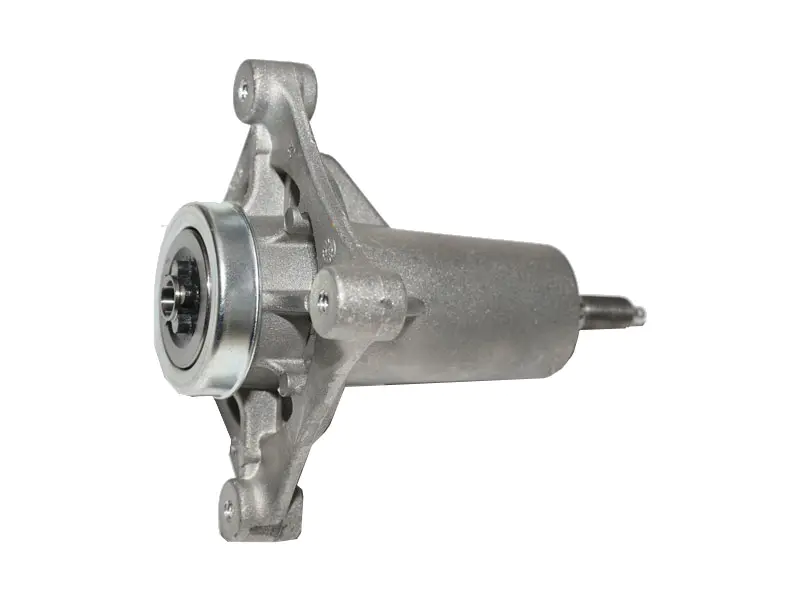
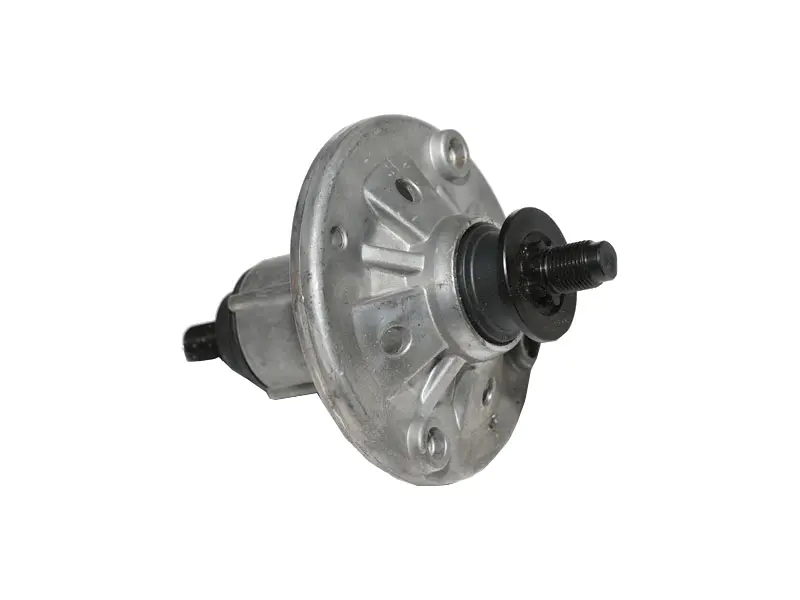
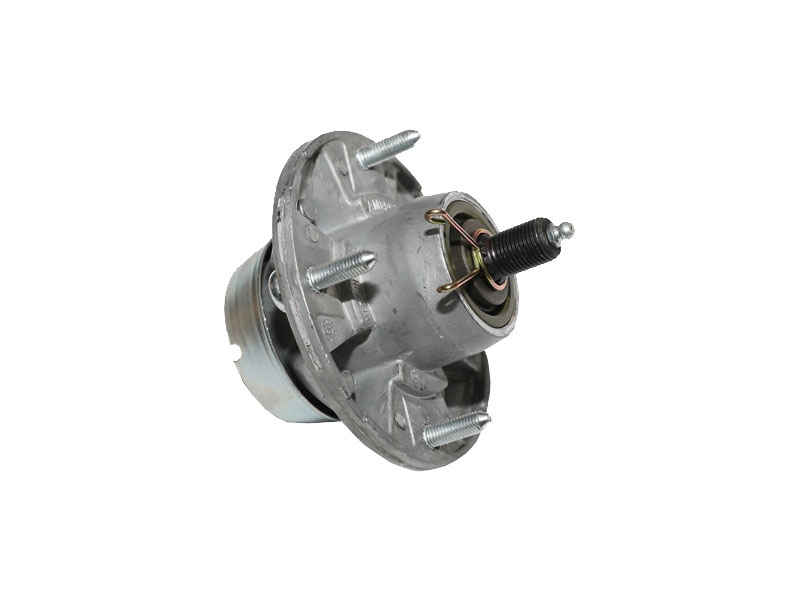
The deck belt routes from the electric PTO clutch pulley on the engine crankshaft, down to the deck's idler pulley (which maintains tension), and then around each blade spindle pulley on the cutting deck. On a 42-inch deck with two blades, the belt typically makes a figure-8 or serpentine path; on a 54-inch three-blade deck, the routing is more complex with multiple idler pulleys maintaining correct tension across all three spindles.
The idler pulley is spring-loaded and serves a dual function: it keeps the belt under tension during operation and releases tension when the PTO is disengaged. A worn idler pulley bearing is one of the most common causes of squealing during blade engagement and should be inspected alongside the belt at each seasonal service.
Ground Drive Belt Path
The ground drive belt connects the engine output pulley to the input pulley on the transaxle or transmission. On most garden tractors, this belt is located above the deck belt and is shorter. The ground drive circuit on hydrostatic transmissions typically uses a wider, heavier belt to handle the torque load without slipping. A slipping ground drive belt—evidenced by the mower losing forward speed under load or on inclines—may indicate belt glazing, incorrect tension, or a worn drive pulley.
Belt Replacement Tips
- Always reference the model-specific belt routing diagram printed on the deck housing or in the owner's manual before removing the old belt. Photographing the existing routing before disassembly is strongly recommended.
- Replace belts in pairs on twin-belt decks even if only one has failed. Mismatched belt ages cause uneven tension and accelerate wear on the newer belt.
- Use OEM-specified belt dimensions: top width, effective length, and cross-section profile (typically 1/2-inch or 5/8-inch V-belt). Aftermarket belts that don't match the OEM cross-section profile will ride incorrectly in the pulley grooves and wear rapidly.
- Inspect all pulleys when replacing belts. A cracked, wobbling, or seized pulley will destroy a new belt within a few hours of operation.
- Do not use belt dressing spray on V-belt lawn mower drives. These products temporarily restore grip on worn belts but accelerate further wear and can swell the belt material.
Seasonal Maintenance Checklist: Starter, PTO, Spark Plug, and Belt
Addressing all four systems together at the start of each mowing season takes less than two hours and prevents the majority of mid-season breakdowns.
- Starter system: Charge or load-test the battery. Clean battery terminals and inspect the solenoid wire connections. On pull-start models, inspect the rope for fraying at the handle attachment point and at the pulley exit hole—these are the two points that fail first.
- Spark plug: Remove the plug and inspect the electrode condition. Replace annually regardless of appearance. Check and set the electrode gap to specification before installing the new plug. Torque to the manufacturer's specification—typically 15–18 ft-lbs for most small engine plugs.
- PTO clutch: With the engine off, check the air gap at three points around the clutch using a feeler gauge. Adjust if outside the 0.010–0.015 inch specification. Inspect the clutch face for glazing or scoring.
- Drive belts: Inspect all belts for cracking, glazing, fraying, or visible cord exposure on the underside. Check all idler and spindle pulleys for play, noise, or seized bearings. Replace any belt showing significant wear before the season begins—a belt that fails in heavy grass is far more disruptive than one replaced proactively.
Keeping a log of hours operated and maintenance performed simplifies future service intervals and helps establish replacement schedules for components like belts and PTO clutches that have predictable wear lifespans rather than single failure events.