English
 中文简体
中文简体 Español
 svenska



Content
Signs of a Bad Spindle on a Lawn Mower
A failing mower spindle rarely gives out without warning. Catching the symptoms early can save you from a costly deck replacement or a dangerously uneven cut. Here are the most common signs of a bad spindle:
- Excessive vibration — If the mower shakes noticeably through the handles or deck, a worn spindle bearing is often the cause. The blade wobbles off-center rather than spinning true.
- Loud grinding or squealing noise — A dry, worn, or seized bearing produces a metallic grinding sound that worsens under load. Some spindles squeal before they fail completely.
- Uneven or scalped cut — A bent or wobbling spindle shaft causes one side of the blade to sit lower than the other, leaving streaks or scalped patches across the lawn.
- Blade contact or rattling — On multi-blade decks, a bad spindle can let a blade drop enough to strike the deck housing or neighboring blades.
- Visible play in the spindle shaft — With the engine off and spark plug disconnected, grab the blade and try to wiggle it up and down. More than minimal movement indicates worn bearings inside the spindle housing.
Any one of these symptoms warrants inspection. Running a mower with a bad spindle risks further damage to the deck, pulleys, and drive belt — and can throw a blade entirely, which is a serious safety hazard.
How the Spindle on a Lawn Mower Works
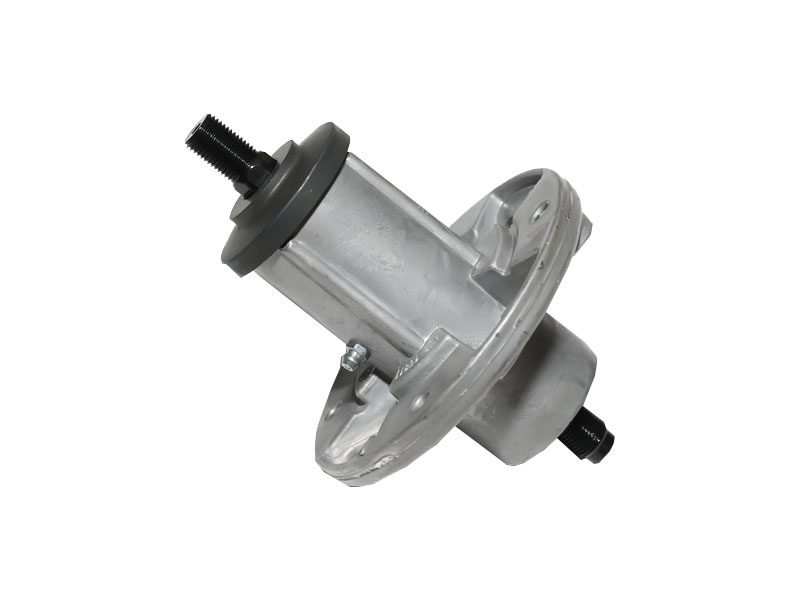
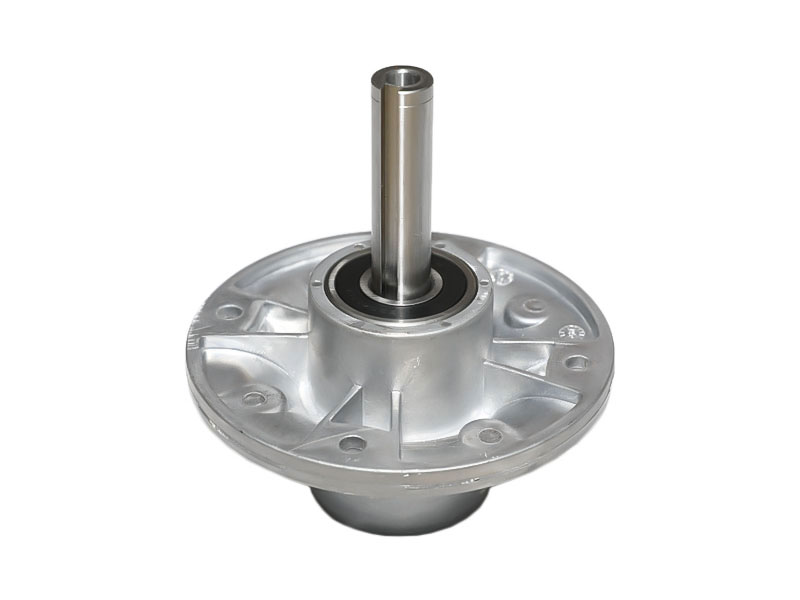
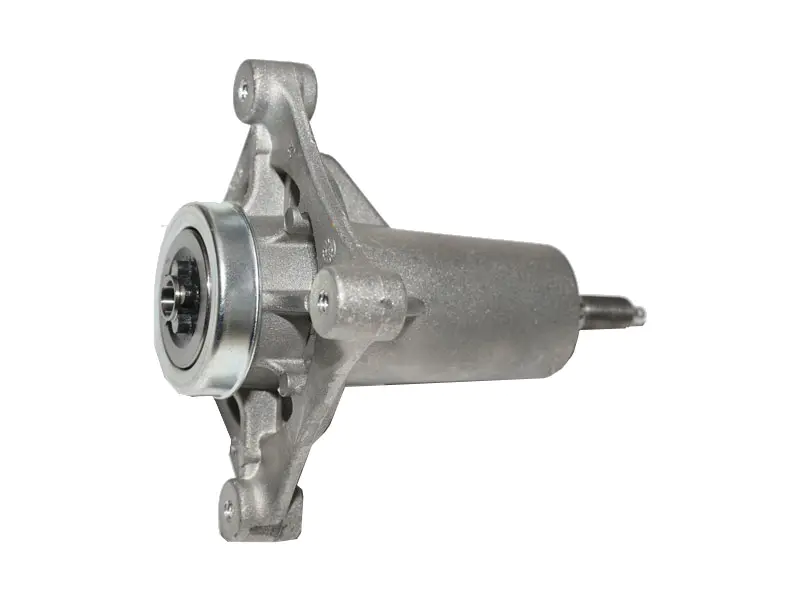
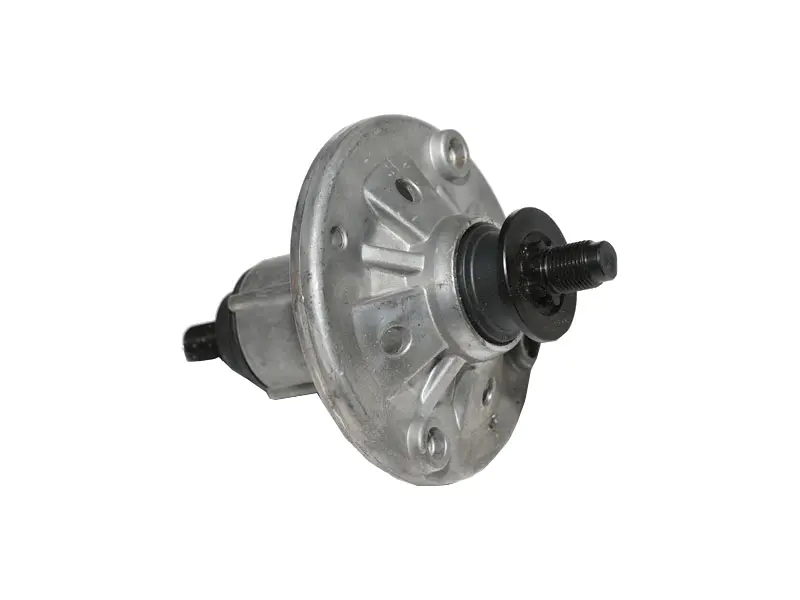
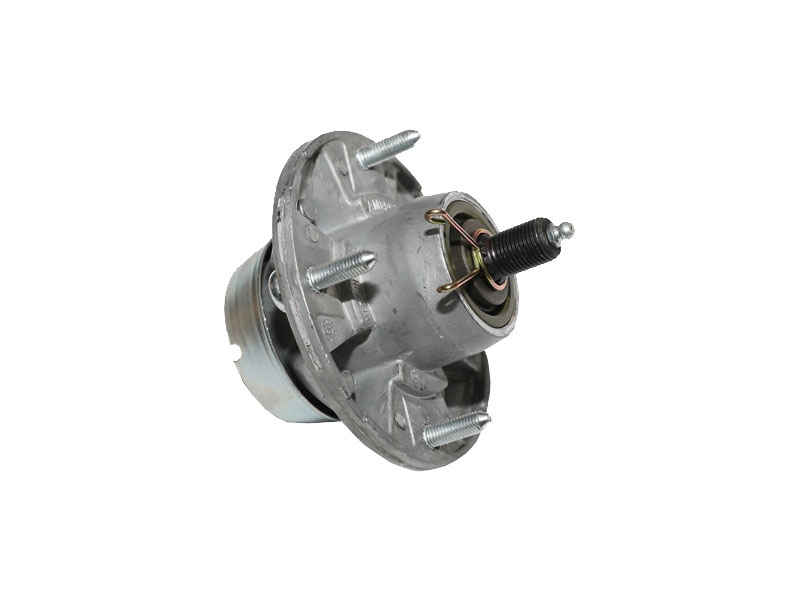
The spindle on a lawn mower is the vertical shaft assembly that holds and spins the cutting blade. It is mounted through the mower deck and driven by a belt connected to the engine pulley. Inside the spindle housing are two sealed bearings — typically one at the top and one at the bottom — that allow the shaft to rotate at high speed with minimal friction.
On riding mowers and zero turn mowers, each blade in the deck has its own dedicated spindle. A 48-inch zero turn deck, for example, typically carries two or three spindle assemblies running in parallel. The drive belt loops around each spindle pulley, transferring power from the engine simultaneously. This design means that one failed spindle does not always stop the others from spinning — but it will compromise cut quality and accelerate belt wear.
Spindle housings are usually made from cast iron or heavy-gauge steel and are bolted directly to the top of the deck. The shaft extends below the deck where the blade is secured with a bolt and blade adapter. Over time, repeated impacts with rocks or debris, water intrusion into the bearings, and normal wear all degrade spindle performance.
Lawn Mower Spindle Repair: When to Fix vs. Replace
Whether to repair or replace a spindle depends on which component has actually failed. Most spindle assemblies consist of three serviceable parts: the housing, the shaft, and the bearings. In many cases, only the bearings need replacement, which is significantly cheaper than buying a complete spindle assembly.
Bearing-Only Replacement
If the housing and shaft are undamaged, pressing out the old bearings and installing new ones is a practical repair. You'll need a bearing press or a vise, the correct bearing size (typically stamped on the bearing race), and basic hand tools. Bearings for common spindle models cost $5–$20 each. This repair is well within reach for a capable DIYer with about one to two hours of shop time per spindle.
Full Spindle Assembly Replacement
Replace the entire spindle assembly when the shaft is bent, the housing is cracked, or corrosion has compromised the structural integrity. A bent spindle shaft cannot be straightened safely — even minor bends cause enough imbalance to destroy new bearings within hours of operation. Full replacement assemblies for popular riding mower and zero turn brands typically cost $30–$80 per spindle, and most can be swapped out with basic tools in under an hour.
Step-by-Step Spindle Replacement Overview
- Disconnect the spark plug wire and engage the parking brake.
- Remove the deck from the mower by disconnecting the lift linkage, drive belt, and any deck hangers.
- With the deck on a flat surface, remove the blade using an impact wrench or breaker bar. Hold the blade with a block of wood — never your hand.
- Remove the spindle pulley (usually secured with a snap ring or bolt at the top of the shaft).
- Unbolt the spindle housing from the deck (typically 3–4 bolts through the deck plate).
- Install the new spindle assembly, torque the housing bolts to spec, reinstall the pulley and blade, and reassemble the deck.
Always replace the drive belt if it shows cracking, glazing, or fraying during this process — you're already halfway there.
Zero Turn Mower Spindle: What Makes It Different
Zero turn mower spindles operate under more demanding conditions than those on standard riding mowers. Higher blade tip speeds, wider decks, and more aggressive commercial-use duty cycles place greater stress on spindle bearings and shafts. Most zero turn spindles are engineered with greaseable or sealed heavy-duty bearings rated for higher RPMs than residential mower equivalents.
One practical difference: many zero turn decks use a mandrel-style spindle where the bearing housing and shaft are a single machined unit, making field bearing replacement harder. In these cases, replacing the full assembly is the recommended approach rather than attempting to press bearings in and out of a precision-machined housing.
| Feature | Residential Riding Mower Spindle | Zero Turn Mower Spindle |
|---|---|---|
| Bearing Type | Sealed or greaseable | Heavy-duty sealed or greaseable |
| Typical Blade Speed | ~3,000 RPM | ~3,200–3,600 RPM |
| Spindles per Deck | 1–3 | 2–3 (wider decks: up to 5) |
| Serviceability | Bearings often replaceable | Full assembly replacement common |
| Assembly Cost (approx.) | $25–$60 | $45–$120 |
For zero turn owners who mow frequently or commercially, inspecting spindles at the start and midpoint of each mowing season — and greasing them if the design allows — is the most cost-effective maintenance habit.
Choosing the Right Lawn Mower Spindle Replacement
Not all spindles are interchangeable. The correct replacement depends on your deck model, blade bolt pattern, and shaft diameter. Here's how to find the right part:
- Use the OEM part number first. Check your mower's parts manual or the manufacturer's website. OEM spindles are guaranteed to fit but are often 20–40% more expensive than aftermarket equivalents.
- Verify the shaft diameter and length. Common shaft diameters are 5/8 inch and 1 inch. Measure your existing shaft before ordering if the part number is unknown.
- Check the blade bolt thread. Blade bolts are typically right-hand thread on most mowers, but some manufacturers use left-hand thread on specific spindle positions to prevent loosening during operation.
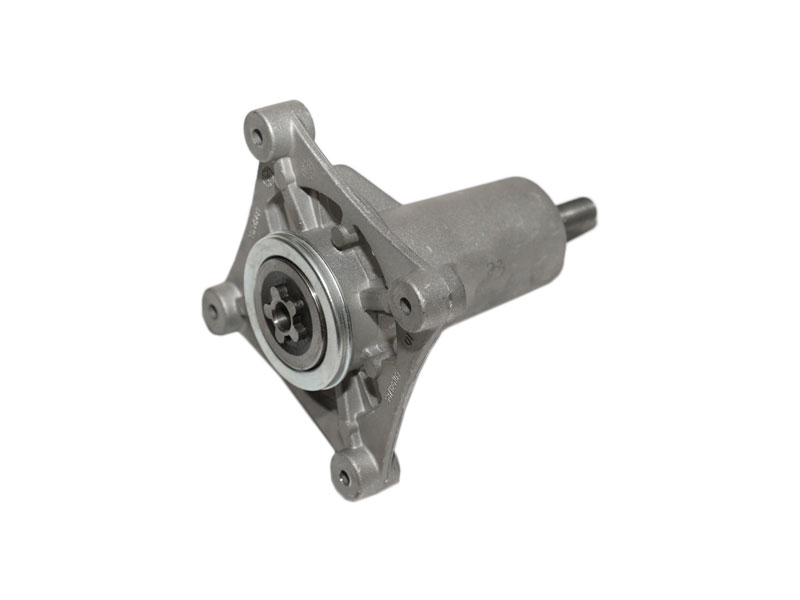
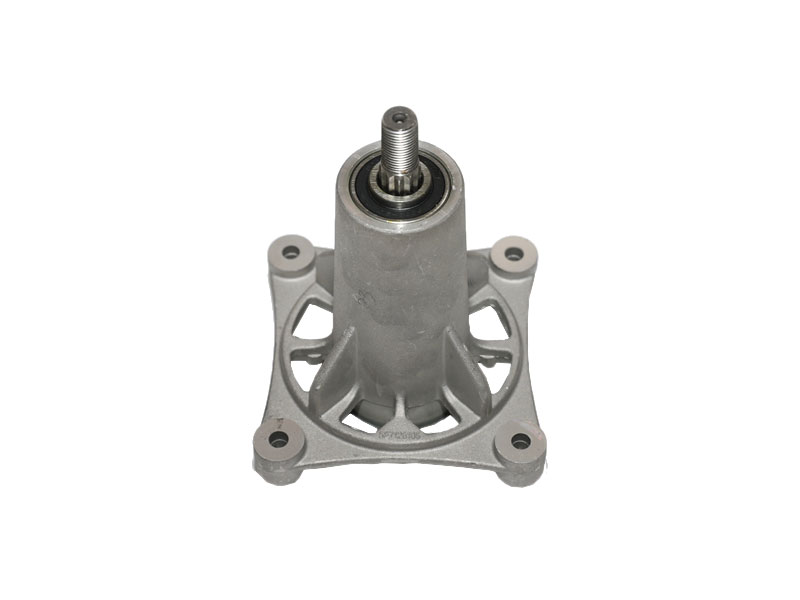
- Count the housing bolt holes. Spindle housings typically have 3 or 4 bolt holes. The bolt circle diameter must match your deck's mounting holes exactly.
- Match the pulley type. Some spindles are sold with a pulley included; others are not. Confirm whether your existing pulley is compatible with the new spindle shaft before completing the order.
Aftermarket spindle assemblies from reputable suppliers offer a cost-effective alternative to OEM parts, provided the fitment specs match. Avoid the lowest-priced options with no brand or warranty information — spindles with poor-quality bearings can fail within a single season under regular use.
Once installed, run the mower on a flat surface and listen for any remaining noise or vibration before returning it to service. A properly fitted spindle should operate quietly with no perceptible blade wobble at full throttle.